Beyond Madison Avenue: NYC’s Adtech Companies to Watch
New York has been the capital of advertising and marketing since Madison Avenue became shorthand for the whole industry. Billboards, magazine spreads, TV spots, banner ads — if it was a new way to reach people, it probably got its start here. Just this month, NYC held its annual Advertising Week.
Now add in the tech side of things. Across loyalty and community, retail purchase data, AI search, and AI-native ad formats, NYC startups are rethinking how brands find customers, and what customers get in return.
The category is in the middle of its biggest shift since the rise of search.
U.S. digital ad revenue hit a record $294.6 billion in 2025, up 13.9% year over year, according to IAB and PwC.
Spending on AI search ads was just over $1 billion last year, and eMarketer projects it will reach nearly $26 billion by 2029.
That’s part of the reason our recent NYC AI Demos event featured NYC adtech companies.
But as customer acquisition costs climb and more shoppers ask AI what to buy, the old playbook of simply outspending competitors is losing its edge. The brands pulling ahead are the ones with better data, stronger communities, and a real reason for customers to come back.
Plus, AI has opened up new inventory, new signals, and new ways to measure what actually works.
That shift feels particularly at home in New York, where the brands, agencies, retailers, and media companies that shape the industry are all within a few subway stops of each other.
Against this backdrop, we caught up with a group of NYC founders building the next generation of adtech and marketing tech, making advertising and marketing a little more useful to the people on the other side of the screen.
For this edition of Companies to Watch, meet:
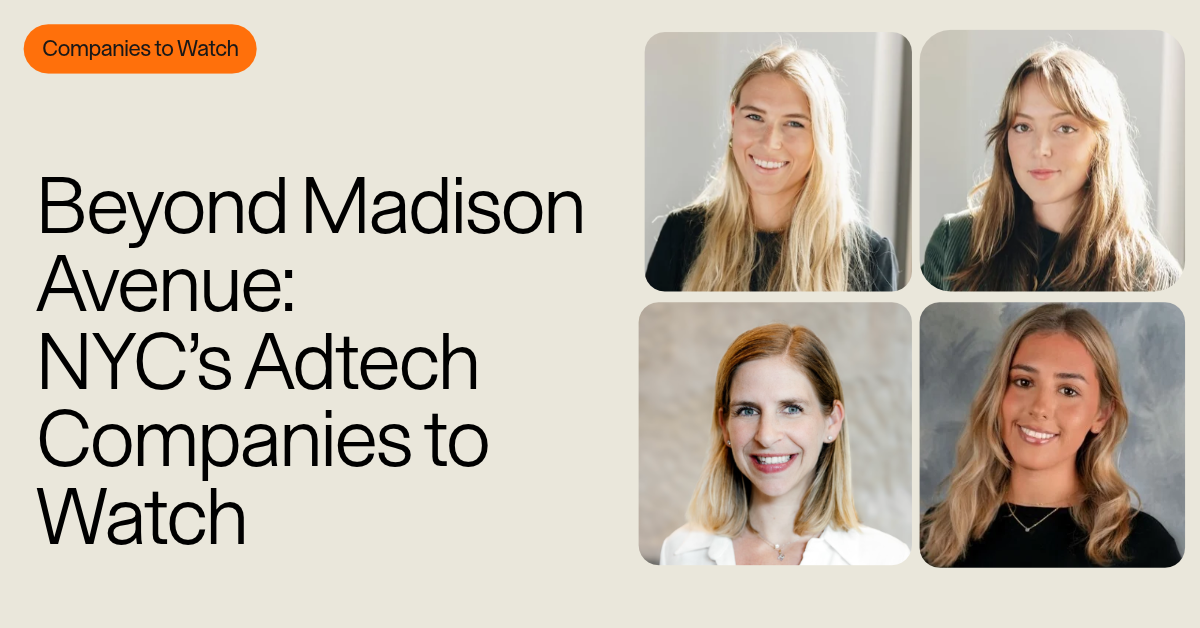
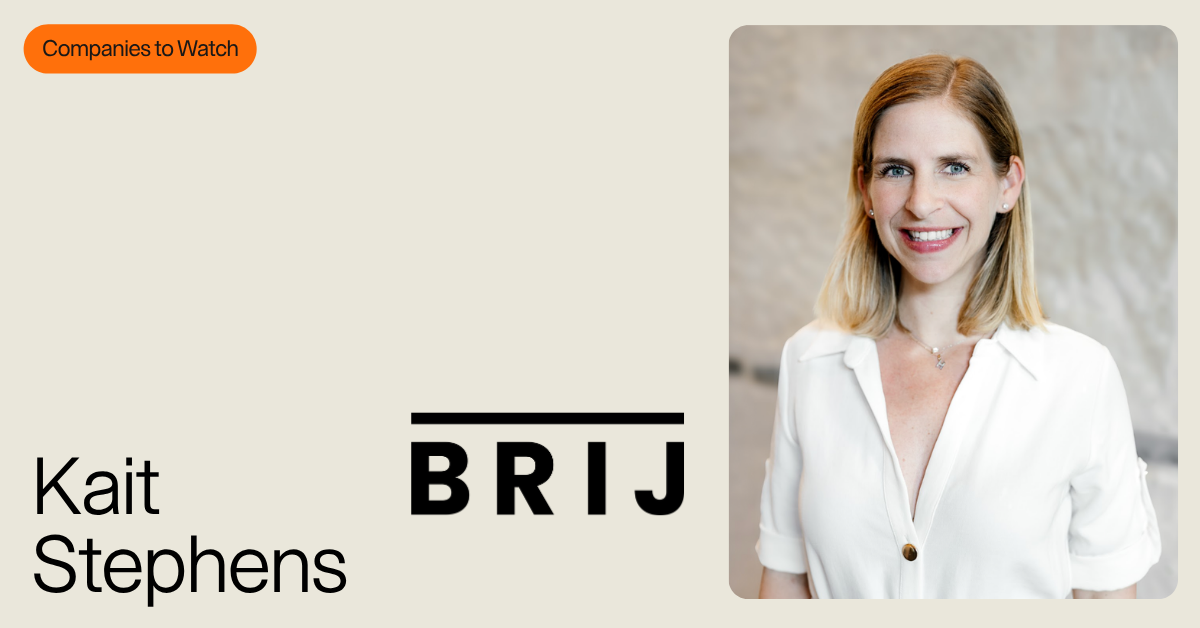
Kait Stephens, founder, Brij
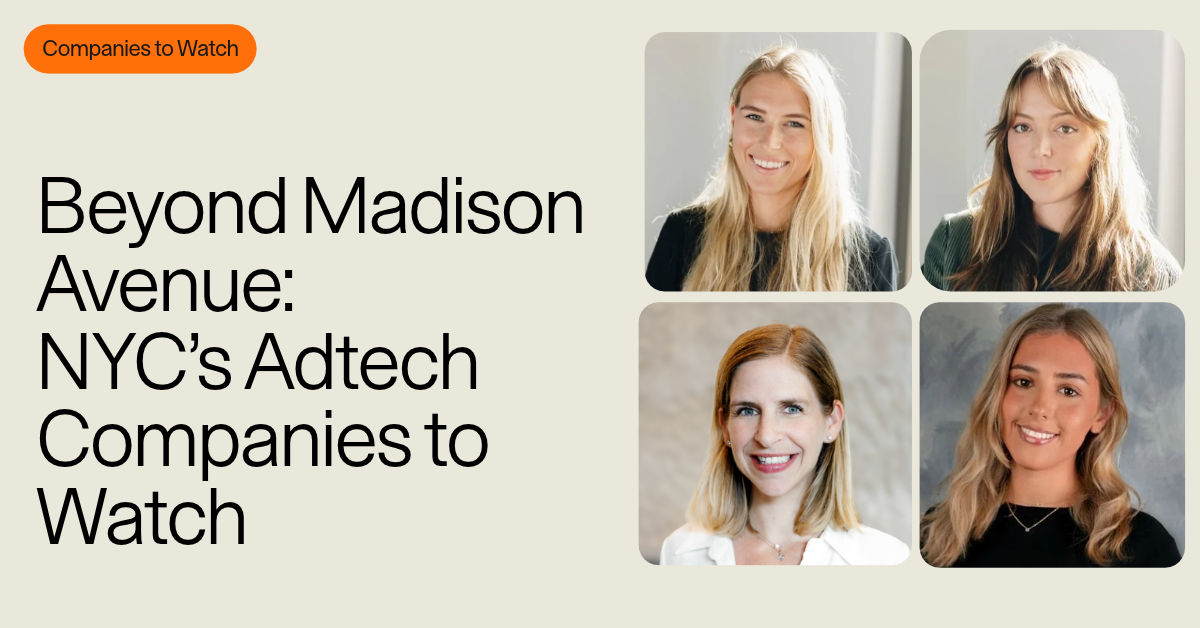
Sarah Ganzenmuller and Regan Jayne Plekenpol, founders, rediem
Olalla Arcadia Levi, founder, WHYL
Brij
“Building a startup takes a village, and New York is the best village you could ask for.”
What does your company do? What problem is it working to solve?
Most omnichannel brands can’t action on 80% of their buyer data, as those sales happen in retail and marketplace channels. Brij identifies these purchases and sends deterministic buyer and receipt data into Meta, Google, and TikTok to sharpen audience modeling and lower CAC, and into brand CRMs and email/SMS platforms to grow LTV. Brands like Skullcandy, Feastables, Quip, Black + Decker, Health-Ade, Caraway, TUSHY, and Bobbie use Brij to make their whole customer base visible and drive efficient growth.
A question we like to ask every founder — why New York?
For me, it's all about the people and the connections. New York has such an incredible concentration of founders, brands, investors, and creative thinkers, and there's something really special about having that community right at your fingertips.
I love that I can grab a spontaneous coffee with a customer, advisor, or fellow founder. There’s also no shortage of events bringing together people in tech, retail, and the women's founder community. The opportunities to learn, connect, and support each other are endless.
I can walk my kids to school, walk to the office, and pop in and out of meetings in person all the time.
Building a startup takes a village, and New York is the best village you could ask for.
You’ve worked with brands ranging from emerging startups to established names like Black+Decker and Caraway. Can you share an example of how a customer has used Brij in a particularly creative or impactful way?
One of my favorite examples is Turtlebox, which used Brij to turn previously invisible retail purchases into powerful signals for its digital advertising.
By sending verified purchase data into Meta, Turtlebox improved its campaign optimization and is even featured on TikTok for its results!
In just two months, they saw a 45% uplift in reported conversions, a 74% increase in reported ROAS, and a 31% reduction in reported cost per conversion on TikTok.
What excites me most is that you don’t need to spend more to get better results. It's all about making existing ad spend work harder by giving the algorithms better data.
What’s been the biggest surprise you’ve encountered about how consumers interact with brands after making a purchase?
How willing consumers are to engage with brands after purchasing when there’s a compelling reason to do so.
There’s this assumption that once someone buys a product at Target or Walmart, the interaction is over. But we’ve seen the opposite. Consumers want product tips, rewards, exclusive experiences, and content that makes their purchase more valuable.
The key is giving them something worth engaging with. Nobody wants to scan a QR code just to join another email list. It reinforced something I believe deeply: the purchase shouldn't be the end of the customer relationship. It should be the beginning.
How has your experience building Brij shaped your perspective on what makes a brand successful?
I’ve had a front-row seat to how some of the most innovative consumer brands operate, and the common thread is that they really understand their customers. They’re constantly learning, experimenting, and finding ways to deliver value beyond the initial purchase.
It has also reinforced how important it is to stay close to your customer, something that’s equally true when building a startup.
The brands that win long-term will be the ones that combine great products with genuine customer relationships.
Looking ahead, how do you see the relationship between brands, retailers, and consumers evolving over the next few years?
I think we’re moving toward a world where the lines between physical retail and digital relationships become increasingly blurred.
Retailers will continue to play a massive role in product discovery and distribution, but brands will need more direct relationships with the consumers buying their products.
AI is accelerating this shift. As advertising becomes more automated, the quality of a brand's first-party data will become an even bigger competitive advantage.
The brands that win will be the ones feeding advertising platforms stronger purchase signals, helping algorithms get smarter over time and ultimately driving more efficient media spend.
Time for some New York-themed rapid fire questions — where is your favorite place to grab a slice of pizza in New York?
Joe's Pizza!
Where is your favorite coffee shop in New York?
Maman — I love the vibes.
Do you have a favorite spot to escape the noise of the city?
The Jersey Shore. My family goes every weekend in the summer, and it’s a great way to get out of the city and spend time outside.
What’s one piece of advice — that you’ve shared or was shared with you — on building a startup in New York City?
Put yourself out there. Luck comes to those who put themselves in places to be lucky — and there is no better place than in NYC.
rediem
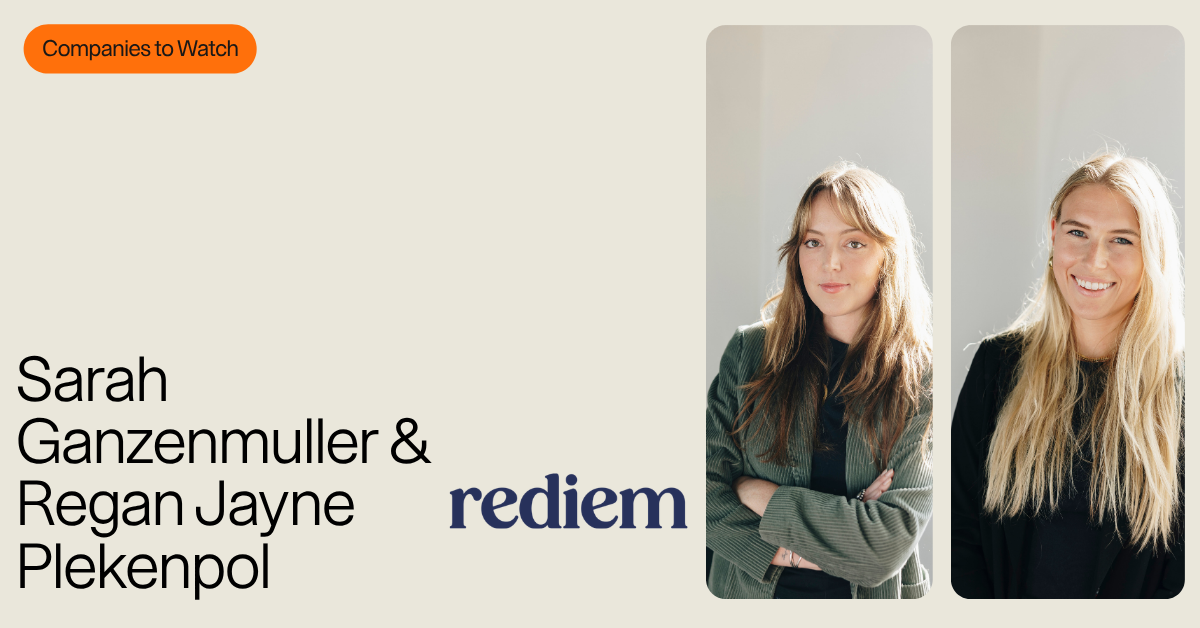
“There’s nowhere more creatively demanding and the culture moves fast here. Trends surface in NYC before they surface online, and a community platform needs to be close to that.”
What does your company do? What problem is it working to solve?
rediem is a community activation and rewards platform for consumer brands like OLIPOP, Sun Bum, and Faherty. Most loyalty tools treat customers like a ledger: spend, earn points, repeat. We think that’s backwards. The brands winning right now have something money can’t buy outright: customers who feel like they belong. rediem gives brands the infrastructure to build that, rewarding the things that actually signal affinity (showing up, creating, sharing, referring) rather than just checkout.
The problem we’re solving is simple: acquisition is only getting more expensive, and brands need a reason for customers to come back that isn’t a discount. Not to mention, community signals are one of the most important moats for brands to build into the agentic commerce era.
A question we like to ask every founder — why New York?
Our customers are here. Many of the brands we work with most closely as innovation partners are headquartered in the city, which means product feedback happens over coffee, not a Zoom link. NYC sits at the intersection we care about: brand and technology. There’s nowhere more creatively demanding and the culture moves fast here. Trends surface in NYC before they surface online, and a community platform needs to be close to that.
Rediem focuses on giving brands a space to talk and collaborate authentically, rather than on recommending those with the biggest ad budgets. What does building that authentic presence look like in practice, and can you share an example?
In practice it means rewarding behavior, not just spend. A brand sets up challenges, drops, and recognition around what their best customers already do, and the community becomes something people participate in rather than something they’re marketed to.
Goodles is a great example. Instead of another “buy two, get 10% off” push, they invited their community to share how they actually cook with the product. Those submissions became a communal recipe book, written by customers, for customers. Nobody was paid to post, and the result was more useful and more believable than anything the brand could have written alone. That’s the shift: the brand becomes the host, not the loudest voice in the room.
In a place like New York, customers can be virtually anywhere. What’s a market, community, audience, activity, venue type, etc., that you see potential in or would like to see benefitting more from this technology?
Two areas stand out to us.
The first is local and independent fitness communities: run clubs, climbing gyms, boutique studios. Walk along the East River on a Saturday morning and you’ll see dozens of run clubs, each with its own regulars, rituals, inside jokes, and even merch. These groups already behave exactly like brand communities. People show up week after week, bring their friends, post about it, and build real identity around belonging. But almost none of them have tooling for it. Their community lives in a group chat and an Instagram account, and the people who show up most, recruit new members, and keep the energy going rarely get recognized for it. That’s exactly the behavior rediem was built to reward. Imagine a climbing gym that celebrates its members’ milestones, or a run club that rewards the person who brought five new runners this month. These communities have the hardest part figured out already. They just need the infrastructure.
The second is legacy CPG brands, the ones sitting on the shelf of every bodega in the city. Some of these brands have decades of loyalty behind them. People have bought the same iced tea, the same chips, the same hot sauce since they were kids, and they’d defend it in an argument. That’s enormous emotional equity. But the brands have zero direct relationship with the people buying them. The sale happens at a corner store counter, and the brand never knows who you are, why you love them, or what you’d share about them if anyone asked. There’s a huge community there with no visibility and no way to tap into it. Giving those brands a way to finally see and reward their most loyal customers is a massive opportunity, especially now, when what people say about a brand is shaping how it gets recommended.
What are some misconceptions businesses have about ad technology today?
That attention can be bought at scale forever. CAC keeps climbing, and the brands leaning hardest on paid are the ones with the most fragile growth.
That “loyalty” means points. Points are a tactic. Loyalty is an emotional outcome, and most programs never measure it.
That AI discovery is just another channel to optimize ads for. When customers ask an AI what to buy, what shows up is shaped by what real people say about you. Community isn’t a nice-to-have anymore. It’s existential because it modulates how you get recommended.
What are some of the “everyday moments” shared through the platform that you’ve seen turned into branded, but collaborative and authentic content?
The best content our brands get isn’t produced, it’s lived. When you reward people for showing up, creating, and sharing, rather than just checking out, you start to see the brand show up in the small, real moments of people’s days. A few of our favourites:
The morning routine. One of the simplest examples is a challenge encouraging customers to post their morning routine with the product sitting in frame. The brand then reposted a sampling of real human moments to their social channels, and the authenticity outperformed polished creative. We’re entering a trust economy, and this is the future of earned media.
A recipe book written by the community. Goodles invited their community to share how they actually cook with their mac and cheese, from weeknight hacks to full-on creations. Those submissions became a communal recipe book, written by customers for customers. Every contributor became part of the brand’s story, and every new customer got a hundred ideas from people just like them.
A newsletter that features its readers. Sun Bum’s Bum Club newsletter spotlights favorite picks from the community itself. Instead of the brand telling people what to buy, members hear it from each other, and the people featured feel genuinely seen. Recognition is one of the most powerful rewards there is, and it costs nothing (plus: these emails fastly outperform transactional sales emails in terms of click-through-rate and attributed sales).
The pets roundup. Harmless Harvest ran a roundup email featuring their community’s pets. It has nothing to do with coconut water (other than the many customers that posed their pups with coconut water in frame), but this is exactly why it works.
What ties these together is that the brand stepped back and let the community lead. And there’s a bigger payoff now: this kind of authentic, customer-generated content is exactly what shapes how a brand gets talked about, and increasingly, how it gets recommended when someone asks an AI agent what to buy.
What’s next? What are Rediem’s top priorities over the next 12 months, and what excites you most about where the company is headed?
Our biggest focus over the next 12 months is AI discovery. The way people find products is changing faster than at any point since the rise of search. More and more, customers aren’t scrolling a feed or typing keywords into a search bar. They’re asking an AI, “What’s the best sunscreen for surfing?” or “What’s a healthy soda that actually tastes good?” And the answer they get isn’t shaped by who has the biggest ad budget. It’s shaped by what real people are saying about you: the reviews, the posts, the recipes, the conversations happening in your community.
That changes everything for brands. For years, the playbook was to buy attention. In the agentic commerce era, you can’t buy your way into a recommendation. You have to earn it, and the brands that earn it will be the ones with real communities behind them. A brand’s community is now its answer engine.
So over the next year, we’re focused on two things. First, helping brands understand this shift, because many are still treating AI as just another channel to optimize ads for, and that misses the point. Second, giving them the tools to act on it: turning the content, reviews, and conversations their communities already create into the signals that shape how they show up when a customer asks an AI what to buy.
What excites us most is that this is the thesis we started with, that emotional equity beats transactional relationships, and AI is proving it out. Community used to be a nice-to-have. Now it determines whether you get recommended at all. We’re not convincing anyone anymore. We’re building for it.
Time for some New York-themed rapid fire questions — where is your favorite place to grab a slice of pizza in New York?
Regan: Two Boots vegan slice
Sarah: L’Industrie!
Where is your favorite coffee shop in New York?
Regan: Devocion in Union Square
Sarah: Design collab in williamsburg
Do you have a favorite spot to escape the noise of the city?
Coldsprings! Extra special because this is where we hosted our very first team offsite.
What’s one piece of advice — that you’ve shared or was shared with you — on building a startup in New York City?
Get in the room. Your customers, partners, and investors are probably within a few subway stops. Also a coffee builds a relationship faster than ten Zoom calls, so take the in-person meeting every time you can!
Let the city pressure-test you. New York has no patience for things that don’t work, and that’s a gift. If an idea survives a skeptical New Yorker, it’s probably onto something.
Build a community of founders!
WHYL
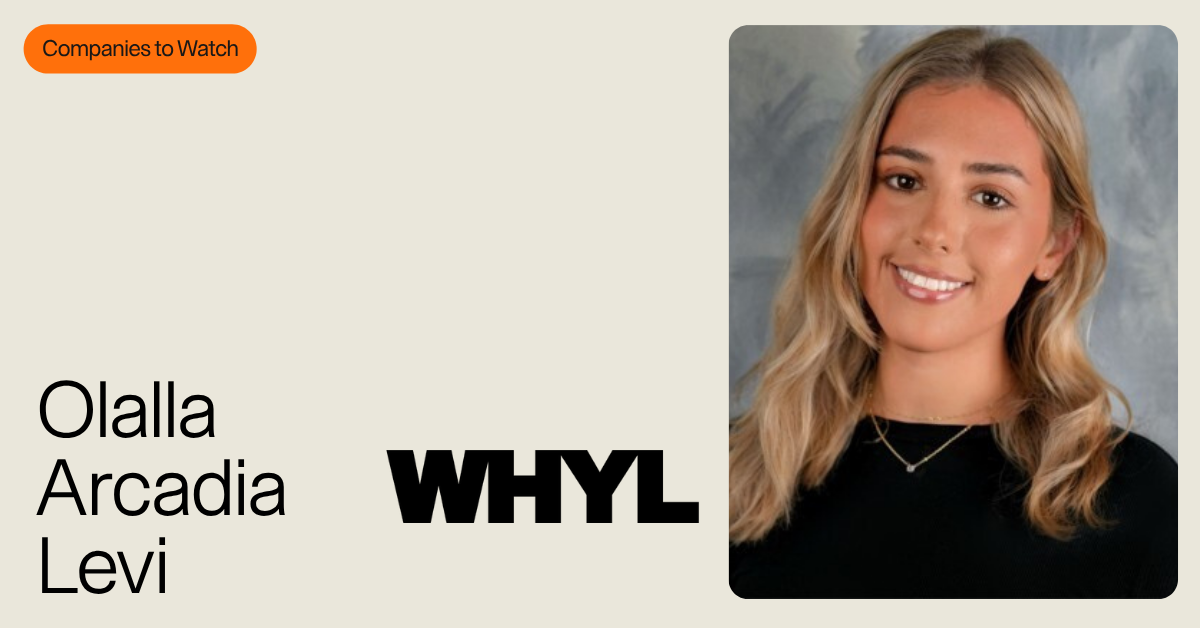
“We need both the companies creating AI experiences and the brands looking for new ways to reach people. New York brings those conversations close together.”
What does your company do? What problem is it working to solve?
WHYL turns AI waiting time into paid attention. Our Chrome extension lets people opt in to watch short sponsored videos while tools like ChatGPT, Claude, and Gemini generate an answer, and share in the advertising revenue. Advertisers get a new way to reach people already using AI, while our longer-term goal is to integrate the same monetization layer directly into AI products. The problem is simple: people spend time waiting, but receive none of the value that attention could create.
A question we like to ask every founder — why New York?
I grew up in Manhattan, so New York is home. It is also where advertising, media, finance, and technology meet, which makes it a natural place to build WHYL's network. We need both the companies creating AI experiences and the brands looking for new ways to reach people. New York brings those conversations close together. Building while studying at Berkeley also gives us a connection between two very different, very useful startup communities.
What was the “aha” moment, when you realized AI waiting times could be used as ad inventory? How did you land on something that many folks, even yourselves, may initially groan at?
The insight was that the wait already exists. People are already watching AI think, so could that time create something useful for them? The obvious objection is, ‘Please, not another ad.’ We take that seriously. WHYL is opt-in, users share in the revenue, and the experience is designed around the existing generation window. We are not trying to manufacture more waiting. We are trying to make a moment people already encounter more valuable.
What’s the inspiration behind the name WHYL?
WHYL comes from “while you wait”—a blend of “while” and “you.” It captures the idea behind the product: turning the time you spend waiting for AI into something valuable for you.
You’ve touted privacy as the product’s foundation. Can you speak a bit on how you’ve maintained it as a top priority?
Participation is opt-in, and we think privacy has to be part of the product design from the beginning. Users should understand what they are agreeing to and have control over their participation. For us, building an advertising business means earning trust from the people using it, alongside delivering value to advertisers. That principle matters as we develop both the extension and future integrations.
How has the experience been co-founding a company with your childhood friend?
Chloe and I have been friends since childhood, so we started with years of trust and a shared history. That makes it easier to be direct with each other and keep going when things get difficult. But building a company also asks something different of a friendship: clear responsibilities, difficult decisions, and accountability. We are learning how to protect the friendship while taking the business seriously. Getting to build something together that we both care about is a very special part of this.
Why is third-party payout the imperative here, or why is straight cash the preferred incentive for users rather than, say, tokens toward more AI usage?
Cash gives users a choice. Credits toward more AI usage can be useful, but they keep the value inside one ecosystem and assume that more AI is what everyone wants. We want users to share in the economic value of their attention and decide for themselves what to do with it. WHYL uses tokens as an accounting unit redeemable for cash, rather than making the reward dependent on buying more of a particular AI service.
Time for some New York-themed rapid fire questions — where is your favorite place to grab a slice of pizza in New York?
L’Industrie—the slice with a ball of burrata on top.
Do you have a favorite spot to escape the noise of the city?
Pig Park in Sutton Place.
What advice do you have — or wish you’d had — for building a startup in New York City?
Make specific asks. ‘Can you help our startup?’ is much harder to act on than ‘Who runs advertising partnerships at this company?’ New York is full of people who know someone relevant, but you have to make it easy for them to understand what you need. Also, talk to potential customers early. A conversation with someone who might actually pay you can teach you more than another week of polishing the pitch.
Regardless of outdoor weather — hot or iced coffee?
Hot coffee.