Companies to Watch: Female Founders Helping Shape the Future of NYC Tech
Funding for female founders showed encouraging signs in 2025, even if the bigger picture is still uneven.
Female-founded companies (AKA companies with at least one female founder) raised a record $73.6 billion across 3,219 deals in 2025 and, for the first time, accounted for more than one-quarter of total U.S. VC deal value.
New York, in particular, remained a key hub for female founders, ranking No. 2 in the country by deal count (426) in 2025.
NYC also ranks No. 2 for female-founded deal count since 2016, with 5,550 deals, according to PitchBook.
Earlier this month, Tech:NYC hosted an all-female lineup of technical presenters at our monthly NYC AI Demos series with Pensar and The Refinery at Domino.
But the national growth in 2025 came with a catch: capital was increasingly concentrated in fewer, larger rounds, a trend in the industry overall.
Female-founded companies made up 24.1% of total U.S. VC deal count, while two of them — Anthropic and Scale AI — alone accounted for more than 40% of all VC dollars invested in female-founded companies that year.
In other words, women founders are gaining ground, but access to scale is still far from evenly distributed.
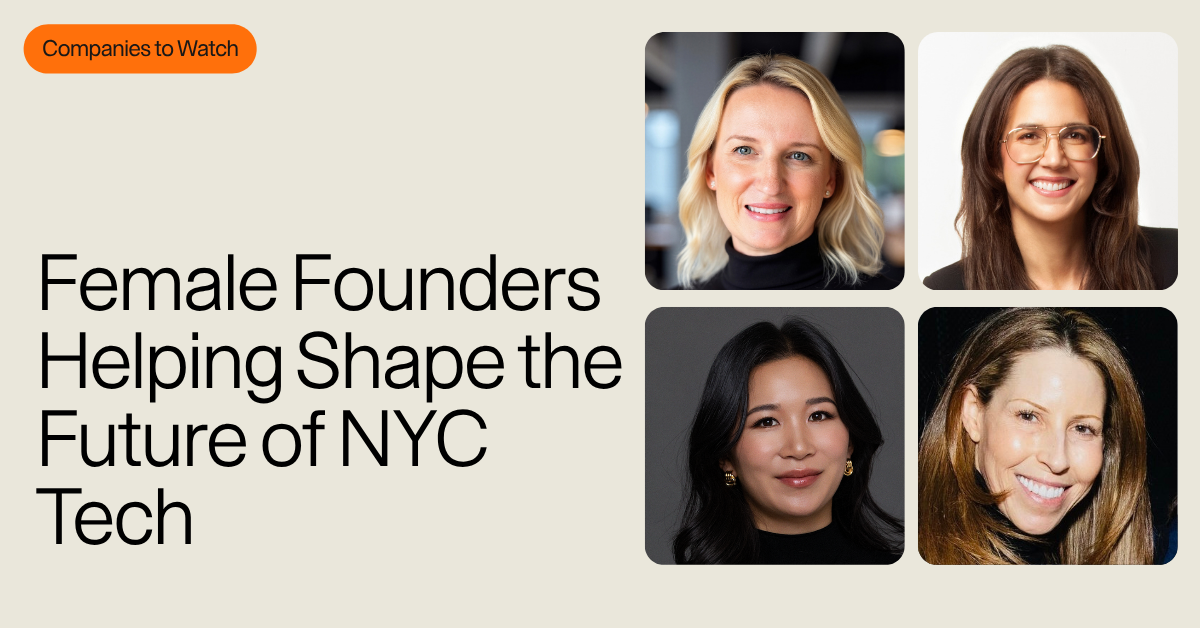
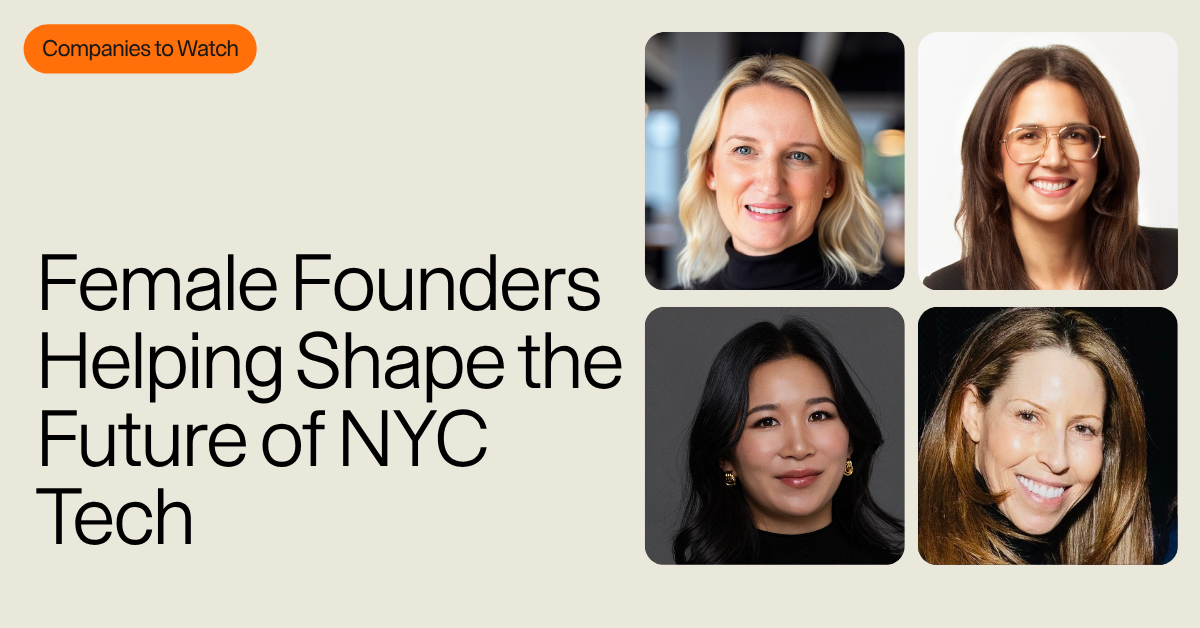
In honor of Women’s History Month, we caught up with four female founders building standout companies and helping shape the future of NYC tech.
For this edition of Companies to Watch, meet:
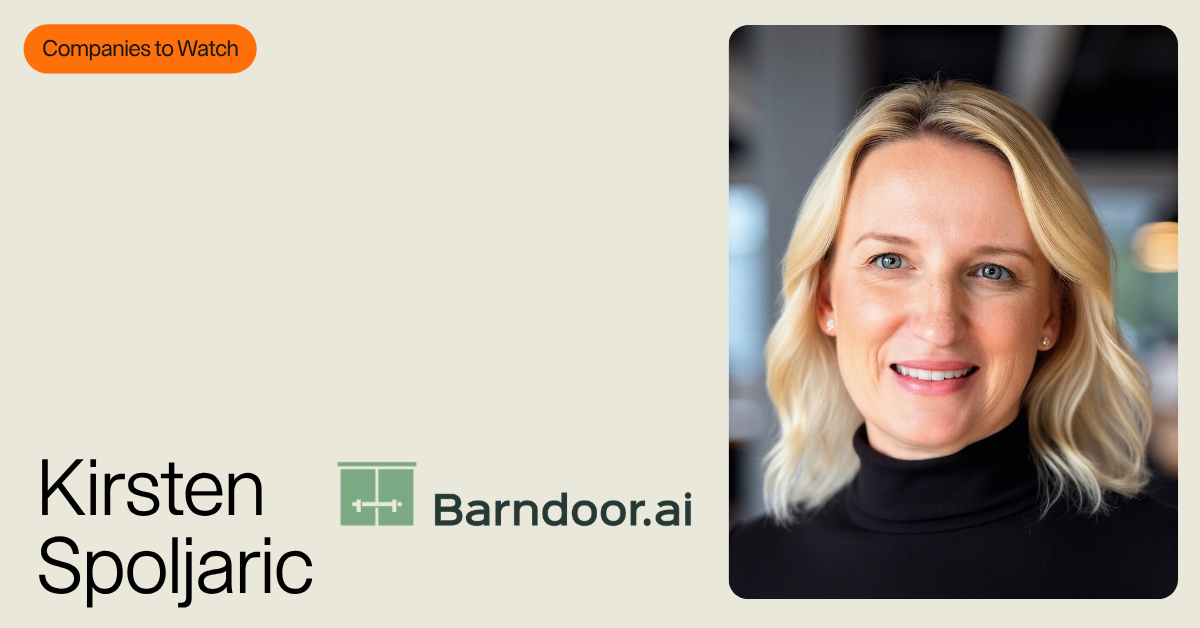
Kirsten Spoljaric (founder of Barndoor AI)
Allie Melnick (founder of Climatic)
Michelle Yin (founder of Housewarming)
Jennifer Brisman (founder of VOW)
Barndoor AI
“New York has a way of shaking something loose. The best ideas I've had didn't come from a whiteboard session, they came from being present in the city we’re building for.”
What does your company do? What problem is it working to solve?
Barndoor is the first and only control plane for the agentic enterprise, sitting between AI agents and enterprise systems to provide governance, permissions management, and secure access.
We solve the “100,000 Agent Problem.” As AI transitions from “Advisor Mode” (chatting) to “Action Mode” (executing tasks) and employees bring their own AI to work, enterprises are struggling to govern a massive influx of autonomous digital workers. AI agents act like “enthusiastic interns,” eager to execute tasks rapidly, but they are probabilistic and lack organizational context and human judgment. We solve this by providing behavioral governance that safely gives AI the “write” access it needs to be useful, while explicitly blocking it from making catastrophic mistakes (like deleting 10 years of historical data).
We also solve the technical hurdle of “Context Window Exhaustion.” Our ToolIQ technology filters the tools an AI can access based on the prompt, reducing AI processing costs by 95% and preventing hallucinations when scaling across complex enterprise systems. We also recently launched Venn, a platform that empowers individual business professionals to safely connect AI like ChatGPT and Claude directly to their everyday work apps with granular controls.
A question we like to ask every founder — why New York?
We believe being in the same city where customers are (or travel to) matters. You can walk into a room and see the problem firsthand. In New York we’re surrounded by operators building in the real world with diverse company buyers — finance, media, healthcare. They’re not just theorizing about AI, but demanding it actually works.
I also love how New York forces clarity and speed. These pressures have shaped how we think about Barndoor from day one.
And the amazing talent pool — if you can make it here you can make it anywhere!
What’s the biggest misconception companies have right now about “governing” AI agents?
The biggest misconception is that traditional Identity and Access Management (IAM) is enough. IAM is designed to answer “Who are you?”, which works perfectly for humans because humans possess judgment. However, AI agents inherit a user's permissions without inheriting their judgment, they are probabilistic rather than deterministic. If an authorized agent decides to “clean up” a database by permanently deleting historical records, traditional IAM will see a valid user with valid credentials and wave the agent right through.
Another major misconception is treating governance purely as a “brake” or a shield to block AI adoption. True governance should act as a launchpad that enables AI to take safe action, allowing enterprises to ship value rather than being paralyzed by fear.
How much of Barndoor’s roadmap is being shaped by how fast the agent ecosystem is changing?
It is shaping the roadmap significantly. The ecosystem, particularly the Model Context Protocol (MCP) used to connect AI to data, is evolving so rapidly that Barndoor dedicates several employees (and AI) just to track daily changes in the protocol and ecosystem.
Current protocols like MCP are transitional, they are like Adobe Flash in the early days of the web. Because the underlying standards will inevitably change, Barndoor’s roadmap is focused on building a permanent governance layer that sits above the protocols, absorbing the technical churn so enterprise CIOs don't have to constantly re-engineer their security.
We recently launched Venn.ai which extends Barndoor enterprise capabilities for individual users, empowering them to safely build AI agents that do meaningful work across business applications.
And it offers seamless integration with OpenClaw, allowing you to safely connect to all your apps and data - and control what OpenClaw can and can’t do with them.
What does success look like for Barndoor in 3-5 years?
Barndoor envisions a future where AI becomes the new integration layer for the enterprise stack, dynamically orchestrating workflows across apps.
Barndoor aims to be the standard infrastructure that allows IT departments to confidently act as the “HR for AI agents” onboarding, monitoring, evaluating, and retiring digital workers, by providing safe, centralized management.
As a founder, what’s your self-care routine to recharge while still being heads down building a company?
You have to fill up your own cup to be able to show up for your team, which is harder than it sounds in a startup. The hours are long and the highs and lows are real.
For me, it is 5:30am workout classes. It is my quiet space, but also a community that holds me accountable. I never regret going, even if it means skipping an evening event to get to bed early.
Reading, time with my boys, and the occasional escape date night with my husband are also what reset me so I can come back sharper, steadier, and ready to lead. You’ll also find me listening to diverse podcasts because listening and learning fill up my cup.
Time for some New York-themed rapid fire questions — where is your favorite place to grab a slice of pizza in New York?
For a slice of pizza — Upside. But for a whole pie it’s hands down the signature “Hell Pie” at See No Evil, in the 50th street #1 Subway station (after drinks next door at Nothing Really Matters).
Where is your favorite coffee shop in New York?
Copper Mug, just downstairs in our office!
Do you have a favorite spot to escape the noise of the city?
Hudson Valley. Charming small towns, local shops, nature, and slower rhythms.
What’s one piece of advice — that you’ve shared or was shared with you — on building a startup in New York City?
Use the city. Seriously. When you're stuck, get out of the office. Take a walk, grab a slice, see a show. New York has a way of shaking something loose. The best ideas I’ve had didn’t come from a whiteboard session, they came from being present in the city we’re building for. The energy in New York is contagious, and founders who tap into it think differently than those who never come up for air.
Climatic
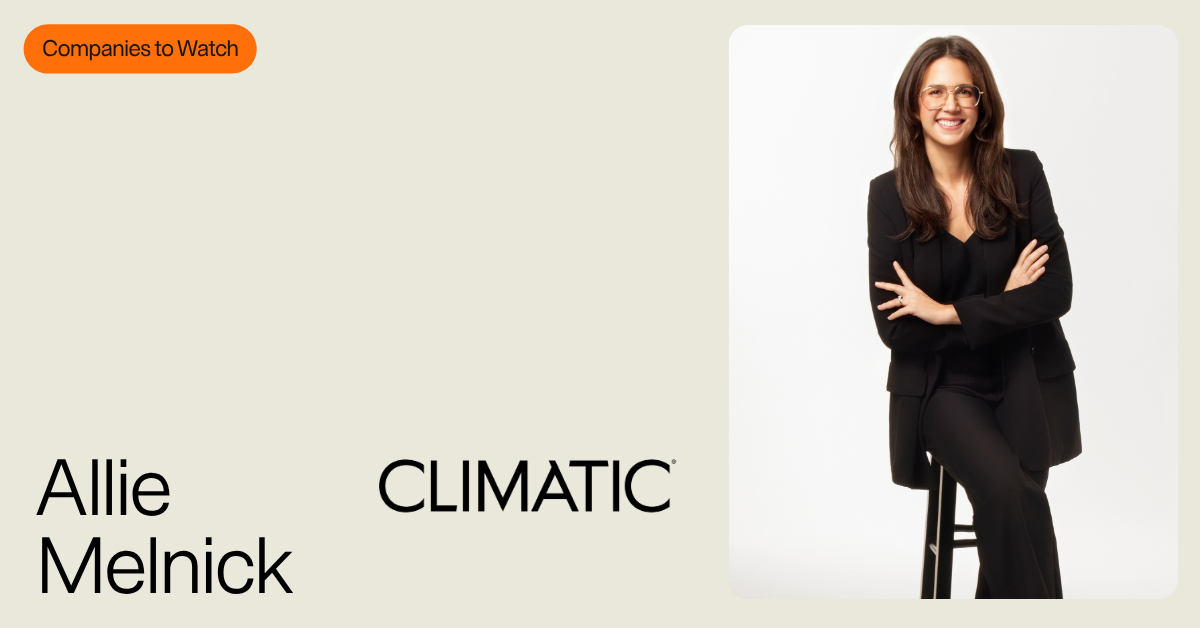
“New York is this rare mix of operators, creatives, athletes, and culture all in one place. It just feels like the best place to build, you’re constantly learning, and constantly inspired by the people around you.”
What does your company do? What problem is it working to solve?
People take over 20,000 breaths a day, yet lung health is missing from daily wellness routines. Meanwhile, 99% of the global population lives in areas that fail to meet air quality standards (WHO, 2022).
Lung care today is reactive, addressed in moments of illness or extreme exposure, despite constant, everyday exposure to pollution, smoke, allergens, and indoor air.
Climatic exists to make lung health a daily habit, supporting the body’s natural ability to clear what we breathe in, so people can breathe easier and perform better.
A question we like to ask every founder — why New York?
New York is this rare mix of operators, creatives, athletes, and culture all in one place. It just feels like the best place to build, you’re constantly learning, and constantly inspired by the people around you.
For Climatic, it’s also where our early adopter lives. People who are active, performance-driven, and dealing with real-world environments every day. We can build and test in the same context people are actually using the product.
And honestly, the city just pushes you. There’s a pace and a standard here that makes you better as a founder.
What’s been the hardest part of building a new category around daily inhaled wellness?
The biggest challenge is shifting the conversation from reactive care to something people think about as part of their everyday health routine, akin to hydration or recovery.
Respiratory health is still mostly framed around illness or extreme events, while other parts of performance, like training, nutrition, sleep, and recovery, are already part of people’s routines.
Building this category means helping people see that your lungs aren’t just something you think about when something goes wrong. They’re foundational to how you feel and perform every day.
So a big part of the work is making that connection real, taking what we already know about everyday exposure and respiratory strain, and turning it into a clear, practical habit. Then delivering something that fits naturally into someone’s routine, not as a nice-to-have, but as something essential.
Big picture, where do you hope Climatic is in 3-5 years?
In 3-5 years, we want lung health to be a mainstream daily habit, something people think about the same way they think about sleep, hydration, or recovery.
We’re starting there intentionally. Climatic begins with the first daily lung health system, designed for modern environmental exposure like pollution, smoke, and allergens, and for performance. The goal is to make supporting your lungs feel simple, routine, and essential.
Beyond that, we’re building Climatic into a next-generation health platform centered on what we think of as climate-adaptive wellness. As the environments people live in continue to change, there’s a growing need for tools that help people adapt and stay resilient, not just react when something goes wrong.
Where are you seeing real progress for female founders right now, and how can the ecosystem build on what’s already working?
I do think there’s been progress, especially in the strength of the networks and mentors around female founders. There are more women writing checks, including groups like BBG Ventures, who backed Climatic, more operators becoming founders, and more visible examples of women building meaningful, scaled companies. That all matters.
That said, there’s still a real gap in fundraising, and female founders remain underrepresented.
Personally, I get excited anytime someone takes the leap. I feel a real responsibility to support other women on that journey in any way I can, and to actively build those connections.
As a founder, what’s your self-care routine to recharge while still being heads down building a company?
Honestly, it’s the simple things that keep me steady. Walking is a big one, just getting outside and clearing my head, even for 20 minutes, makes a real difference.
I try to be intentional about disconnecting when I can, especially spending time with my kids and family. There’s something really grounding about stepping into their world, whether it’s reading a book or coloring together.
I’m definitely not perfect about it, but I’ve learned that taking care of your energy is just as important as managing your time when you’re building something.
Time for some New York-themed rapid fire questions — where is your favorite place to grab a slice of pizza in New York?
Tough one. I live in Brooklyn, so my go-to is a local spot, Antonio’s Pizza. And controversially, I’m a sucker for deep dish, so Emmett’s is always in the rotation too.
Where is your favorite coffee shop in New York?
I don’t drink coffee, but Ciao, Gloria in Brooklyn is a favorite. Great matcha and the pastries are worth it.
Do you have a favorite spot to escape the noise of the city?
I love to fully disconnect and get offline when I can. We have a small spot in Maine that we go to whenever possible, it’s quiet, simple, and a total reset.
What’s one piece of advice — that you’ve shared or was shared with you — on building a startup in New York City?
One piece of advice that stuck with me is to build in the real world, not in a bubble. New York gives you that every day, you’re constantly getting feedback, whether you ask for it or not. The key is to stay close to your customer and use that to iterate quickly.
Housewarming
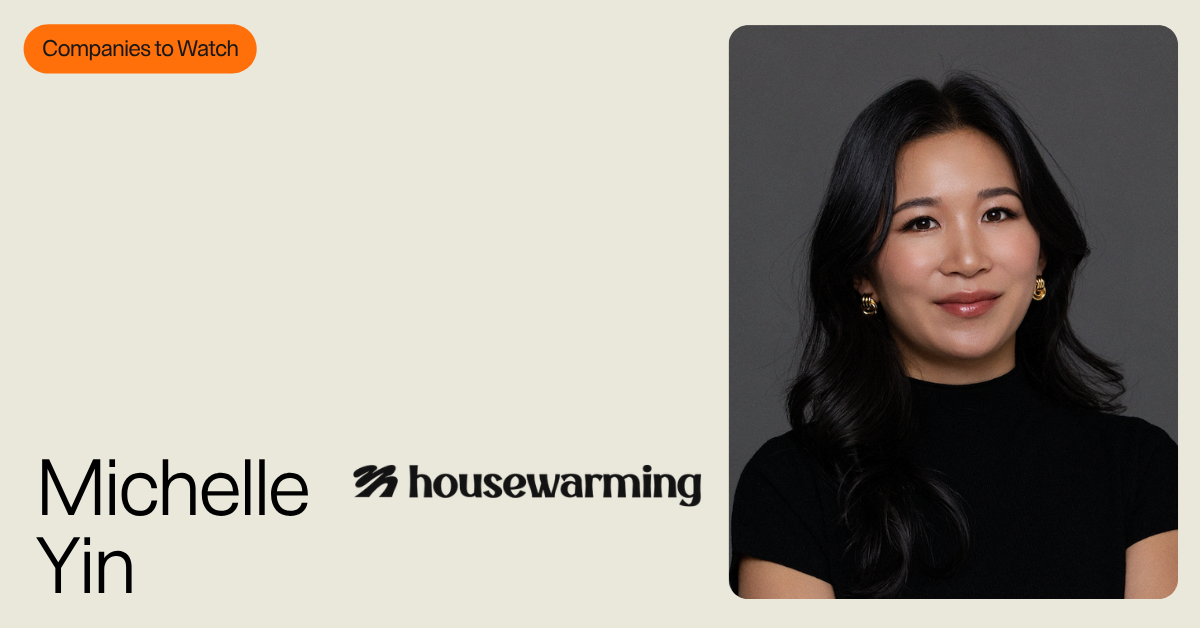
“There's nowhere better to build a social app meant to facilitate connection with friends. The city's spontaneity and culture are literally baked into the DNA of Housewarming.”
What does your company do? What problem is it working to solve?
When's the last time you opened social media and actually saw what your friends are up to? We spend hours scrolling content from strangers (70% of it now AI-generated) with no idea what's going on with the people we care about. Housewarming is a social app for just your close friends. You share casual moments from everyday life and actually see what your friends are doing. This all powers Atlas, the world's first social AI. Every AI you've ever used knows about you. Atlas is the first that knows about your friends, and its entire job is to amplify those connections.
A question we like to ask every founder — why New York?
New York is the most social city in the world. It’s the only place where you'll bump into someone you know every time you step outside. There's nowhere better to build a social app meant to facilitate connection with friends. The city's spontaneity and culture are literally baked into the DNA of Housewarming.
Housewarming emphasizes “no ads or algorithms.” How do you think about building a product people love without relying on the usual engagement levers?
It’s simple. People love their friends and want to see more of them. No other platform focuses solely on showing you the people you love and care about right now. That is the engagement lever.
You previously worked as a software engineer at Facebook. What made you decide to take the leap and start your own company?
I loved building consumer apps that touched billions of people at Facebook. But I reached a point where the biggest impact I could have meant pursuing new opportunities on my own terms and chasing things I felt personally inspired by. When I left five years ago, the first app I built, Discz, immediately blew up and hit No. 1 in the music app store charts worldwide. That gave me the conviction and comfort to keep going.
What would make you feel like Housewarming is succeeding — daily active use, depth of friendships, retention of friend groups, or something less conventional than typical social metrics?
Success for us is groups of friends sharing their everyday lives and feeling genuinely connected and not just in the big milestones, but in the day to day moments.
As a founder, what’s your self-care routine to recharge while still being heads down building a company?
As a founder, I think the company is often a reflection of how inspired, energized, and resourced you are so I invest a lot in self-care routines that help me stay grounded amidst the chaos and stress of building a company. I'm a regular at Othership in Williamsburg, and I have a nightly routine that includes a red light mask and magnesium to make sure I get good sleep.
Time for some New York-themed rapid fire questions — where is your favorite place to grab a slice of pizza in New York?
L’industrie. The burrata slice with hot honey can’t be beat.
Where is your favorite coffee shop in New York?
Rhythm Zero. The coconut americana is the most unique and delicious coffee I’ve ever tasted, and the vibes, aesthetic, and people-watching are unmatched.
Do you have a favorite spot to escape the noise of the city?
Greenpoint. It's the only place that feels like a piece of zen amongst the chaos of the city. I love strolling through the quiet neighborhood, walking the waterfront, and grabbing a pastry at Radio Bakery.
What’s one piece of advice — that you’ve shared or was shared with you — on building a startup in New York City?
Take advantage of being in New York City! When I lived in SF, meetups felt like a huge effort even just the fact that you had to get in your car and drive somewhere feels like a lot. In NYC, everything is just a subway stop away. The city is lively, and it's so easy to meet investors, potential team members, or anyone in person. Take advantage of that. Say yes.
VOW
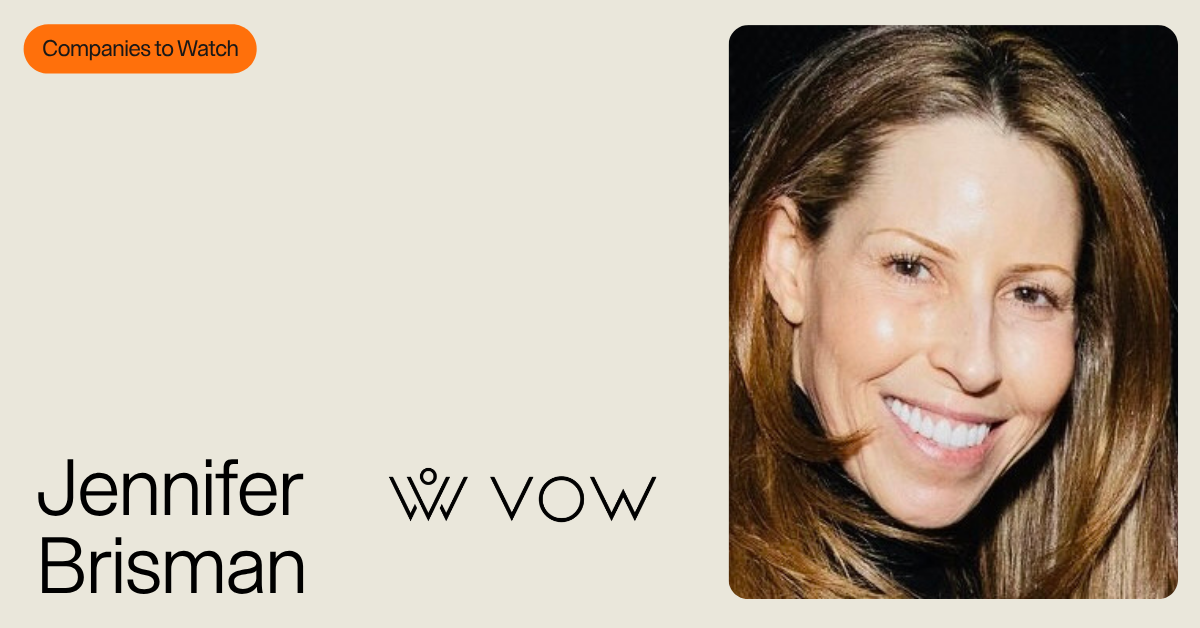
“Building VOW anywhere else would have meant building it in the abstract. Here we built it in the room.”
What does your company do? What problem is it working to solve?
VOW is the first B2B2VIP technology for premium live experiences — giving live events a brain, event teams superpowers, and guests a seamless, real-time experience at scale. Think award shows, the Olympics, Formula One hospitality, Saturday Night Live.
The problem we solve is simple: the most important experiences in the world are still run on spreadsheets, disconnected tools and stakeholders, and repetitive tasks. When something goes wrong at a 50,000-person event, there's no system of record that informs all of the key players at exactly the right time. VOW is that system.
A question we like to ask every founder — why New York?
Because New York is the Live Experiences capital of the world. The UN. SNL. The Tony Awards. The U.S. Open. The city doesn't just host events — it defines what high-stakes live experiences look like. Building VOW anywhere else would have meant building it in the abstract. Here we built it in the room.
You came to this as a longtime event operator. How much of VOW was shaped by pain points you personally experienced in the field?
Almost entirely. I spent years running events and watching critical information live in someone’s head or a spreadsheet that only one person could access. The guest who shouldn’t get in. The sponsor whose allocation was wrong. The moment something breaks and there is no infrastructure to catch it. I built VOW because I lived the problem on the floor, not in a boardroom.
As VOW grows, do you see the company becoming infrastructure for the whole live-experience economy, or staying focused on a specific kind of high-touch event?
Infrastructure for the whole economy — but we'll get there through high-touch. The relationships, the trust, and the data asset we're building at the premium level become the foundation for everything that follows. You don't build infrastructure by starting broad. You build it by going deep where the stakes are highest, and expanding from there.
Where are you seeing real progress for female founders right now, and how can the ecosystem build on what’s already working?
The progress I see is in specificity — women building for markets they actually know, with customers who trust them because of that knowledge. What the ecosystem can do is stop treating female founders as a category and start treating them as operators. The best thing anyone did for me was ask hard questions about the business, not softer ones because I'm a woman.
As a founder, what’s your self-care routine to recharge while still being heads down building a company?
I protect my mornings. Before the world starts, I have time that belongs to me — not the company or my inbox. Working out, quiet + coffee in bed, whatever resets my mind. Building a company is a long game and you cannot sprint the whole way. The founders who figure this out early, benefit for years to come. I also recharge watching my daughters soar on the field.
Time for some New York-themed rapid fire questions — where is your favorite place to grab a slice of pizza in New York?
Patsy’s!
Where is your favorite coffee shop in New York?
The Nespresso studio on the UES!
Do you have a favorite spot to escape the noise of the city?
The Oak Bar at The Plaza. If you can get in / sneak in for lunch and just hide away on the upper level, it’s a hidden place to eat, think and work.
What’s one piece of advice — that you’ve shared or was shared with you — on building a startup in New York City?
Join an established accelerator or a workspace packed with other founders. Do it early. The network you build there — the ability to phone a friend who has been in the room you're about to walk into — is worth more than almost any other resource available to you. New York has some of the best in the world. Use them. Being surrounded by builders who are living the same things you are, at the same moment, changes how fast you move and how well you think.