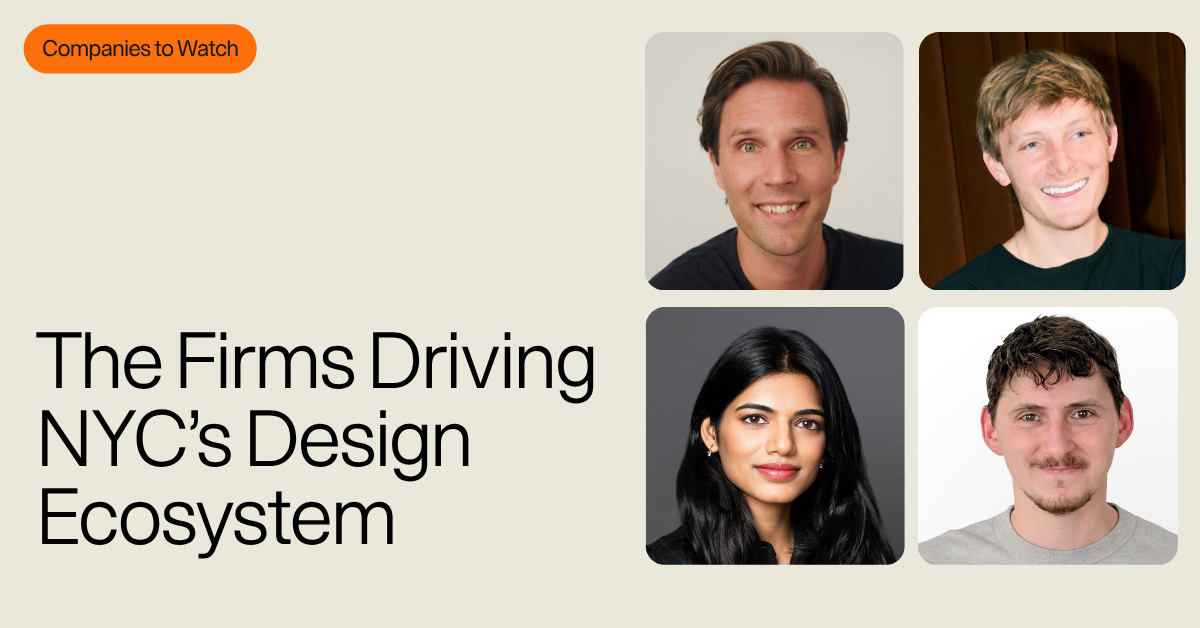
Companies to Watch: The Firms Driving NYC’s Design Ecosystem
We’re right in the middle of the NYCxDesign Festival (May 14-20), New York’s largest annual design celebration, and the timing couldn’t be better, as New York’s design ecosystem feels especially innovative and interconnected.
The festival features more than 250 events across 10 design disciplines, underscoring both the breadth of the sector and the city’s role as a global design capital.
Across architecture, interiors, product, branding, creative tools, and the growing overlap between design and technology, NYC companies are shaping how things look and how people live, work, build, and experience the city.
67% of designers now use AI daily, reducing design production time by 58%.
$12.4 billion was invested into creative AI startups in 2025.
This energy is especially palpable in neighborhoods where design firms are clustering and collaborating.
Dumbo has become one of the city’s biggest design hubs, home to more than 160 architecture and design firms, with nearly 80 design, architecture, and real estate companies concentrated in just three loft buildings owned by Two Trees.
This week’s NYC AI Demos, hosted by Tech:NYC, Pensar, and Two Trees and themed around design, reflects that same energy, featuring live demos from leading design firms like Figma, Air, The Browser Company, Flora, Cartwheel, and Contra Labs.
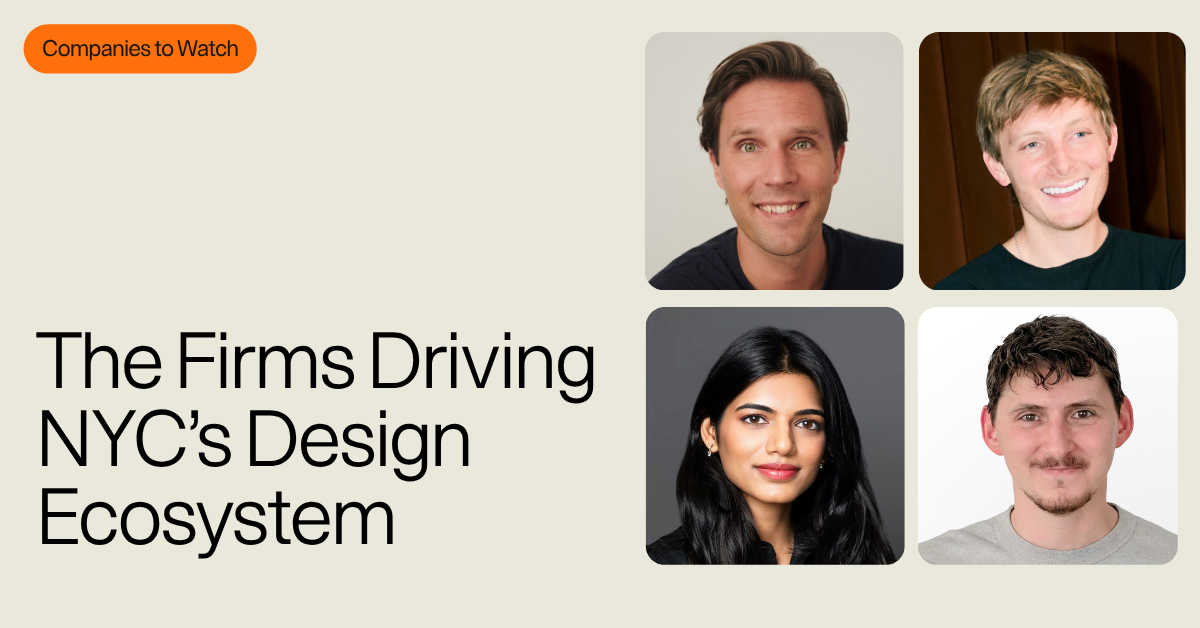
Against these backdrops, we caught up with four builders shaping the future of design and helping define the city’s next chapter.
For this edition of Companies to Watch, meet:
Jonathan Jarvis, founder, Cartwheel
Andy McCune, founder, Cosmos
Vita Mallela, founder, Flock AI
Sam Bokher, founder, What IF
Cartwheel
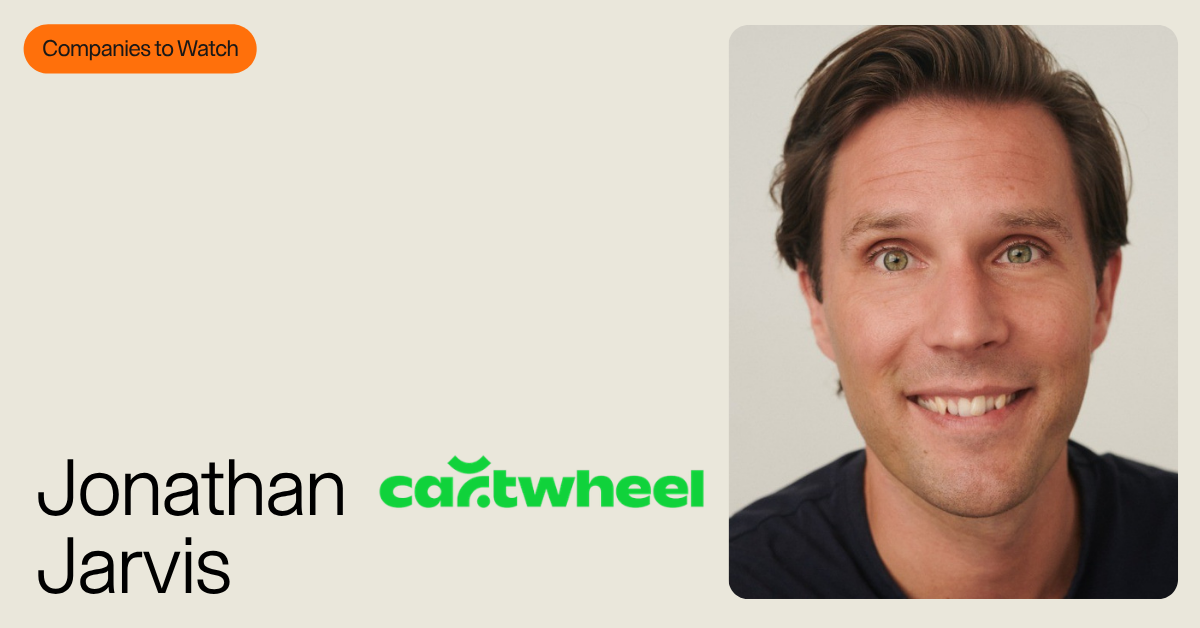
“New York is the center of the universe.”
What does your company do? What problem is it working to solve?Weteach AI how to move, so game designers, roboticists, and animators can work 100x faster and make much, much bigger projects.
A question we like to ask every founder — why New York?
New York is the center of the universe.
Animation tools are often powerful but technically intimidating. How do you design for professional control without making the product feel inaccessible to newer creators?
Legacy animation tools are designed to make frames and seconds worth of animation. But, modern distribution — social media, stream video, live service games — demand MUCH more. Cartwheel is the first tool designed for motion at scale. We help designers make minutes, hours, even days worth of motion rapidly and with creative control.
You’ve said the name Cartwheel came from an early prototype where a stick figure successfully performed a cartwheel. Why did that moment stick with you, and what did it reveal about the kind of creative tool you wanted to build?
The first motion I got our original prototype model to do successfully was a cartwheel. I typed “do a cartwheel” and a little stick figure did it. While it might seem simple and silly today, 3 years ago this was an incredible feat and I jumped out of my seat and did a cartwheel myself. I just knew it was going to be the name of the company in that moment. A cartwheel is all about motion. It’s fun. It’s a universal movement. We also sometimes say we’re tuning animation upside down!
Cartwheel’s work spans entertainment, advertising, games, and even robotics. Where do you think generative motion will have its biggest cultural impact first — storytelling, design, simulation, everyday creative expression, or something else?
Gaming is where we’re seeing the most early adoption. Modern games are among the most complex stories being told and often need to be entirely created in 3D. We have many large game studio customers using Cartwheel for game play animations, cinematic cut scenes and marketing.
Another big impact generative motion will have is the emergence of the small animation studio. A few friends can get together and make a feature length story, or a series, or their own advertising or production studio. Soon, an individual will be able to make their own movie. I’m excited to see these singularly creative stories (or at least, primarily driven by a singular creative vision, I bet there will be others who help edit, promote, collaborate, etc.) — like we’ve seen with written novels for decades.
As a founder, what’s your self-care routine to recharge while still being heads down building a company?
Running, boxing, movies and playing with my daughter. I also like tummo breathing.
Time for some New York-themed rapid fire questions — where is your favorite place to grab a slice of pizza in New York?
Prince Street Pizza.
Where is your favorite coffee shop in New York?
Laughing Man on Duane Street.
Do you have a favorite spot to escape the noise of the city?
Woodstock, NY.
What’s one piece of advice — that you’ve shared or was shared with you — on building a startup in New York City?
Every industry is here, take advantage of the intersections.
Cosmos
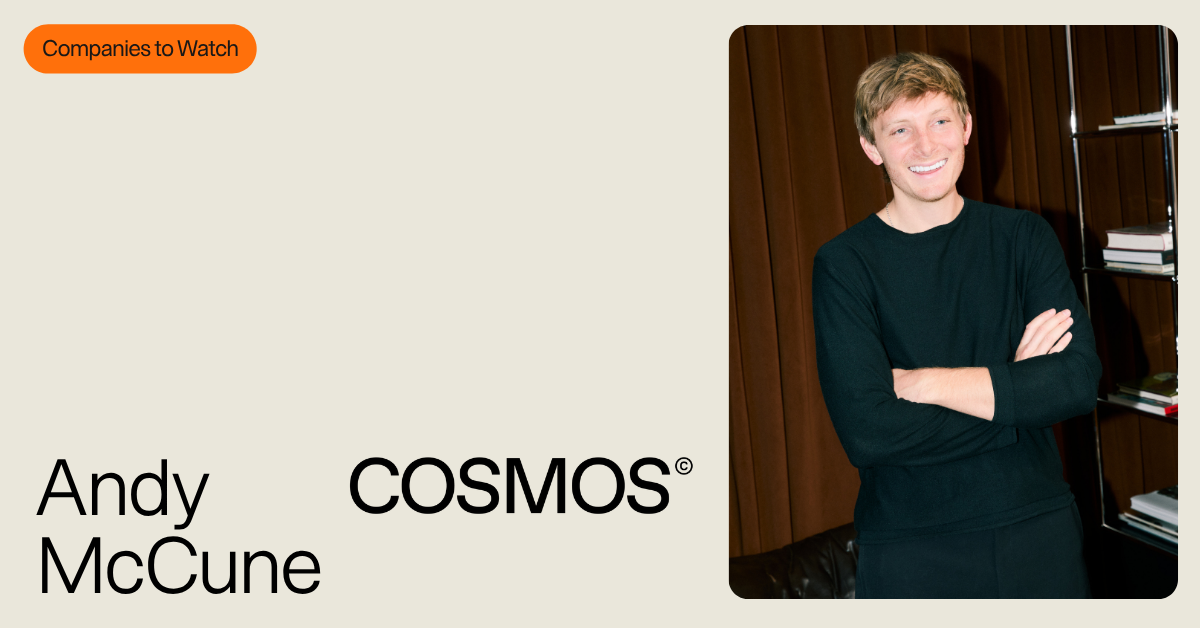
“I’ve been in New York for over a decade, and I still think it’s the best place in the world to build a consumer company.”
What does your company do? What problem is it working to solve?
Cosmos is building a new home for visual culture.
Today, the internet is overflowing with content, but it’s harder than ever to find what’s actually good, understand where it came from, or build a point of view around it. Cosmos helps people find, save, and organize the images, ideas, references, and worlds that shape them.
We’re building the taste layer of the internet. A place where discovery feels human again, and every save becomes part of a living map of who you are and what you’re becoming.
A question we like to ask every founder — why New York?
I’ve been in New York for over a decade, and I still think it’s the best place in the world to build a consumer company.
New York is a constant collision. Cultures, styles, disciplines, industries, perspectives. That creates an energy that’s hard to find anywhere else. You feel what culture is responding to in real time.
For consumer founders, there’s no better place to build.
What kinds of designers was Cosmos built for first — interior designers, graphic designers, architects, fashion people, creative directors, etc. — and how has that audience surprised you?
From the earliest waitlist, we saw interior designers, architects, graphic designers, fashion people, creative directors, artists, and photographers all using it. That was important because it meant Cosmos wasn’t born from one narrow definition of creativity, but from a wide range of creative disciplines.
The audience has surprised me in how fluidly they move across disciplines. Someone might come for interiors and end up saving fashion, architecture, product design, and film stills. That’s where it gets interesting.
A lot of design discovery starts with intuition: a color, a texture, a mood. How do you translate that into software?
You have to build a system that can actually understand visual language, not just keywords.
Cosmos lets people search by color, upload an image as a reference, and layer a text query on top of it. So instead of searching in a rigid way, you can start with a mood, an object, a material, or a feeling and move from there.
Inspiration rarely starts with a clean search query. It usually starts with something much more intuitive — a thought, a reference, a feeling.
What has changed about your own creative process since building Cosmos?
Cosmos has broken my idea of perfectionism. I used to chase the fully polished thing — the work that had reached its final form. Building Cosmos has made me see creative work as much more alive than that. It’s always moving, always changing, and never fully finished.
That’s changed how I think about product, design, and creativity in general. The work is not a fixed destination. It’s a living, breathing thing.
As a founder, what’s your self-care routine to recharge while still being heads down building a company?
I try to get out of the city most weekends and touch grass, literally.
Being a founder is all-consuming, so I need those moments in nature where my nervous system can reset and I can come back down to earth. Even if it’s just for a day, it helps me return with more clarity.
Time for some New York-themed rapid fire questions — where is your favorite place to grab a slice of pizza in New York?
If I ate pizza, it would probably be L’Industrie.
Where is your favorite coffee shop in New York?
I have to say, it’s La Cabra.
Do you have a favorite spot to escape the noise of the city?
I recently moved to Cobble Hill, which in itself has felt like a little escape from the city. But my latest favorite discovery is Brooklyn Bridge Park Pier 6.
What’s one piece of advice — that you’ve shared or was shared with you — on building a startup in New York City?
Stay close to culture. In New York, you can feel the way the zeitgeist is moving. The advice I’d give is to tune into that. Pay attention to restaurants, stores, neighborhoods, music, fashion, art, and the people around you. That’s often where the future shows up first.
Flock AI
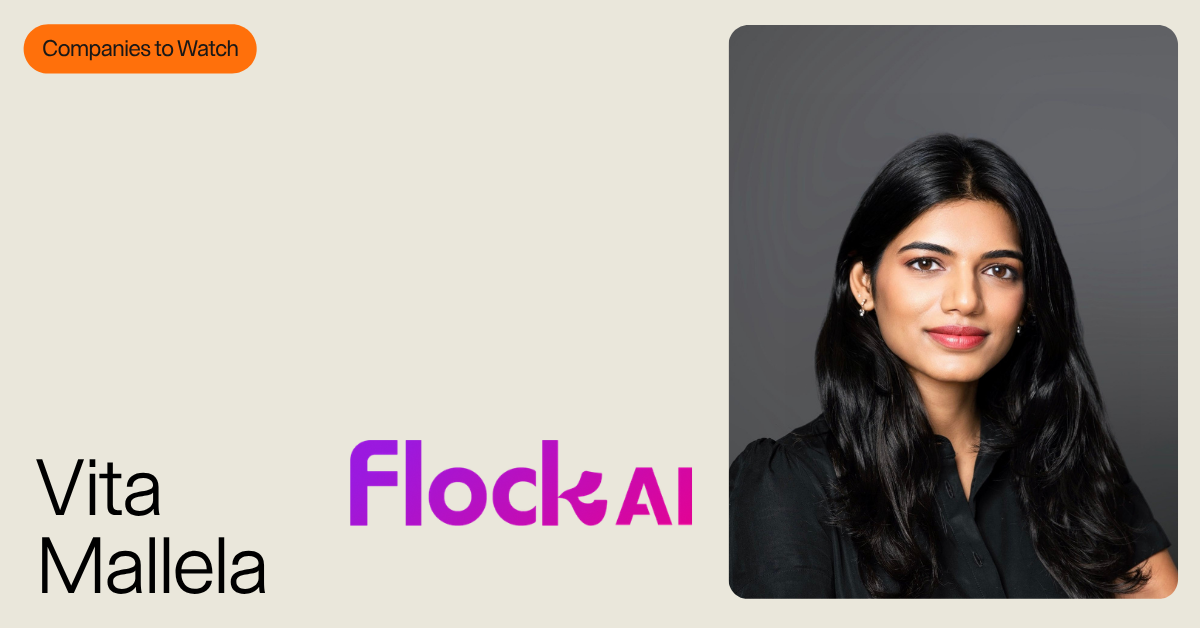
“NYC is where fashion and culture set the pace, and staying close to that is how we understand what our clients create and what their customers respond to.”
What does your company do? What problem is it working to solve?
Flock AI is the AI-powered visual commerce platform that creates, distributes, and optimizes content across every touchpoint between a retail brand and its customers. Flock AI powers product and on-model e-commerce content, immersive personalized try-on experiences, and social and marketing content tailored for every platform and audience.
Flock AI is servicing enterprise brands who simply cannot create the amount of content they need with traditional photo shoots but insist on the highest quality imagery for luxury product and lifestyle ecommerce and marketing content.
Brands once relied on a single photoshoot to produce static assets stretched thin across every channel. Now, Flock AI generates purpose-built content for each destination, unlocking one-to-one commerce capabilities. The platform integrates natively with leading e-commerce stacks, featuring a visual analytics layer that connects content creation and optimization directly to conversion performance.
A question we like to ask every founder — why New York?
New York City is where the global fashion industry does business. It's home to the highest concentration of enterprise apparel brands in the world, many of whom are already our customers. For Flock to build for them, we have to be where they are. NYC is where fashion and culture set the pace, and staying close to that is how we understand what our clients create and what their customers respond to.
How do you think Flock AI can help smaller brands compete visually with much larger retailers?
The economics of content used to favor scale. Large retailers could spend millions a year on photoshoots, while smaller brands stretched a single $100k shoot across every channel and still came up short on product views, model diversity, and platform-specific imagery. AI flattens that gap.
With Flock, a smaller brand can produce the same volume and quality of content as a major retailer, with its own creative DNA intact. Our proprietary taste interpretation layer, product accuracy algorithms, and styling data translate brand guidelines into production-ready content. What wins now is taste and creative vision, not solely the budget to execute it.
What’s one misconception people have about AI-generated product imagery that you wish you could correct?
Early AI imagery couldn’t escape the uncanny valley. Six fingers, backwards feet, results that erased brand identity. The misconception is that’s still the ceiling, and that AI imagery means brand compromise. It doesn’t. Flock ingests a brand’s full aesthetic taxonomy: styling, expression, composition, color. We preserve that creative DNA as content scales infinitely. The output isn’t a generic AI render of your product; it’s content that looks like it came from your art director’s shoot, at a fraction of the cost and a thousand times the volume.
What’s next for Flock AI? What are you most excited about building over the next year?
We’re still growing our visual imagery business, but what I’m most excited about is Flock Mirror, our immersive virtual try-on product. VTO has been the holy grail of e-commerce since the first retail site launched. It has the potential to reduce returns and fundamentally change how customers shop online. Beyond brand deployments, we’ve been bringing it to consumers directly around cultural moments like the MET Gala and Cannes, letting users see themselves on the red carpet, or in their own living room. That collision of product, fashion, and culture is where Flock comes alive.
As a founder, what’s your self-care routine to recharge while still being heads down building a company?
I’ve stopped pretending balance exists in year three of building a company. What works is being ruthless about making time for the things that actually recharge me. Reading, a good workout class, shopping, trying new restaurants around the city with friends. Recharging isn’t about protecting empty pockets in your calendar. It's about staying connected to what you’re passionate about outside the company.
Time for some New York-themed rapid fire questions — where is your favorite place to grab a slice of pizza in New York?
Mama’s Too! Worth the line, and for people who like more experimental flavors, they’ll always have something, including a Cacio e Pepe slice.
Where is your favorite coffee shop in New York?
Jung Lee NY Floral Cafe. The floral and event design studio has a cafe tucked inside, so you’re drinking coffee surrounded by some of the most stunning arrangements in the city.
Do you have a favorite spot to escape the noise of the city?
Virginia. My parents are there, and so are the farms, the country drives, and the parks you can lose a whole afternoon in.
What’s one piece of advice - that you’ve shared or was shared with you — on building a startup in New York City?
Show up. New York rewards founders who actually walk into the room, at industry dinners, at retailers’ offices, at the events your customers attend. A coffee on Madison Avenue compounds in ways Zoom never will.
What IF
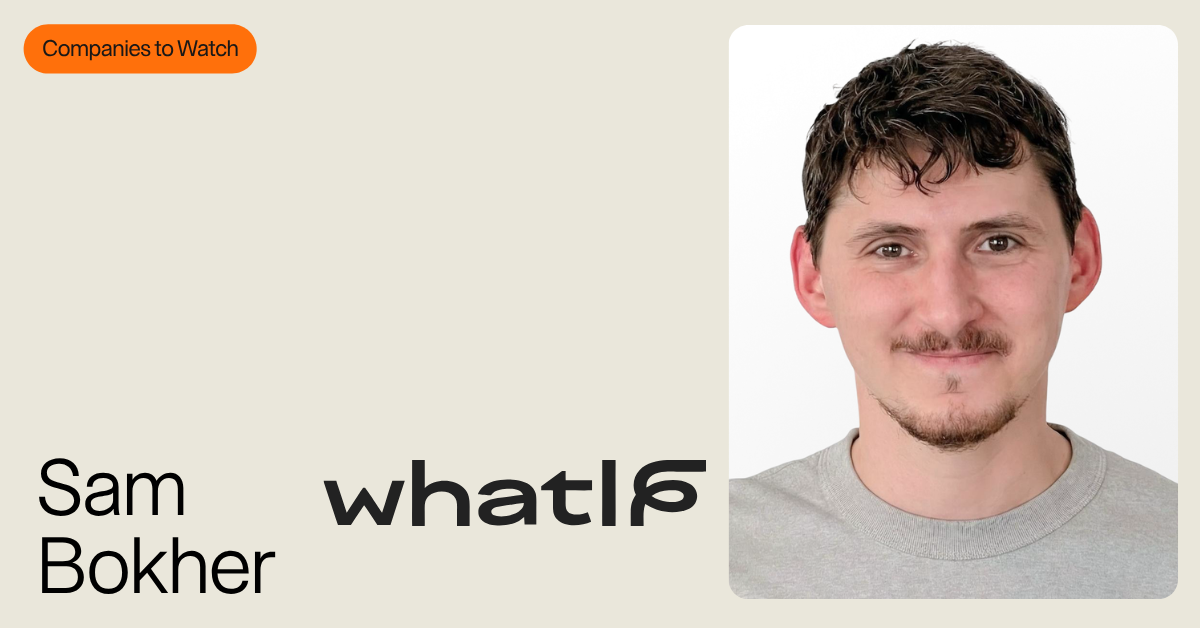
“New York has everything a creative person needs to stay inspired — and not at the expense of tech.”
What does your company do? What problem is it working to solve?
What IF lets marketers, creatives, and founders design, compare, and publish infinite versions of a site — all on one canvas. Most tools give you one preview to overwrite. We keep every version, so it’s easy to compare side by side or roll back. Plus we give you flagship coding, image, and video models and agentic workflows at scale.
For the agency pitching three concepts Monday. The salesperson needing a landing page before a trade show. The founder who needed a site yesterday. When AI can build anything, the hard part isn’t making — it’s choosing the right option.
A question we like to ask every founder — why New York?
I love this city. New York has everything a creative person needs to stay inspired — and not at the expense of tech. There are plenty of founders and operators here, and our clients are here too. For a product built for creatives, there’s nowhere else I’d rather build it.
The company is obviously built around the phrase “what if.” What does that question mean to you as a design principle, not just a company name?
The name came out of how I actually work. “What if we tried it this way?” is how I start almost every conversation with my team, and it’s literally what I type into Cursor when I’m stuck on a creative call. It’s the moment before a decision — when everything is still open. That’s the moment our product is built for. We help you put your “what ifs” side by side, fast, so you can actually see them before you commit.
Your product is built around spinning up lightweight websites quickly. What does “lightweight” mean to you — faster to build, easier to change, more disposable, or something else?
Mostly faster to build and easier to change. Lightweight literally means a few pages, nothing heavy under the hood. It’s built for the creative phase: pitching a concept, shipping a launch page, running a demo. You should feel fine spinning up a new version and trying a different direction. If you need a complex CMS or hundreds of pages, that’s not us — use Webflow. We’re the part of the process where you’re still deciding what the site should be.
If What IF succeeds, how do you think it changes the way startups, product teams, or creators test new ideas?
It changes the ratio of ideas you actually get to test. In the past, you might have a dozen ideas but only the resources to prototype two — the rest stayed in your head. If we succeed, startups, product teams, and creators stop pre-filtering their ideas based on what they have time to build. You preview all of them, side by side, then take the ones that actually work and polish them. The creative direction still comes from you. We just remove the bottleneck between having an idea and seeing it.
As a founder, what’s your self-care routine to recharge while still being heads down building a company?
It might sound sad, but I genuinely love working. Creative tooling is a problem I actually enjoy being in, so the work itself isn’t what I need to recharge from. That said, I know I need to not overexert myself — so the basics are gym or some kind of exercise every day, and the occasional slice of cake. But honestly, the thing that helps me most is spending time with friends.
Time for some New York-themed rapid fire questions — where is your favorite place to grab a slice of pizza in New York?
Joe’s Pizza. I know it’s basic. L’Industrie is good but I’m not waiting in line.
Where is your favorite coffee shop in New York?
Alita Cafe by Grand stop in East Williamsburg. I mainly drink drip coffee and theirs is just the right kind.
Do you have a favorite spot to escape the noise of the city?
Dia Beacon, Storm King, Fire Island.
What’s one piece of advice — that you’ve shared or was shared with you — on building a startup in New York City?
Get out there. Don't just sit in your office all day — meet clients in person, go to events (shout out to NYC Tech Demos), push yourself and do a hackathon. New York is the best city in the world to build in, but only if you actually use it. Your next customer, next hire, and next investor are all reachable on foot. Have the coffee, go to the dinner, walk to the event. The serendipity is the entire point.