Companies to Watch: NYC Fintech Founders Shaping the Future of Finance
New York Fintech Week kicks off next week, and it arrives at a moment when the city’s fintech ecosystem is looking a lot like core economic infrastructure.
From payments and spend management to market infrastructure, crypto, lending, and embedded finance, NYC fintech companies are reshaping how money moves, how businesses operate, and how financial markets are accessed.
New York fintech companies raised more than $7.8 billion across 372 VC deals in 2025, following $7.2 billion across 401 deals in 2024, according to PitchBook data.
And the sector has already logged more than $5.2 billion across 113 deals this year alone.
Fintech in New York has become something of a melting pot (of gold), with enterprise software, capital markets infrastructure, and new financial products all growing side by side in the same city.
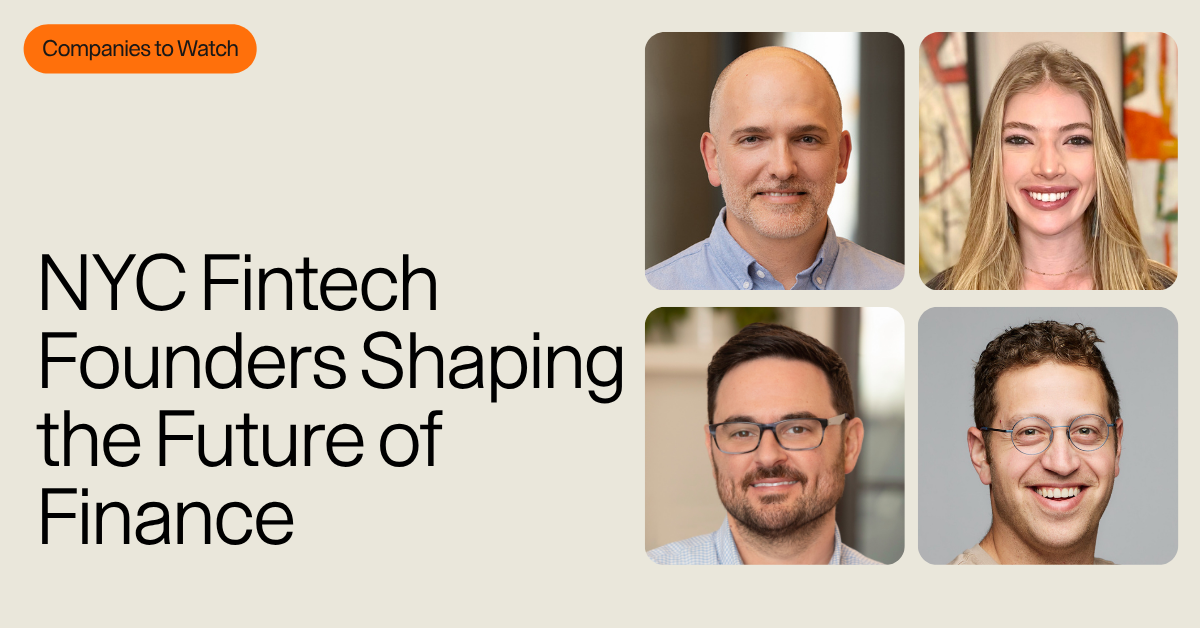
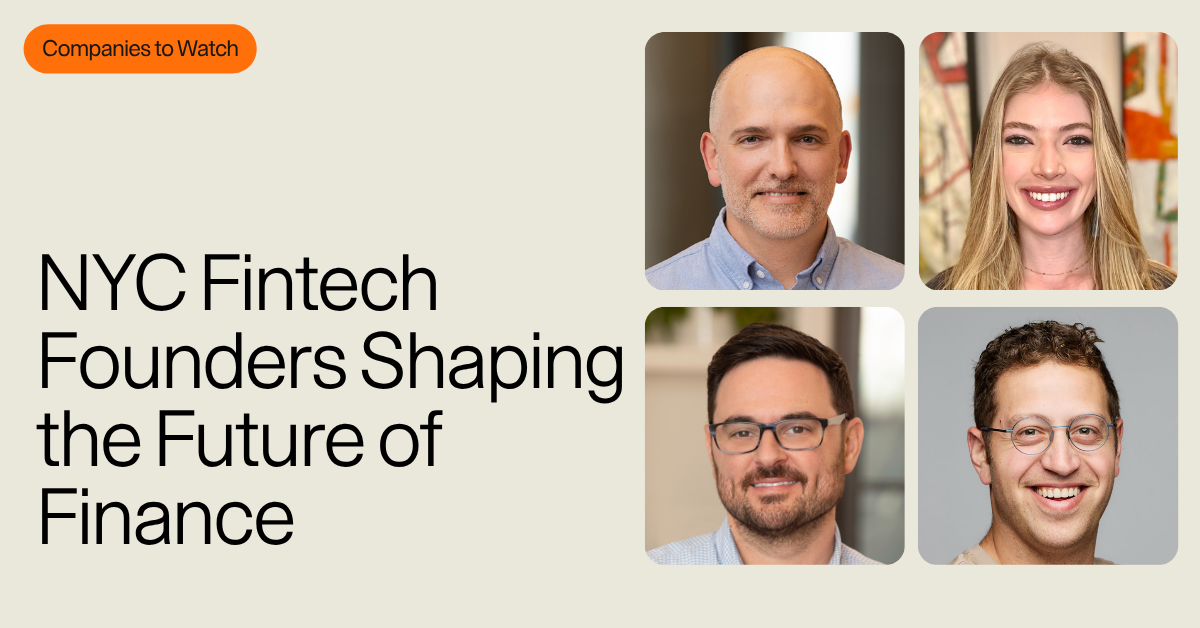
As fintech founders, investors, and operators gather across the city next week, we caught up with four builders shaping the future of finance to find out where the sector goes next.
For this edition of Companies to Watch, meet:
Nick Gavronsky, founder, Aboon
Frida Leibowitz, founder, Debbie
Aaron Marks, founder, Rhythmic
Sam Broner, founder, The Better Money Company
Aboon
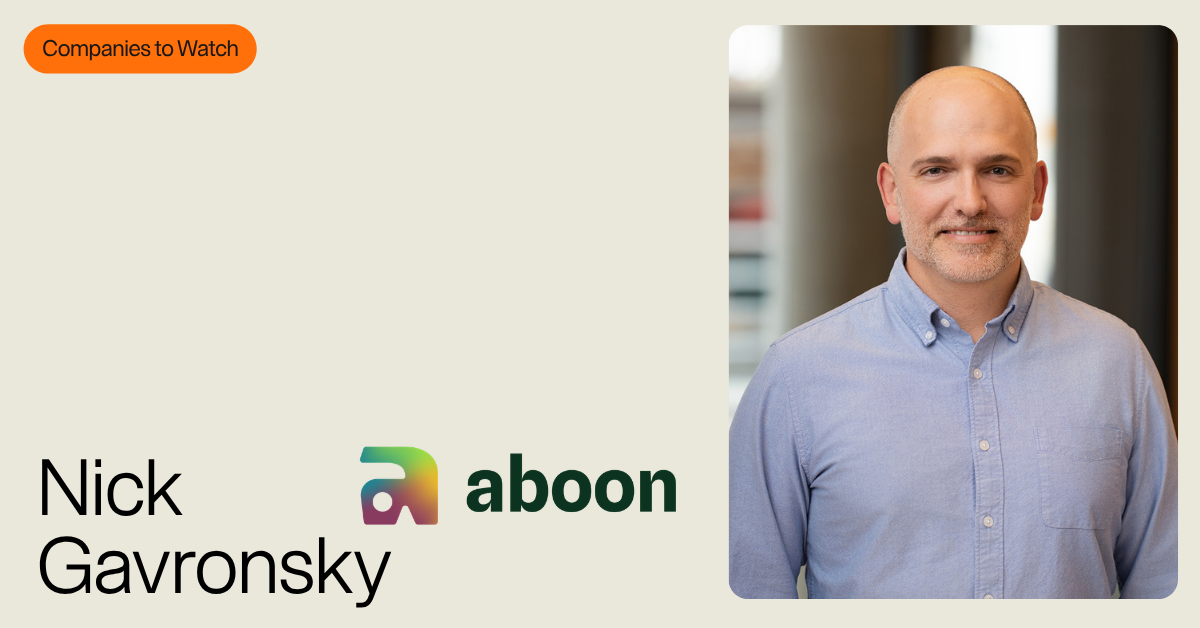
“For what we're building, a company at the intersection of fintech, wealth management, and enterprise partnerships, there’s no better place [than New York].”
What does your company do? What problem is it working to solve?
Aboon is an AI-powered digital TPA, a Third Party Administrator, that makes it fast and easy for financial advisors to design, launch, and manage 401(k) plans for their business owner clients.
The problem: Nearly half of small businesses still don’t offer a workplace retirement plan, and the tools advisors rely on are slow, manual, and stuck in the past. Setting up a 401(k) can take 10 to 12 weeks of emails, PDFs, and back-and-forth. Aboon compresses that to a day or less, combining automated workflows with real human expertise along with deep recordkeeper partnerships.
A question we like to ask every founder — why New York?
It’s where our team has been based for a long time as part of the startup community. And for what we’re building, a company at the intersection of fintech, wealth management, and enterprise partnerships, there’s no better place. New York gives us proximity to the financial services industry: the wirehouses, the institutional relationships, the talent. It’s a grind, but it sharpens you. When you’re building for advisors and business owners across the country, being in the city that never stops feels right. There’s also something about the density of New York that creates serendipity. The right conversation at the right moment happens here more than anywhere else.
You serve both first-time advisors and specialists. How do you design one product that feels simple enough for newcomers but powerful enough for experts?
We design around the job to be done, not the user’s experience level. For a first-time advisor, Aboon guides them through every step: proposals in minutes, a dedicated Plan Consultant in their corner, plain-language plan design. For a specialist, those same tools are fast, flexible, and configurable.
The key insight: a significant amount of our plan sales come from advisors who've never sold a plan before. That's proof the defaults are working. Experts don't need hand-holding removed. They just need friction removed. Same platform, same engine, different comfort levels with the throttle.
What metric tells you Aboon is truly winning: time saved, plans launched, advisor adoption, employer satisfaction, or something else?
First-time plan sellers. When a wealth advisor who’s never sold a 401(k) closes their first plan through Aboon, then goes back to prospect their entire book of business, that’s the flywheel. It means we didn’t just save time; we unlocked a behavior. That metric, advisors converting from zero to active, tells us we’re not just serving the market that exists. We're expanding it.
What is something people outside the industry misunderstand about how hard it is to modernize retirement-plan administration?
People assume it’s a software problem. It’s not. It’s a regulatory, operational, and trust problem wrapped in software. Every plan touches ERISA compliance, IRS testing, recordkeeper integrations, DOL rules, employer payroll data, and participant communications. Each piece has its own legacy workflow, often baked into legacy, proprietary systems. You can’t just build a clean UI and call it modern. You have to digitize the actual work: intake, testing, plan amendments, compliance alerts, while keeping humans in the loop. The surface is simple. The infrastructure underneath is genuinely hard.
As a founder, what’s your self-care routine to recharge while still being heads down building a company?
I don't have a perfect routine, but I protect a few things. Time with my kids is non-negotiable. It forces me to be present and not just perpetually “on.”
Working out is the clearest head-reset I have, and sleep is the other one I've stopped treating as optional. I read on my Kindle, mostly business and leadership, to keep thinking beyond the immediate fire. And talking to other founders and mentors matters more than any wellness ritual. Building is isolating if you let it be. The routine is less about self-optimization and more about not losing perspective.
Time for some New York-themed rapid fire questions — where is your favorite place to grab a slice of pizza in New York?
Tough question. I’ll go with Prince Street Pizza for a slice. The spicy pepperoni square is hard to beat. There's a reason there's always a line.
Where is your favorite coffee shop in New York?
Irving Farm. It’s the kind of place that feels like it belongs to the neighborhood. Good coffee, good energy, and you can actually sit down and think. That's rare in New York.
Do you have a favorite spot to escape the noise of the city?
Madison Square Park. There’s something about it. Right in the middle of everything, but you can actually breathe. I’ll grab a coffee from Irving Farm, walk over, and sit for a bit. It resets me in a way that’s hard to explain. The city is still there, but it quiets down enough to think.
What’s one piece of advice — that you’ve shared or was shared with you — on building a startup in New York City?
Don’t underestimate the relationship density here, but don’t confuse activity for progress. New York will fill your calendar with meetings, coffees, introductions, and events. The founders who win are the ones who figure out early which relationships actually move the business forward and ruthlessly protect their time for everything else.
The city rewards people who show up and do the work. The trap is confusing showing up socially with doing the work.
Debbie
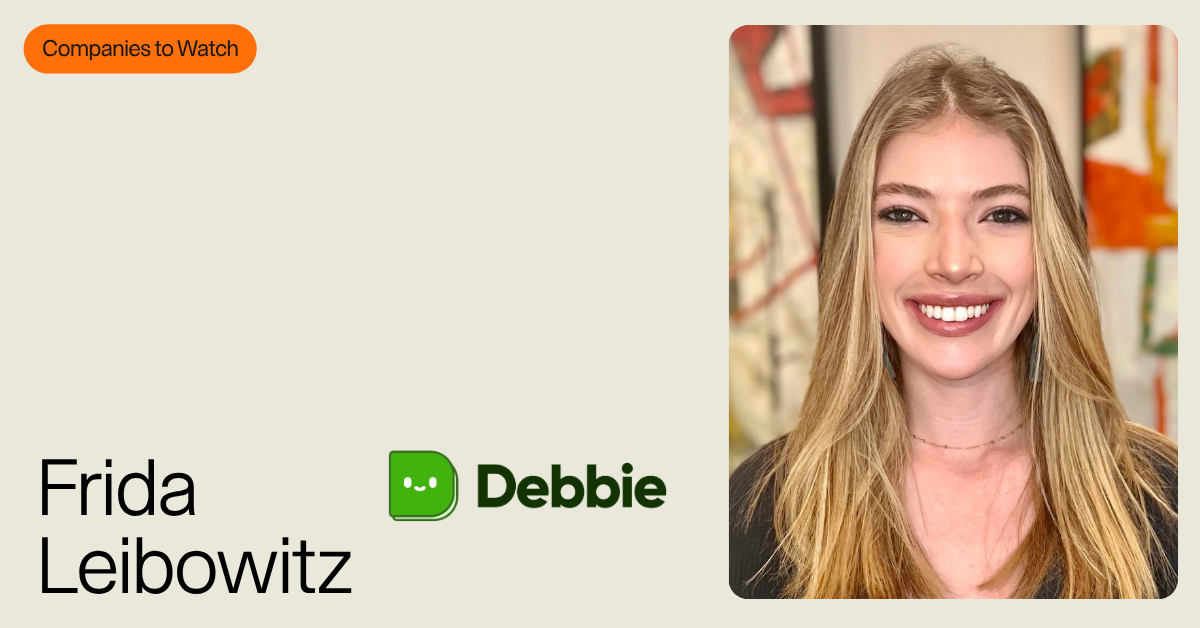
“Against all odds, this city expanded my sense of what was possible — and it still has that magic in my eyes.”
What does your company do? What problem is it working to solve?
Debbie is building a rewards platform for financial wellness in partnership with financial institutions. We help people earn rewards for positive money habits like saving, paying off debt, and improving their financial health — instead of rewarding spending.
The problem we’re solving is that traditional financial incentives are built for people who can already afford to spend more, while millions of everyday consumers are left out. We want to flip that model and make the financial system feel more motivating, accessible, and aligned with long-term well-being.
A question we like to ask every founder — why New York?
New York is the American Dream to me. I came here at 10 with my single mom and four siblings, and we didn’t even know what kinds of dreams were possible — New York is where we learned to dream. It’s where I earned a scholarship to NYU Stern, found my way into finance, and started to believe I could build something meaningful. Against all odds, this city expanded my sense of what was possible — and it still has that magic in my eyes.
How do you define success for a user: paying off debt faster, building savings, changing habits, or something else?
For us, success is all of the above — but it starts with a mindset shift. Instead of beating ourselves up for financial mistakes and living in a system that punishes us for them, we want to glorify every tiny step in the right direction. If someone feels more motivated, more in control, and more hopeful about their money, that’s a huge win. From there, the real outcomes follow: more savings, less debt, healthier habits, and lasting progress.
What do people usually misunderstand about debt or saving habits?
People often misunderstand debt and saving as a financial literacy problem. In most cases, people already know the basics — spend less, save more, pay on time.
The hard part is not knowledge, it’s behavior. It’s stress, habit loops, short-term tradeoffs, and a system that rewards consumption far more than restraint. That’s why more education alone usually doesn’t move the needle. What actually helps is making good financial behavior feel motivating, visible, and rewarding in everyday life.
If everything goes right, what does Debbie become 3-5 years from now?
If everything goes right, Debbie helps define the next $100 billion rewards market — one built for the 99%, not just top spenders. We want to become the Noom or Duolingo of finance: the company that changes behavior at scale and redefines what good financial products look like.
That means being deeply embedded into the financial system through major institutions, while also building a massive redemption ecosystem centered on everyday life — groceries, gas, and even things like sports tickets. Not luxury rewards, but rewards that feel meaningful to everyday Americans.
What was the inspiration behind the name Debbie?
The name Debbie came from wanting something feminine and relatable. When we started, there were very few female-named companies in fintech. You had Marcus, Albert, Dave, and others, and we wanted to bring a different energy. It’s also loosely inspired by my sister’s name and my co-founder’s mom’s name. We loved that everyone seems to know a Debbie. Honestly, it wasn’t some grand branding exercise. It was a 2am late-night pitch deck decision that somehow stuck.
As a founder, what’s your self-care routine to recharge while still being heads down building a company?
It may be a less conventional answer, but my Sabbath observance has become one of the most important ways I recharge. Every week, from Friday at sunset until Saturday at sundown, I’m completely offline — no phone, no computer, fully off. I usually spend that time with friends and family, and it gives me real space to clear my head. Ironically, some of my best ideas and insights come during those hours. As a founder, I’ve come to appreciate how powerful it is to have one day each week that creates true distance from the noise.
Time for some New York-themed rapid fire questions - where is your favorite place to grab a slice of pizza in New York?
Would it be horrible if I said I don’t really get the hype around New York pizza? But I am a sucker for pastries, and I love the cheesecakes at Martha’s Bakery in Brooklyn.
Where is your favorite coffee shop in New York?
Ella’s on the Upper East Side. It has that neighborhood spot feel that I love, and it’s one of those places that just feels easy to return to.
Do you have a favorite spot to escape the noise of the city?
Probably Beacon or Cold Spring. It’s such an easy escape from the city, about an hour by car or a bit longer by train, but it really feels like you got out. I love that you can do a real hike and then hang out in a cute little town before or after.
What’s one piece of advice — that you’ve shared or was shared with you — on building a startup in New York City?
I’ve experienced being both a big fish in a small pond and a small fish in a big pond, and New York is definitely the latter. For me, that’s what makes it such a powerful place to build. I’d much rather be surrounded by people who intimidate me a little. If you can embrace that instead of shrinking from it, it pushes you to level up every day.
Rhythmic
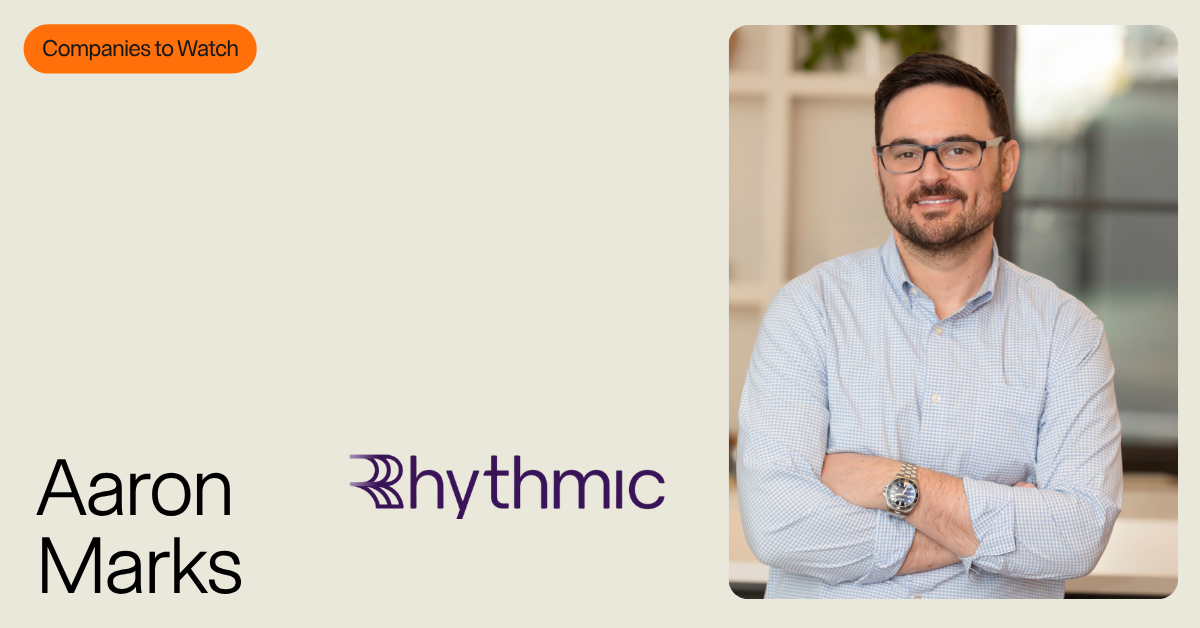
“New York is the center of gravity for everything we’re building. Stablecoins, consumer finance, retail, payments… it all converges here.”
What does your company do? What problem is it working to solve?
Rhythmic lets brands add balances, payments, rewards, and savings directly into their apps, without having to become a fintech company. We handle everything end to end, with stablecoins under the hood but a simple dollar experience for users.
Today, money and rewards are fragmented across apps, cards, and wallets that don’t connect or adapt. We bring that into one place, so brands can move beyond one-off transactions and offer ongoing value. Save, earn, and spend inside the products people already use.
A question we like to ask every founder — why New York?
New York is the center of gravity for everything we’re building. Stablecoins, consumer finance, retail, payments… it all converges here. The access to partners, investors, and customers is unmatched. But honestly, it’s also the energy. The density of events, media, and community means you’re constantly colliding with the right people at the right time. There’s no better city to build this company.
Given your and your co-founder’s backgrounds across AmEx, Mastercard, Walmart, and Circle, what did those experiences teach you that shaped Rhythmic’s product differently from a typical fintech startup?
Joseph and I have both straddled traditional and emerging payments our entire careers. We know how to build consumer-grade, compliant financial products, and we know how to work with large global companies. That combination is rare. Most crypto-native teams underestimate compliance and enterprise sales. Most traditional fintech teams underestimate what stablecoins unlock. We’ve lived in both worlds, and Rhythmic is built from that intersection.
If Rhythmic works exactly as you hope, what behavior change will users adopt that they are not doing today?
We meet users where they already are, inside the brands they use every day, and give them better ways to save, earn, and spend.
Today, most brand apps stop at checkout. With Rhythmic, they keep going. Your money works for you, with rewards that adjust to how you spend and balances that grow over time. Over time, people stop thinking about accounts and just expect this to be part of the experience.
Two to three years from now, what would make you say Rhythmic has built a category-defining company instead of just a useful fintech tool?
If we become a natural part of how people already use the brands they care about, that’s a good sign. It should feel expected, not something users have to think about. And if brands start treating financial products as core to their experience, not an add-on, we’ve done our job. At that point it stops feeling new and just becomes how things work.
As a founder, what’s your self-care routine to recharge while still being heads down building a company?
I love hitting the playground with my two-year-old. Nothing puts things into perspective faster than watching her explore, take risks, and just have fun. Building a company is intense, but spending that time with her reminds me why I'm doing it and that the world is a lot bigger than my inbox.
Time for some New York-themed rapid fire questions — where is your favorite place to grab a slice of pizza in New York?
This changes often, but right now it's Jonny’s Pizza.
Where is your favorite coffee shop in New York?
Sey in Brooklyn.
Do you have a favorite spot to escape the noise of the city?
I have a few random hotel lobbies throughout the city that I camp out in. Grab a coffee, find a comfy chair, and catch up on emails. Either that or the closest park.
What’s one piece of advice — that you’ve shared or was shared with you — on building a startup in New York City?
Before I moved here, my buddy Farooq from Rain told me, “Increase your surface area for luck.” Being in New York does exactly that. You’re more likely to be where you need to be, with who you need to be with. So you have to get out there and improve your surface area for luck.
The Better Money Company
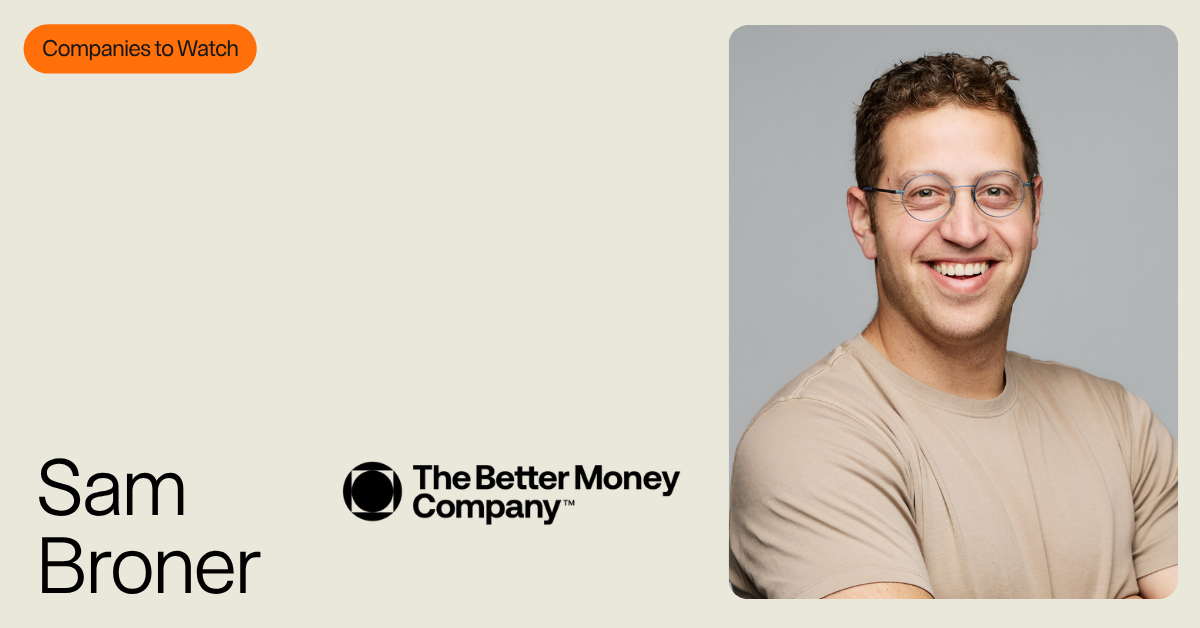
“We’re building The Better Money Company in NYC so that we can be closer to our customers, partners, and the deep and talented community of folks who have worked on similar problems.”
What does your company do? What problem is it working to solve?
Moving money today carries layers of cost and friction. Stablecoins can change that, but they need better infrastructure. You shouldn’t have to care who issued one in order to spend or send it. As stablecoins go mainstream, dozens of institutions will issue their own. Without a clearinghouse to help holders move between stablecoins at par, you recreate the fragmentation banking spent decades eliminating.
That’s what The Better Money Company is solving. We handle clearing, price guarantees, and compliance so that any company can build on stablecoins without worrying about interoperability. Money just moves, at par, the way it should.
A question we like to ask every founder — why New York?
NYC is the center of the world for stablecoins, finance, banking, payments, and fintech. We’re building The Better Money Company in NYC so that we can be closer to our customers, partners, and the deep and talented community of folks who have worked on similar problems.
You’ve noted that the next generation of great companies will “own their financial stack” — what does that look like in practice?
Today, every fintech is assembled on top of a dozen intermediaries — a processor, a BaaS provider, a card network, a sponsor bank, an FX layer — each takes a spread but also limits the quality and direction of the product. Payments in general work like this: they're not part of the product, they’re a tax the company pays to sell the product.
Stablecoins let companies build the products they’ve always wanted. Robinhood launching USDG, JPMorgan running JPMD, Stripe acquiring Bridge — these aren't crypto experiments, they’re payments companies operating their own rails to build better products for their customers.
You talk about a future with hundreds of stablecoins. What has to happen for that world to actually show up?
Three things: first, regulatory clarity — the GENIUS Act unlocked this and we’re continuing to see clear bipartisan rulemaking in the wake of legislation.
Second, issuance needs to get even easier. Our member issuers are doing a great job here — Paxos, Bridge, M0, Agora, Frax, Brale, and others are turning issuance into a platform that any company can take advantage of.
Third, and this is where we come in, stablecoins must be fungible at par. Users and businesses need to know their GENIUS Act stablecoin is worth the same as every other and can be spent, sent, swapped, and redeemed like it.
If everything goes right, what does The Better Money Company look like in 3-5 years?
Today, people and businesses have been forced to accept the status quo of payments. They are expensive, unreliable, and challenging to deeply integrate into products. In three to five years, stablecoins will break that open. We are building the infrastructure that makes every GENIUS Act compliant stablecoin interchangeable, so that stablecoins are even easier to use, companies can make better products, and people have cheaper, better payments experiences.
We’ll be the infrastructure connecting stablecoins and enabling these better, cheaper payments experiences.
As a founder, what’s your self-care routine to recharge while still being heads down building a company?
I spend time with my wife and friends, run, cook — things that require me to be fully present, but not focused on work. And of course the work is fulfilling, we have a great team, and I’m excited to work with them everyday, which makes it easier to keep the battery full.
Time for some New York-themed rapid fire questions — where is your favorite place to grab a slice of pizza in New York?
F&F in Carroll Gardens is my #1 these days, but Prince St just opened up in Carroll Gardens as well. Between F&F, Lucali, Nate’s (shout out Detroit), Table 87, Sottocasa… the real question is what’s the best neighborhood for pizza and the answer there is obvious.
Where is your favorite coffee shop in New York?
I go to Cafe Cotton Bean, also in Carroll Gardens, pretty often. Great vibe. The owner is great. Near work, the coffee at La Cabra is pretty hard to beat.
If you follow me on X, you’ll know I’m not afraid to grab a bodega drip. Can’t beat the price and convenience.
Do you have a favorite spot to escape the noise of the city?I love NYC — when I’m in Brooklyn I run along the Brooklyn Waterfront or through Prospect Park. If I’m on the UWS, I run Riverside and Central Park. And running, for me, is the best way to escape the noise while in the city. Phone stays in the pocket, enjoy the view, keep moving, clear the head.
But ultimately, I love to escape to the Hudson Valley.
What’s one piece of advice — that you’ve shared or was shared with you — on building a startup in New York City?
Make sure your commute isn’t too long. Sage advice for simplifying life while doing hard things!