Companies to Watch: The NYC Startups Making Tech Social
It’s summer in New York, which means the city is at its most social. Parks are packed, rooftops are buzzing, and seemingly every night brings another dinner, block party, concert, or reason to meet someone new.
The timing feels especially fitting for New York’s social-tech ecosystem, where founders are building new ways for people to find their communities, strengthen relationships, discover new places, and turn online connections into real-world experiences.
Across events, dating, friendship, local discovery, group coordination, and AI-powered communication, NYC startups are rethinking what it means for technology to be truly social.
The category is emerging from a quieter period for venture investment.
Social-startup funding peaked in 2021, when investors deployed $2.2 billion across 239 deals.
Last year, PitchBook counted 97 deals totaling $330 million.
But the smaller funding environment is making room for a new generation of focused, inventive companies, and investors are actively searching for the products and behaviors that could define social technology’s next era.
Plus, AI has lowered the cost of building and enabled new approaches to relationships, creativity, coordination, and community.
That energy feels particularly at home in New York, a city built around density, spontaneity, shared experiences, and the constant possibility of meeting someone new.
Against this backdrop, we caught up with a group of NYC builders creating the next generation of social products, helping make technology feel a little more human.
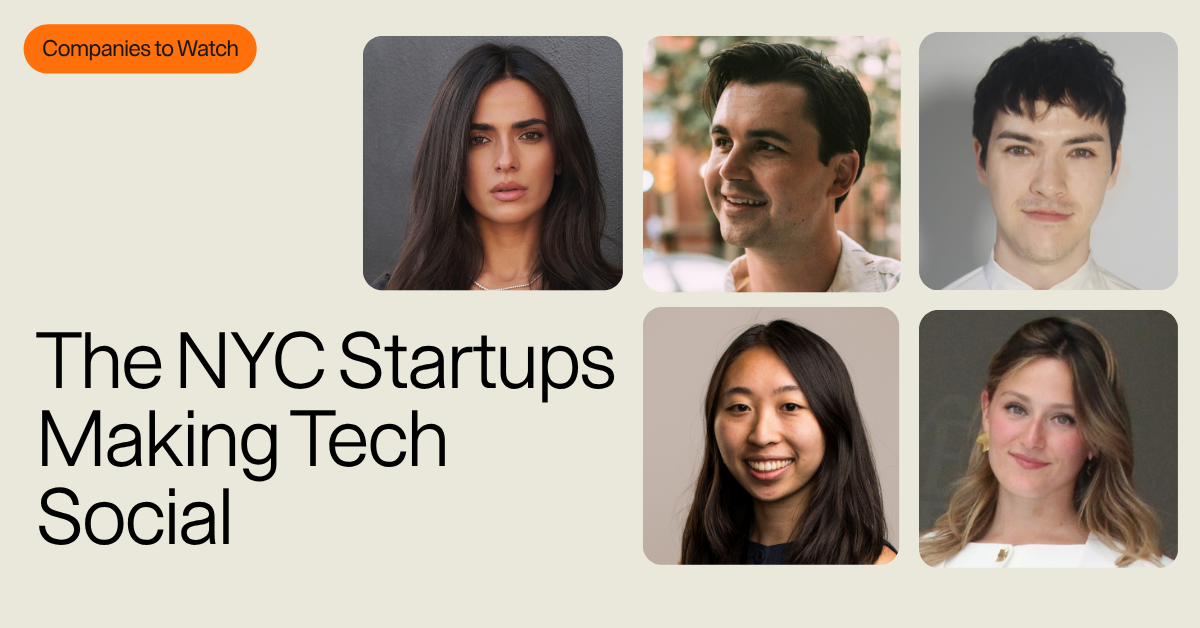
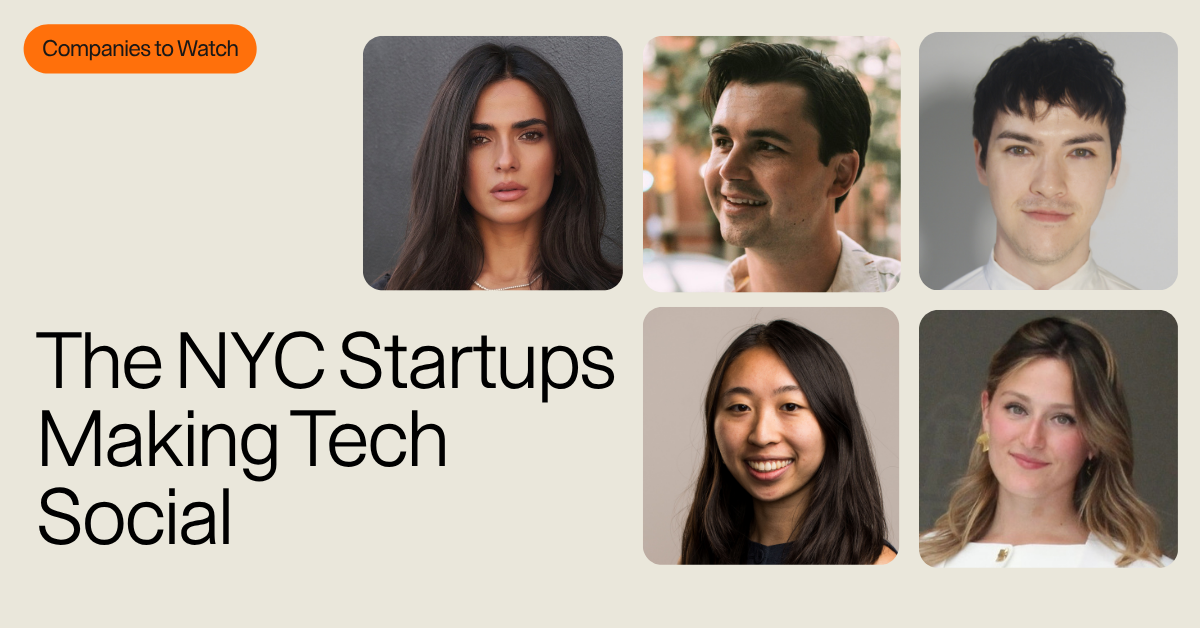
For this edition of Companies to Watch, meet:
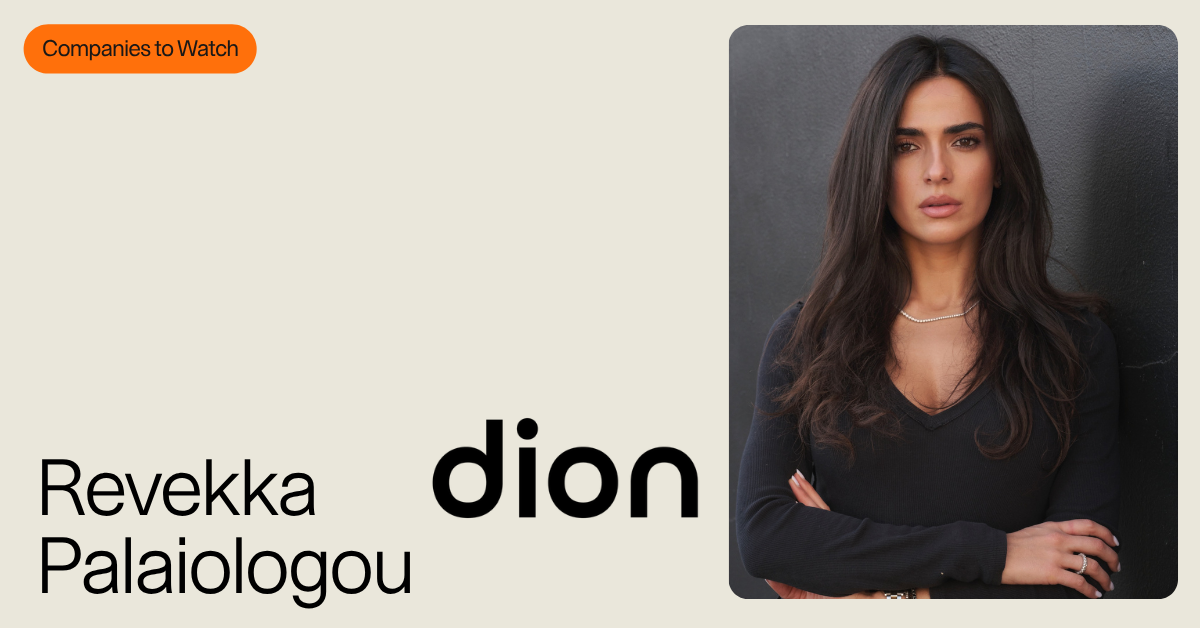
Revekka Palaiologou, founder, Dion
Christopher Chang, founder, Sapphi
Weilyn Chong, founder, swsh
Elisa Ferraroni, founder, We b0nd
Dion
“If an offline social layer works in a city this demanding, it works anywhere.”
What does your company do? What problem is it working to solve?
Dion is a members-only social app built to get people offline and into real life together. We curate a community of interesting people alongside a network of great venues, then make it effortless to actually meet.
Dion aims to replace the endless swiping of traditional dating apps with higher-value actions, like sending someone a drink, that move people from the screen to the same room. The problem is a modern paradox: people have never been more connected online, yet loneliness keeps rising. Cities are full of people worth meeting, but no good way to actually meet them.
A question we like to ask every founder — why New York?
New York has the densest concentration of ambitious, curious, interesting people anywhere, and it’s a city that rewards showing up in person. It already runs on introductions, rooms, and word of mouth. We’re building the tool that organizes that energy instead of leaving it to chance. If an offline social layer works in a city this demanding, it works anywhere.
Dion depends on both a strong member community and a compelling network of venues. Which side of that marketplace has been more difficult to build, and how do the two reinforce each other?
It used to be the venues. Securing partnerships one by one is slow, and it capped how fast we could grow. What changed everything is our fintech layer: with the Dion card, you simply pay wherever you already go, so we no longer depend on venue deals to make the experience work. That freed us to focus entirely on the community, which is by far the most exciting part to build. The card removes the friction, and the community is what actually brings people together in real life.
What is the biggest misconception people have about Dion when they first hear it described as a members-only social app?
That it's a velvet rope, exclusivity for its own sake. Members-only isn’t about status, it’s about trust and context. Curation is simply how you build a room where people genuinely connect rather than perform. We’re not selling access to feel important. We’re removing the friction and randomness that keep interesting people from ever meeting.
As Dion expands across cities such as New York, Miami, Los Angeles, Dubai, Mykonos, Ibiza, and Saint-Tropez, what aspects of the experience can scale globally, and what needs to be rebuilt around each city’s social culture?
The product, the trust and safety foundation, and our quality bar travel everywhere. What’s deeply local is the venue network, the cultural rhythm, who the founding members are, and how people actually socialize. August in Mykonos is nothing like a Tuesday night in New York. We keep the engine the same and rebuild the taste layer city by city.
Many social platforms optimize for time spent on-screen. How do you measure success for a product designed to move people offline?
We absolutely want people to spend time on Dion, but we care about what they’re doing with that time and how often they moved online. We don’t want people endlessly scrolling or collecting matches that go nowhere.
So we look beyond time spent and focus on metrics like how many drinks turn into conversations, how many new connections are created, how often people meet in real life, and whether they come back and do it again. Today, 61% of funded gestures create a new connection on the first attempt.
Time for some New York-themed rapid fire questions — where is your favorite place to grab a slice of pizza in New York?
Pizza Studio Tamaki in the East Village. It’s Tokyo-style pizza and relatively new to New York, definitely one of my favorites right now.
Where is your favorite coffee shop in New York?
Fellini. Great coffee, great atmosphere, very New York.
Do you have a favorite spot to escape the noise of the city?
Biking along the West Side Highway and eventually ending up in Central Park. It’s probably my favorite way to clear my head and take a break from the city without actually leaving it.
What’s one piece of advice — that you’ve shared or was shared with you — on building a startup in New York City?
I’d say get out of your apartment and meet people.
New York is probably one of the few places where one dinner, one introduction or one random conversation can genuinely change the trajectory of your company. Some of the most important relationships for Dion came from simply being in the right rooms and being open to meeting people.
Especially when you're building a consumer company, the city itself can become part of your product if you actually participate in it.
Keeper
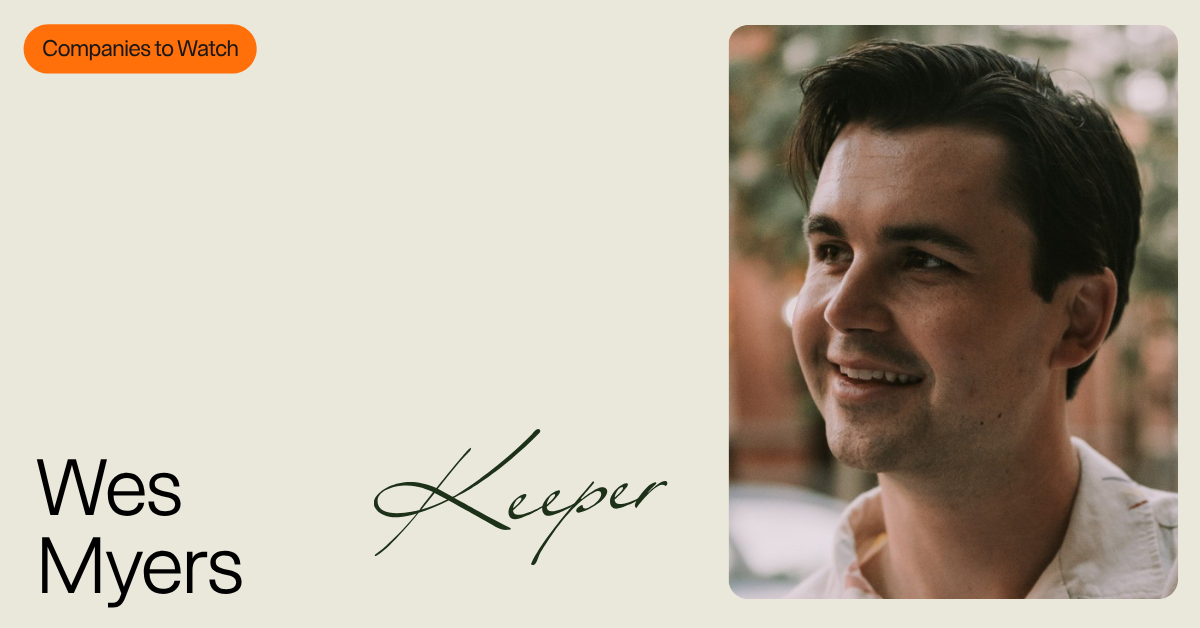
“[New York] has an enormous dating market, an extraordinary concentration of capital, media, and ambition, and no patience for products that don’t work.”
What does your company do? What problem is it working to solve?
Keeper is an AI matchmaker for people who want marriage and a family. We combine AI, relationship science, and human matchmakers to identify highly compatible partners and make thoughtful introductions.
The problem we are solving is that dating apps are optimized for engagement, not outcomes. They give people more options, but very little help in deciding whom they should actually build a life with.
A question we like to ask every founder — why New York?
New York is the best possible pressure test for a company like Keeper. It has an enormous dating market, an extraordinary concentration of capital, media, and ambition, and no patience for products that don’t work. The city also makes the problem impossible to ignore: people can be surrounded by millions of others and still struggle to meet one genuinely compatible person.
Keeper combines AI, relationship science, and human matchmakers. What decisions is technology better at making, and where is human judgment still essential?
Technology is better at processing scale and complexity. It can evaluate thousands of candidates, weigh dozens of preferences at once, learn from behavioral data, and apply standards consistently. Human judgement is still useful when context matters: distinguishing a real concern from a superficial objection, and handling introductions with care. But we think the AI will be as good as the humans soon enough.
What was the hardest part of getting the company from zero to its first meaningful group of customers?
The hardest part was solving the trust and liquidity problem at the same time. Matchmaking only works when you have enough high-quality people in the pool, but people are reluctant to join until they believe the pool is already strong. We had to recruit deliberately, learn what users would actually tell us, and prove that our process could produce introductions meaningfully better than what they were finding on dating apps.
Which metric do you pay the closest attention to when judging whether the company is truly working?
The metric I care about most is the percentage of first dates that become long-term relationships. A lot of other metrics can look impressive while masking a weak product. A matchmaking company is working only if the people it introduces actually want to keep seeing each other. That outcome is slower to measure, but it is much harder to game and much closer to the value we promise.
As a founder, what’s your self-care routine to recharge while still being heads down building a company?
I lift weights. I can bench press 225 for reps. Pretty good, right? I try to get eight hours of sleep every night, try to read an hour before bed to relax my mind, and meditate for 30 minutes each morning. I’m getting better about the meditation. Once or twice a month I go out with my dawgs and really get after it. I think that helps, too.
What are your biggest priorities for Keeper over the next year, and what does the company need to prove to reach its next stage of growth?
Our biggest priorities are increasing the density of strong candidates in every market and automating more of the process without making it feel automated. We need to prove that Keeper can scale outcomes: that as the member base grows, the quality of introductions stays high, matchmakers become more effective, and customer acquisition produces durable long-term relationships.
Time for some New York-themed rapid fire questions — where is your favorite place to grab a slice of pizza in New York?
Pop’s Pizza on 42nd Street.
Where is your favorite coffee shop in New York?
They’re all the same to me.
Do you have a favorite spot to escape the noise of the city?
There is no escaping it. You can hide, but you can’t escape.
What’s one piece of advice — that you’ve shared or was shared with you — on building a startup in New York City?
Build close enough to your customers that reality can interrupt your theory. New York gives you unusually fast feedback because the market is large, demanding, and candid. That can feel punishing, but it is an advantage. A weak idea gets exposed quickly, and a strong one can find users, talent, investors, and attention faster than anywhere else.
Sapphi
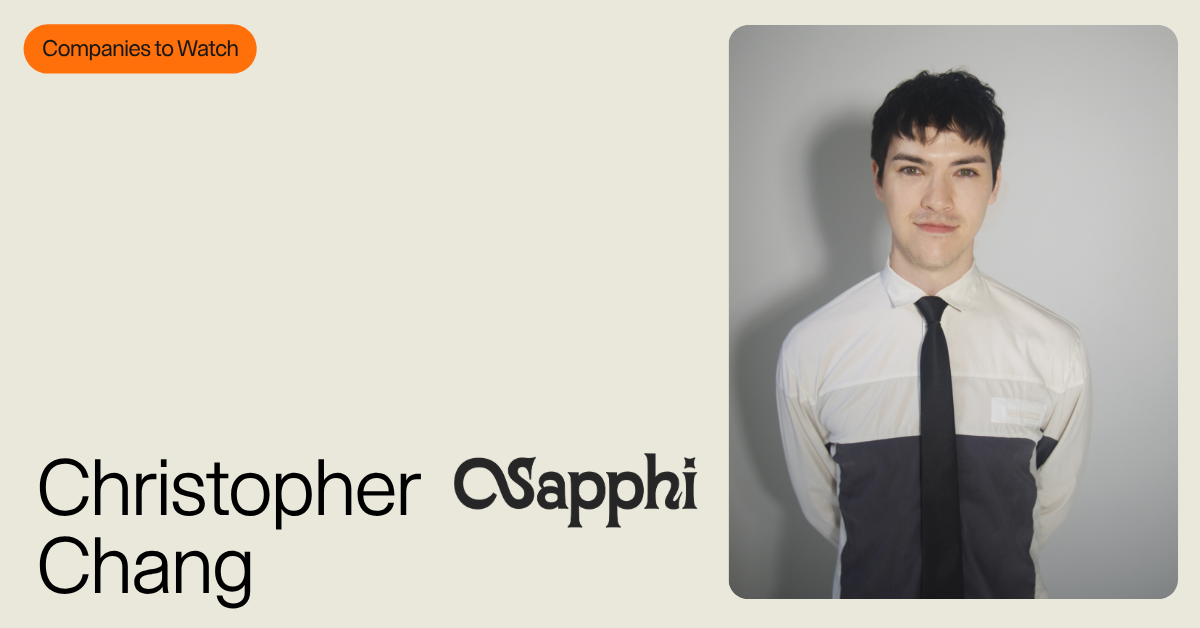
“Unlike San Francisco, the average person in NYC won’t know what B2B SaaS or Consumer Social means, and that’s a good thing. New Yorkers will tell you exactly what you need to hear.”
What does your company do? What problem is it working to solve?
Sapphi is a social app for lesbian, queer + trans people. Currently there are no safety-first, sex-positive options for this half of the queer community. The app shows a live grid of who's nearby, chemistry-testing features like missed connections and personal ads, and a map of queer venues and events. Access is waitlist-gated, human-reviewed, and ID-verified.
There’s a business story too: fewer than 40 lesbian and trans bars remain in the U.S., down from ~200 in the 1980s. Sapphi builds them reliable queer foot traffic, neighborhood by neighborhood.
A question we like to ask every founder — why New York?
NYC is the largest U.S. LGBTQIA+ market, where our founding team lives, and the kind of city where a social app can reach critical mass one neighborhood at a time. NYC has also historically sparked cultural movements, specifically queer ones, which influence the rest of the world.
Sapphi is designed as a broader social platform — not simply a dating app — where users can discover people, events, and LGBTQ+ venues. What convinced you that the community needed a three in one product?
We spent our first year deep in research conducting 30+ interviews, hosting three co-design events, and running a survey that received 1,500+ responses. What we learned is that people show up for different reasons on different days: yearning, lurking, casual encounters, romance, or loneliness.
Existing apps forced users to pick one mode, but queer life doesn't work that way — it moves between your phone, a bar, a party, a group chat. We built the product to match how the community actually connects.
What does a successful Sapphi community look like from a business perspective, and which signals matter most right now — active users, real-world meetups, event participation, venue partnerships, or something else?
Density. Success is a city where enough queer people are active that the grid feels alive, events fill, and venues want to participate. 71% of our NYC members are active monthly, and that density is why retention runs roughly twice the industry average. The signal we track weekly is high-intent engagements (e.g. letters posted, event RSVPs, venue check-ins). These are the actions that lead to real connection, not scrolling. IRL meetups and venue partnerships matter most right now because they’re where community and revenue sync.
What are your biggest priorities for Sapphi over the next year, and what does the company need to prove before expanding to more cities or markets?
Three priorities: close our pre-seed round, turn on monetization (ticketing, venue partnerships, subscriptions), and deepen NYC engagement through an events fund and content studio.
Before any new city, we need to prove the playbook is repeatable. Retention should hold through monetization, events should sell out without us personally hosting them, and our map feature should drive real foot traffic to venues.
We won’t expand until NYC passes these thresholds. After that, we’re on to SF and LA.
As a founder, what’s your self-care routine to recharge while still being heads down building a company?
Tending to the herb garden on my balcony, watering my house plants, burning palo santo. On weekends I like to walk to my local fish market, pick one up, then go home and cook a meal for friends. Recently I’ve gotten into biking. On days when I am feeling especially stressed, I will read and write for a couple of hours.
As Sapphi grows, how will you preserve the sense of safety and belonging that may be easier to create within a smaller, more curated community?
Safety is deliberately our biggest investment. Trust and Safety is roughly a third of our planned headcount, about triple the industry norm. Every application and every report is reviewed by a person, not an algorithm, and that won't change as we grow.
We plan to scale city-by-city rather than everywhere at once, so the community stays local enough to hold itself accountable.
Time for some New York-themed rapid fire questions — where is your favorite place to grab a slice of pizza in New York?
Joe’s Pizza.
Where is your favorite coffee shop in New York?
My father grew up in Malaysia, so I’m partial to Kopitiam in Chinatown for their white coffee and kuih. In Brooklyn, the Bedford Qahwah House location is my go-to for late night work sessions.
Do you have a favorite spot to escape the noise of the city?
The Guggenheim when it’s cold out. Prospect Park when it’s warm out.
What’s one piece of advice — that you’ve shared or was shared with you — on building a startup in New York City?
New York City is boots-on-the-ground UX research. Validate demand by speaking with your target users at the places they frequent. Unlike San Francisco, the average person in NYC won’t know what B2B SaaS or Consumer Social means, and that’s a good thing. New Yorkers will tell you exactly what you need to hear.
swsh
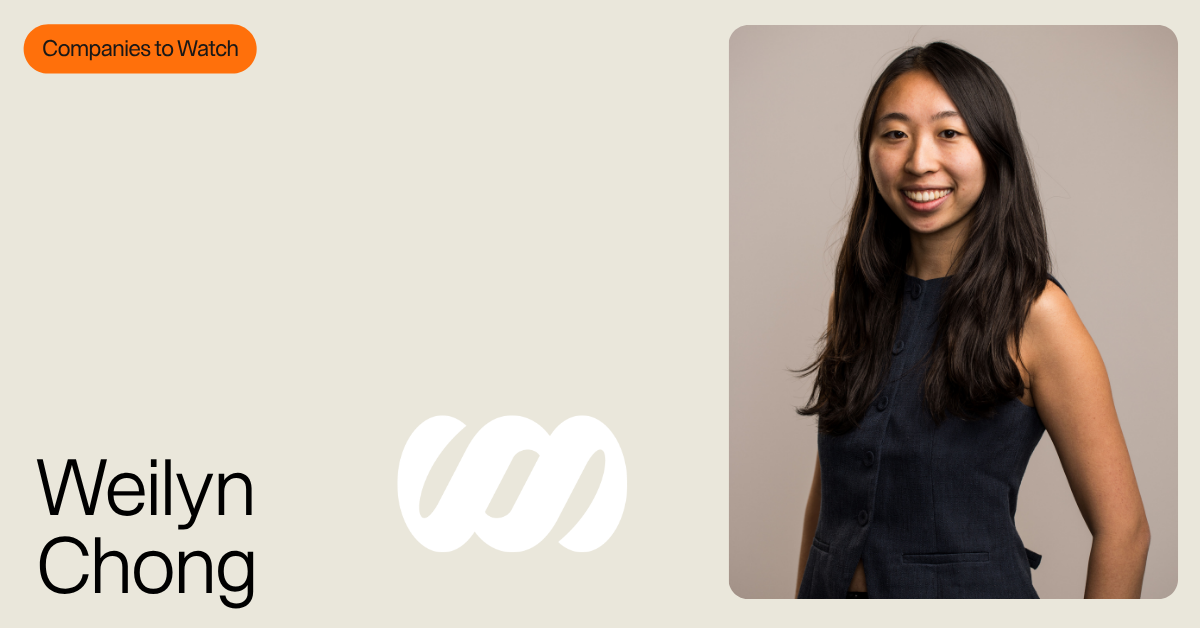
“No better place to be building social consumer [than New York].”
What does your company do? What problem is it working to solve?
swsh (pronounced “swish”) is a fan engagement platform for live experiences — turning every concert, game, and brand activation into a searchable, owned media library that builds first-party audience data at scale.
We build shared photo and video albums that give artists, sports teams, and brands a seamless way to collect fan-generated content, grow their first-party audience database, and turn every live event into a permanent, searchable media asset. As an infrastructure layer for fan participation, swsh unlocks content and audience intelligence from live events while helping organizations build stronger, more connected communities of superfans that power long-term brand affinity.
Launched in 2023 and headquartered in New York, swsh works with some of the biggest names in music (UMG, Warner, Sony), sports (Detroit Pistons), and brand activations (TikTok Clubhouse, Buldak, Method).
Live events produce some of the most powerful audience moments in culture — but almost none of that engagement becomes owned content or usable audience insight for brand marketing.
At the same time, people are leaning more heavily into real-world experiences as a primary way they connect with culture, community, and brands. As audiences shift toward IRL participation, organizations need infrastructure to capture the content and data generated inside those experiences. swsh serves as that platform layer.
Fans capture thousands of photos and videos at concerts, games, festivals, and brand activations. Those moments typically disappear into personal camera rolls, social platforms brands don’t control, or fragmented channels that can’t be measured or reused. At the same time, organizations investing heavily in live experiences often leave without understanding who participated, what resonated, or how to continue the relationship afterward, and without visibility into key marketing ROI signals like brand lift, brand impressions, and brand sentiment generated inside the experience itself.
Music labels spend millions promoting tours without knowing who was actually in the room beyond ticketing data. Sports teams invest heavily in game-day experience but rarely capture participation signals from the fans who showed up. Brands activate at festivals and experiential events and walk away with a handful of professional photos and little to no audience intelligence.
There’s a growing disconnect between how powerful live experiences feel and how little structured insight organizations capture from them.
At the same time, marketers across sports, entertainment, and culture are relying more than ever on in-person experiences as a primary growth channel.
swsh closes that gap by transforming fan-created content into structured, searchable shared albums that brands own — unlocking both a scalable content engine and a new layer of first-party audience intelligence. Instead of losing engagement after the moment ends, organizations can capture participation, understand their audiences more deeply, and extend the life and impact of live experiences well beyond the event itself.
A question we like to ask every founder — why New York?
No better place to be building social consumer. :)
What can brands or event organizers learn from fan-generated photos, videos, and conversations that they cannot learn from ticketing data or traditional social analytics?
Brands are able to learn who their real fans are through who is showing up and uploading in bulk. Being able to see what fans are capturing and what they care about is complimentary and enriching insights alongside ticketing and traditional social analytics.
What has surprised you most about how fans behave when they’re contributing to a shared event album rather than posting to their own social feeds?
We see, unlike traditional social feeds, swsh fans upload in bulk — we had one fan upload 1K+ content from a concert. They are also more free to be authentically themselves within swsh albums with other superfans.
As swsh expands beyond individual events, what is the larger vision — becoming the underlying fan-data infrastructure for live entertainment, a new kind of social network, or something else entirely?
The long-term vision is to build a consumer platform for the real world. A place where people collect and reconnect around the moments that define their lives (concerts, games, trips, birthdays, sorority parties, festivals, community events, etc.).
Which market has shown the strongest pull so far — music, sports, festivals, or brand activations — and what does that reveal about where swsh can grow fastest?
We’ve been in music and artists the longest and have really cracked the market fit. We’ve recently had more traction across brands which will unlock deeper partnerships across sports and festivals.
Time for some New York-themed rapid fire questions — where is your favorite place to grab a slice of pizza in New York?
Very lactose intolerant so when I grab a slice I love to indulge — L’industrie Parma slice is incredible.
Where is your favorite coffee shop in New York?
Isshiki Matcha (Angel the founder is so incredibly passionate about what she does and is so inspiring).
Do you have a favorite spot to escape the noise of the city?
Since May 2026, the city has implemented a green wave down the Second Ave bike path. Nothing beats a summer night hitting every green light as you bike home :)
If I’m homesick, I always find myself at Singapore Social and if I want to cozy up at a cafe I’m at Park at Kims.
What’s one piece of advice — that you’ve shared or was shared with you — on building a startup in New York City?
Whenever I'm facing a decision that feels scary or uncertain, I ask myself: what's the worst that could happen? Usually the answer isn’t as bad as it seems, and that question is what pushes me to actually take action.
We b0nd
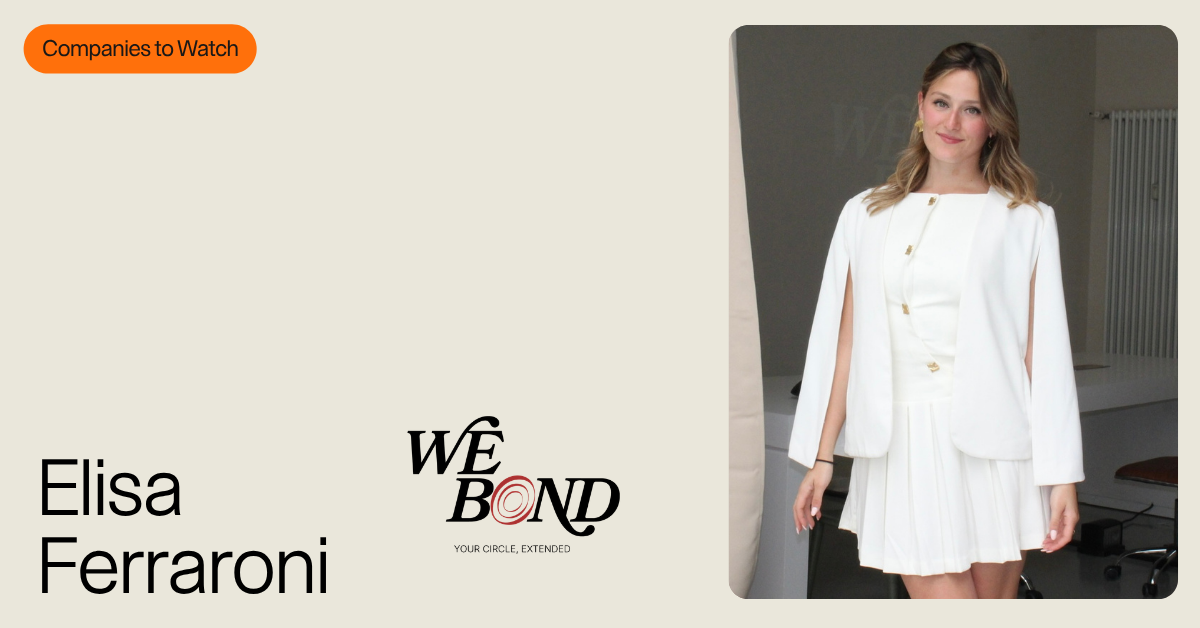
“New York moves at the speed I want to live at. I grew up in Europe and lived across several countries, but this city has always matched my energy more than anywhere else.”
What does your company do? What problem is it working to solve?
We b0nd is Trust as a Service, TaaS for short.
We b0nd is an app that connects you to your trusted network of people and places, anywhere in the world.
The problem is that word-of-mouth from people you trust has no place to live online. Today, finding it is either highly manual or scattered across private conversations. We centralise that trust and make it accessible when you need it.
A question we like to ask every founder — why New York?
New York moves at the speed I want to live at. I grew up in Europe and lived across several countries, but this city has always matched my energy more than anywhere else. What struck me is how generous the ecosystem is here: people make time to help, share opportunities, and make introductions. That spirit is exactly what We b0nd is built on, so it made sense to build the company where that sense of community felt strongest.
You came up with We b0nd after living in seven countries and repeatedly discovering that important new connections were already hiding within your extended network. When did that observation begin to feel like a company you needed to build?
I moved all over the world, and every time, I felt like I was starting over. When relocating to a new city like Miami or Madrid, I knew there would be someone there I was already connected to, but I didn’t know how to find them.
One day, on a public bus in Switzerland, I struck up a conversation with the woman next to me and realized she was my cousin's best friend.
That’s when it hit me: I had been relying on chance to find the people I was already connected to.
So I started hosting events built around the concept of unlocking friends of friends networks. When they sold out globally, and expats volunteered to help build it, I knew I had discovered a problem bigger than me.
We b0nd sits somewhere between a social network, a members’ club, and an events business. How did you decide what the company’s core product should be?
We take inspiration from all three, but We b0nd is its own category: Trust as a Service.
We're a tech company first, events just unlock new cities and build community before the app scales it. We borrow from social media because we deal with human connection online, except we're built to move people offline instead of keeping them scrolling: digital by design, human by nature. A referral system keeps that trust intact, like a membership club.
As AI makes content easier to fake, trust becomes the internet's most valuable currency, and We b0nd is part of that emerging Trust economy.
We b0nd is already active across cities including New York, London, Paris, Madrid, and Milan. What have you learned about launching a community city by city, and what determines where you expand next?
Always build the community before you launch the tech that scales it. Especially when you're dealing with people, the IRL element has to come first. Finding partners who share our target audience matters just as much, since they open doors a community alone cannot. When there is real symbiosis between the community and the partners you bring to an event, growth follows. I decide where we expand based on the cities members frequently visit, then cross-check that against expat density data for each city.
As a founder, what’s your self-care routine to recharge while still being heads down building a company?
Honestly, I am still learning this part. Reading helps me switch off, it helps me release stress whilst teaching me something that could be useful in building We b0nd. I love any self help book.
Beyond that, I travel a lot, and I try to use that time to meet new people, although that’s part of my business, it's something I truly love to do.
Your technology is designed to get people offline rather than keep them scrolling. What metrics tell you the product is working — introductions, event attendance, lasting friendships, or something else?
Snapchat had the streak, Tinder had the swipe, we have the bond, which tracks real-world connection. A bond can only happen on our app once two people have met in person and tapped their phones together.
We don't place any intent behind the connection. A networking app implies business, a dating app implies romance, we let our users decide. The only constant is that it started through trust and moved offline. Beyond that, we track the fundamentals: event attendance, retention, and how many recommended places actually get visited.
Time for some New York-themed rapid fire questions — where is your favorite place to grab a slice of pizza in New York?
As a fellow Italian, Eataly. Non-negotiable.
Where is your favorite coffee shop in New York?
Cafe Lyria.
Do you have a favorite spot to escape the noise of the city?
Clinton Hill. Still the city, but a completely different pace than Manhattan.
What’s one piece of advice — that you’ve shared or was shared with you — on building a startup in New York City?
Look at your friends and I'll show you your future. It's true everywhere, but especially in a city as intense as New York. Surround yourself with people you admire and can learn from. Your environment shapes your ambition more than you realize.