Companies to Watch: Black Founders Building What’s Next in NYC Tech
Even as Black-led venture capital shows encouraging signs, the data makes clear we’re still early in the story.
According to BLCK VC’s 2025 State of Black Venture report:
The median fund size for Black-led firms is $20 million (and the average is $59 million), still below the broader industry median of $50–$100 million — a reminder that access to scale remains uneven.
And on the startup side, new research finds that only 3.1% of VC-funded high-growth startups are Black-owned, and those that do raise venture capital raise about half as much as others.
So there’s still work to be done.
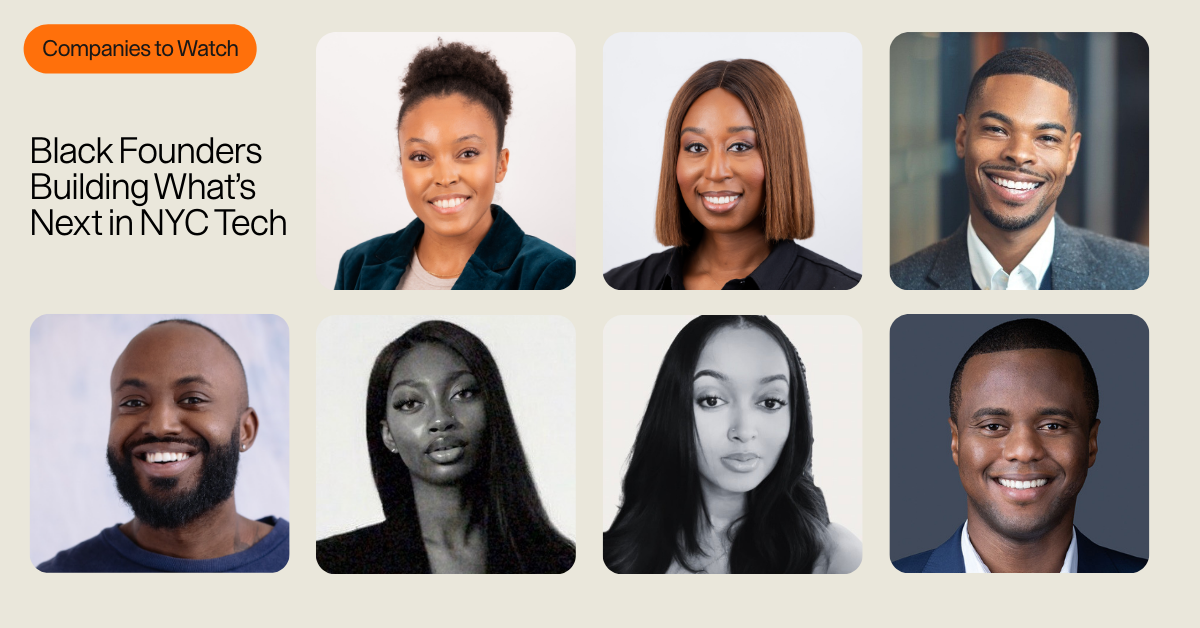
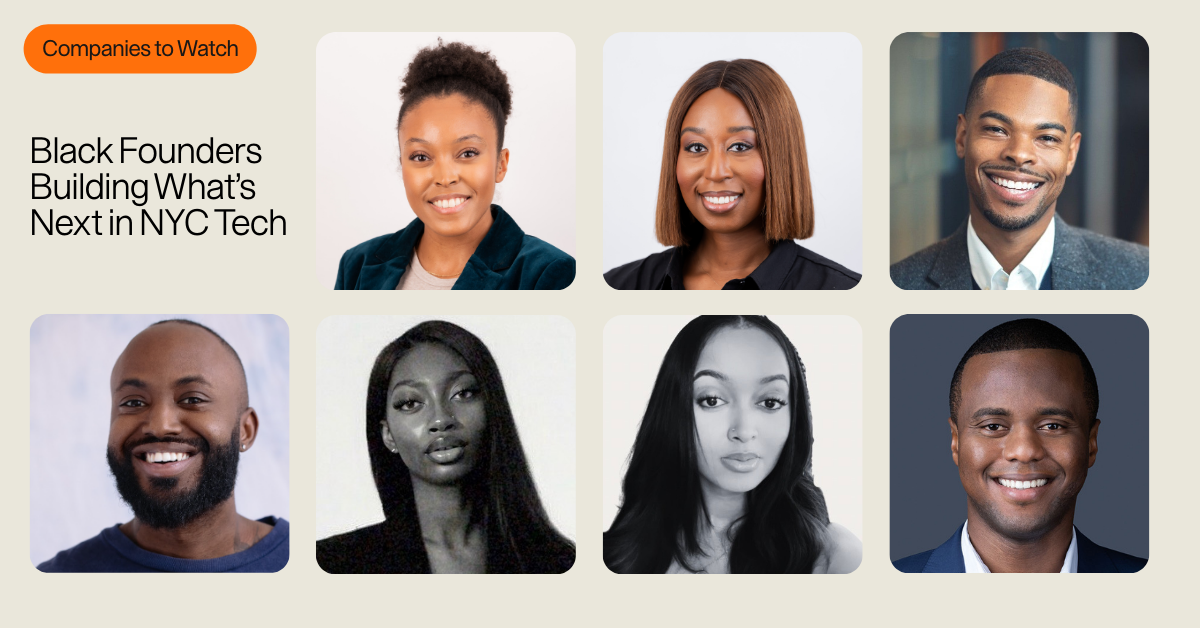
In honor of Black History Month, we caught up with seven Black founders from five startups who are shaping the NYC tech ecosystem and innovating to improve health, ecommerce, retail, and more.
For this edition of Companies to Watch, meet:
Obi Chukwuma and Onyi Chukwuma (founders of MMARA)
Halston Prox (founder of Tabz)
David Gabeau (founder of Tapestry)
Olaitan Ajilore and Haboon Nur (founders of VAULT)
Dr. Tsikata Apenyo (founder of Volta Health)
MMARA

“[New York] brings together healthcare, beauty, technology, and culture while reflecting the diversity of the women we serve.”
What does your company do? What problem is it working to solve?
MMARA is a digital hair health platform that helps women experiencing hair loss uncover the underlying causes behind shedding and slow growth. MMARA enables users to track lifestyle factors like stress, nutrition, hormones, and routines to identify patterns that impact hair and overall wellness.
We solve the problem of limited visibility and guidance in hair loss journeys empowering women with data-driven insights so they can take informed action, advocate for their health, and restore confidence.
A question we like to ask every founder — why New York?
We chose New York City because each of us has spent crucial years of our lives here. This city shaped how we think, what we value, and what we believe is possible. Despite the constant pull toward Silicon Valley, New York has always felt like the true center of innovation to us. It brings together healthcare, beauty, technology, and culture while reflecting the diversity of the women we serve. Building MMARA here keeps us close to real communities and real experiences, ensuring what we create is not only innovative, but culturally grounded and built with purpose.
What’s been the hardest part of building a consumer health app in this space?
The hardest part has been bridging the gap between beauty and healthcare. Hair loss is often treated as cosmetic, yet for many women it’s tied to stress, hormonal shifts, nutrition, or underlying health issues. That means we must build trust, educate users, and translate complex health signals into insights that feel approachable, not clinical or overwhelming. We’re also challenging a market filled with quick-fix products by encouraging data, patience, and behavior change. Building a consumer app that is both science-informed and culturally sensitive requires balancing credibility, accessibility, and empathy every step of the way.
What’s next for MMARA? New tracking features, partnerships, coaching, community, or something else?
Obi: On the product side, we are building a predictive AI model that analyzes the users data to better identify patterns, surface likely root causes, and provide personalized advice to kickstart regrowth.
Onyi: We are excited about building partnerships with women’s groups, wellness organizations, and aligned companies evolving MMARA into a comprehensive health companion that supports women with insight, education, and proactive care.
Where are you seeing real momentum for Black founders right now, and how can the ecosystem accelerate what’s already working?
Real momentum is happening where Black founders are building solutions rooted in lived experience and designed specifically for our communities not trying to retrofit mainstream products. We’re seeing growth in culturally competent health, financial empowerment, and technology platforms that address gaps long overlooked. These founders are winning by building trust first, then scaling.
To accelerate this progress, the ecosystem must fund earlier, invest in community-based distribution, and back founders as domain experts of their own experiences. The most effective support isn’t just capital, its long-term partnership that helps these solutions grow sustainably within the communities they’re meant to serve.
As a founder, what’s your self-care routine to recharge while still being heads down building a company?
Onyi: My monthly 90-minute full body massage helps me truly disconnect and quiet a constantly running mind. I also prioritize working out, because staying active helps maintain my energy and focus. As a mother, I’ve learned to value quiet moments to decompress because it makes a huge difference as I balance building a company and caring for my family.
Obi: Cooking is a big one for me. There’s something grounding about making a meal completely from scratch and sitting down to actually enjoy it. I also lean into skincare and haircare as a reset ritual. Taking the time to care for my body helps quiet my mind and creates space so I can come back clearer and more focused.
Time for some New York-themed rapid fire questions — where is your favorite place to grab a slice of pizza in New York?
Obi: Pop’s pizzas on 57th, especially their margarita. I also love Mama’s Too.
Where is your favorite coffee shop in New York?
Obi: Dream Talk on 54th, the drinks are so rich!
Do you have a favorite spot to escape the noise of the city?
Obi: Belvedere's castle in Central Park
What’s one piece of advice — that you’ve shared or was shared with you — on building a startup in New York City?
Network is incredibly important and more accessible than most people realize. New York is one of those unique places where you could be sitting next to someone who could change your life and never know it. Be kind, stay curious, and don’t be afraid to connect.
Tabz
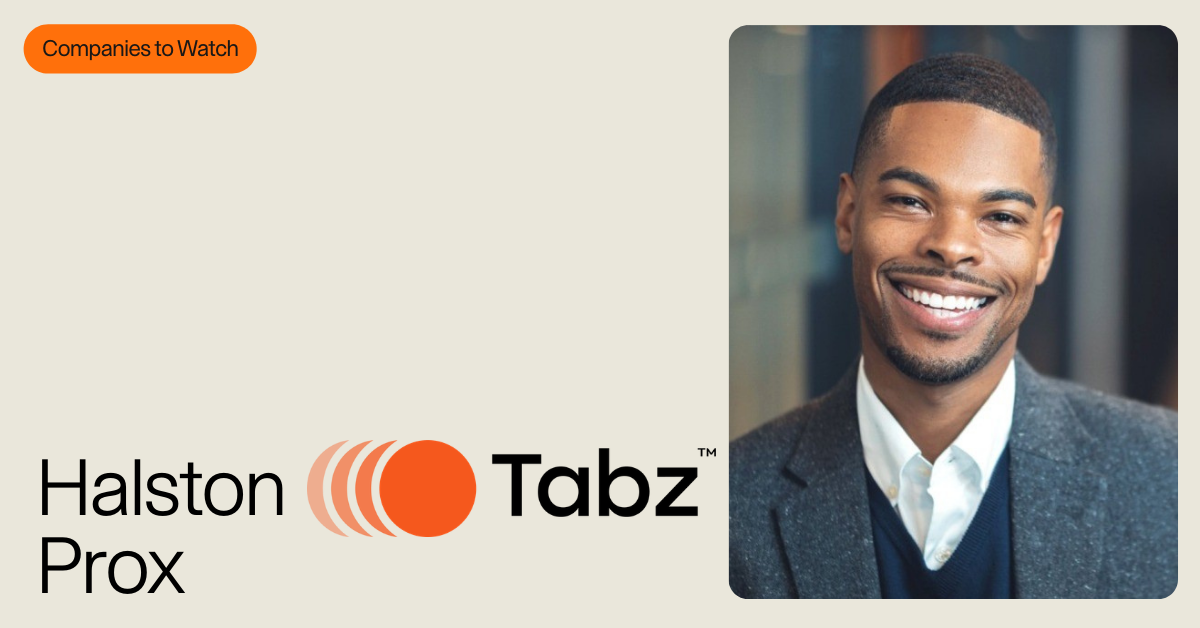
“Healthcare, fintech, media, talent — it’s all here, compressed into one city.”
What does your company do? What problem is it working to solve?
Tabz is the unified pharmacy commerce platform. We help pharmacies accept omni-channel payments, manage checkout, connect fulfillment, and reconcile revenue in one system.
Most pharmacies run on fragmented tools: a PMS, a payment processor, spreadsheets, and manual follow-ups. Scripts get filled, but cash flow gets messy. Copays go uncollected. Orders ship before payments clear. Reporting is reactive.
We bring decision, money, work, and data into one workflow so pharmacies can actually see what’s been prescribed, what’s been paid, and what still needs action.
A question we like to ask every founder — why New York?
New York forces clarity.
If your product doesn’t work, the market tells you fast. If your story is weak, nobody listens.
Healthcare, fintech, media, talent — it’s all here, compressed into one city. You can have a board meeting in the morning, a pharmacy partner lunch in Midtown, and an investor dinner downtown.
New York rewards operators who move. That energy shapes how we build.
You call Tabz the “Pharmacy Commerce Standard.” What does “commerce standard” mean in practice — features, reliability, compliance, integrations, outcomes?
A commerce standard means pharmacies can rely on one system to govern the full transaction lifecycle: checkout, payments, order fulfillment, and data.
In practice, that means secure payment collection, online and split-payment workflows, fulfillment alignment so orders don’t move without confirmed payment, and real-time reporting connected to major pharmacy management systems.
It also means high uptime, auditability, compliance, and clean reconciliation.
Most importantly, it delivers outcomes: higher conversions, fewer manual touchpoints, reduced fulfillment errors, and predictable, traceable cash flow.
What’s one operating principle you use as a founder — about hiring, speed, customer obsession, or focus — that’s been especially important for building in healthcare?
Respect the operator’s time.
Our customers run businesses on thin margins with very little room for error. If a feature requires training, workarounds, or extra clicks, it’s probably wrong.
In healthcare, complexity is unavoidable. But the experience shouldn’t feel complex. We build with the assumption that every extra step costs someone money or sleep.
Where are you seeing real momentum for Black founders right now, and how can the ecosystem accelerate what’s already working?
Real momentum is happening where Black founders are building infrastructure (fintech, healthcare, AI). Black founders are solving real problems within massive industries. There’s a shift from being invited into rooms to owning the rooms. More repeat founders, more technical depth, more enterprise ambition.
As a founder, what are your self-care routines to recharge while still being heads down building a company?
I work out, eat clean, protect sleep, and prioritize time to actually think about how the company is doing/will be doing in the next months and years. Lastly, I can’t forget about music and long walks. You can’t scale chaos, and clarity starts with discipline.
Time for some New York-themed rapid fire questions — where’s your favorite place to grab a slice of pizza in New York?
Prince Street Pizza. Hands down.
Where’s your favorite coffee shop in New York?
Romeo and Juliet Colombian Coffee in Hell Kitchen is my go-to before walking to the office.
Do you have a favorite spot to escape the noise of the city?
Central Park is where I go to hang out in the spring/summer.
What’s one piece of advice — that you’ve shared or was shared with you — on building a startup in New York City?
Use the density. Take the in-person meeting. Build real relationships. In this city, proximity compounds.
Tapestry
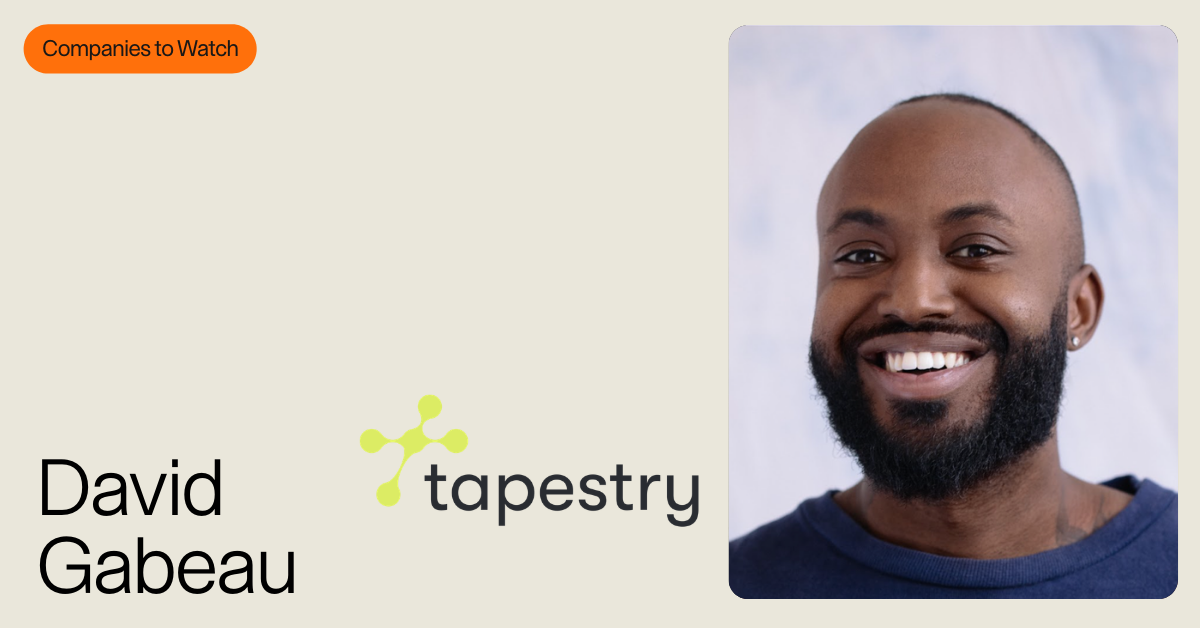
“I love the energy of this city. You have people of every age, race, religion, and industry chasing their dreams side by side.”
What does your company do? What problem is it working to solve?
Tapestry is building the consumer interface to the AI agent economy. We started by unifying social data across blockchains into one API, giving developers instant access to portable identity, relationships, and wallet infrastructure. That protocol now powers our flagship app, Zumi, an AI companion for Gen Z that helps users feel, connect, play, and earn real money.
The problem we're solving: AI companions today are stuck in conversation loops with no economic capability. We believe the companions people trust with their feelings will become the agents they trust with their wallets.
A question we like to ask every founder — why New York?
I love the energy of this city. You have people of every age, race, religion, and industry chasing their dreams side by side. You can leave your apartment at any hour and stumble into an adventure. You can connect with anyone in your field, from interns to icons, in a single week.
And for what we're building at Tapestry, there's no better home. New York lives at the intersection of culture, social connection, and finance. So do we. The city runs on the same energy as our company.
How do you measure whether Tapestry is “working”? Is it developer retention, time-to-ship, end-user engagement, cross-app connection rates, something else?
All of the above, honestly. We've been intentional about building a data-rich, open social graph that developers actually want to plug into. We track integrations, cross-app data reads, and profiles created across the protocol. In recent quarters though, our north star has been monthly active users, with a specific focus on Zumi as the top of the funnel. We've crossed 80K downloads in just a few months, and every user who connects their life with their Zumi becomes a valuable node on the graph. That's the flywheel: consumer love feeds protocol growth.
What are the missing links in the early-stage capital pipeline for Black founders, and how can the industry close those gaps?
Relationships. Early-stage investors fund people they believe in because they've gotten to know them. The most natural way to close the gap is for the venture community to be more intentional about building relationships with Black founders, operators, and investors well before a fundraise begins. The opportunity is huge on both sides. When those connections happen earlier, investors get access to networks and deals they wouldn't otherwise see, and founders get the trust and context that makes early-stage funding possible. It starts with showing up in each other's worlds.
What are some things on the roadmap for Tapestry that you’re excited about?
We just launched Zumi Earn, which means our users can actually make real money through their companion. That was a huge moment for us because our users have been asking for it. Next up is prediction markets, where you can stake on trending items inside the app with your friends. And the thing that gets me most excited is building toward a world where your Zumi can do things for you. Recommend a song based on your mood, help you find a gift for a friend, handle small everyday tasks. We want Zumi to be the most helpful relationship in your life.
As a founder, what are your self-care routines to recharge while still being heads down building a company?
I'm dedicated to hot yoga at Hot 8 in Brooklyn Heights. It's a great way to start the morning with a sculpt class or wind down with a relaxing yin session. My dog and I walk the Brooklyn Bridge regularly, which is just as much for me as it is for her. And my closest friends are all really busy across different industries, but we're committed to a dinner once a month to catch up. Those three things keep me grounded. Building a company is a marathon, and you have to protect the things that refuel you.
Time for some New York-themed rapid fire questions — where’s your favorite place to grab a slice of pizza in New York?
Joe’s on Union Square because it reminds me of all the nights we ended up there in college at NYU.
Where’s your favorite coffee shop in New York?
Ludlow Coffee Supply in the Lower East Side. It's one of my favorite places to work when I can throw headphones on and go no-meetings for a few hours. Some of the coolest people in the city pop in and out, but the energy is heads down. The coffee and baked goods are pretty good too.
Do you have a favorite spot to escape the noise of the city?
The Whitney Museum. Something about standing in front of a piece of art that someone poured their life into puts everything back in perspective. The permanent collection always gives me something new to sit with, and the rotating exhibitions keep me coming back. On a good day I'll grab a coffee, walk through a few floors, and end up on the terrace looking out over the Hudson. It's the kind of quiet that actually recharges you in this city.
What’s one piece of advice — that you’ve shared or was shared with you — on building a startup in New York City?
Document your experience. I give this advice to anyone building anything because the return on investment is unreal. When you share what you're working on and thinking about, the right people find you. And when you reach out to someone new, your body of work speaks before you do. For me that's always been blogging, which I still do at blog.usetapestry.dev, but in 2026 it could just as easily be a TikTok or YouTube series. Writing publicly has brought me so many opportunities in the most roundabout ways. Just put it out there.
VAULT

“If you are building something category defining, this city sharpens you.”
What does your company do? What problem is it working to solve?
VAULT is an operating system for premium retail that connects a social, client-facing style platform with a Retail OS for retail, merchandising, and client experience teams. VAULT captures real-time capsule creation, edits, swaps, and social feedback, then translates it into SKU-level intelligence so teams can curate faster, prioritize inventory with confidence, and convert more clients with fewer missed fits and wasted effort.
A question we like to ask every founder — why New York?
Olaitan: New York was the right place to build because it sits at the intersection of fashion, commerce, and technology. Luxury retail lives here, and so does technical ambition.
We wanted to build close to the problem and close to the energy. New York rewards people who move with urgency and vision. There is a culture of reinvention here that mirrors how we think about retail. If you are building something category defining, this city sharpens you.
Haboon: Like most people who move to New York, I came here looking to broaden my worldview and evolve as a person, and eventually as a founder. For building a company like VAULT, it also just made sense to be at the intersection of culture, fashion, and technology, there’s nowhere else where those worlds collide as naturally. Moving here forced me out of my shell in the best way, and the city really does bring the world to your doorstep. I always say New York looks different on everyone, and I’ll always be grateful for what it’s given me so far.
What was the “this is broken” moment in luxury retail that made you believe a new intelligence layer was necessary?
Olaitan: My time as a stylist was eye opening. I watched teams manage high value clients through group chats, memory, and scattered systems. Items would go missing, communication would break down, and million dollar relationships could unravel over operational mistakes.
The process was creative but structurally fragile. I realized luxury retail did not need another tool, it needed an intelligence layer that could bring structure and visibility to a very vibey but high stakes environment.
What’s one “bright spot” in the tech industry you’ve seen that’s genuinely helping Black founders thrive, and how can the ecosystem scale more of that?
Olaitan: One bright spot has been the rise of Black venture capitalists and operators who are writing checks and opening networks. Representation at the capital level changes outcomes.
The ecosystem can scale this by continuing to back emerging Black fund managers and by creating more direct pathways between Black founders and institutional capital. Access should not rely on proximity. When capital and networks are distributed more intentionally, innovation follows.
Where do you want VAULT to be in a year? In five years?
Olaitan: In a year, we want VAULT embedded inside leading luxury retailers and stylist teams, proving measurable impact across revenue, efficiency, and client retention.
In five years, VAULT becomes the invisible infrastructure powering modern retail. Not just a platform teams log into, but the intelligence layer shaping how product, people, and personalization connect across the industry.
As founders, what are your self-care routines to recharge while still being heads down building a company?
Olaitan: Fitness is my reset. Weightlifting and pilates give me structure, discipline, and mental clarity. Building a company requires stamina, and training reminds me that progress compounds with consistency.
Movement is where I process ideas and release pressure. It keeps me grounded while we scale something ambitious.
Haboon: Ceramics and tactile art are my refuge. After spending so much of my career behind a screen building intricate technical systems, working with my hands is the fastest way for me to truly switch off and reset. There’s something grounding about shaping something physical from start to finish, it gives my mind a clean break and brings me back to a sharper version of myself.
Time for some New York-themed rapid fire questions — where are your favorite places to grab a slice of pizza in New York?
Olaitan: Cliche, but Cuts & Slices. It just feels very New York to me.
Haboon: Luigi’s Pizza in Park Slope, Brooklyn. It’s my go-to when I want a classic New York slice done right. It’s family-owned, and the owner, Gio, really shows up for the community around him.
Where are your favorite coffee shops in New York?
Olaitan: Sweetfire Cafe and Devoción. Both have great energy for meetings or solo work sessions.
Haboon: Conwell Coffee & Cocktail Hall in FiDi is a favorite because it’s Art Deco–themed, the former bank hall setting plus the artwork, lighting, and murals give it this 1920s ambiance, and you feel the architecture and old New York energy the second you walk in. It’s a total break from the typical overstimulating street-corner coffee shop, and FiDi gives me that older-city vibe I’ve been searching for since moving to the city.
Do either/both of you have a favorite spot to escape the noise of the city?
Olaitan: For me it is the Pilates or dance studio. It is one of the few places in New York for me where I can be fully present in my body and completely disconnected from the outside noise.
Haboon: The New York Public Library, Stephen A. Schwarzman Building. I’m still new to the city and I haven’t really escaped to places like the Catskills yet, so when I want a break from the noise, this is where I go. Between the exhibitions and the quiet focus of the reading rooms, I always feel instantly calmer and can get my best work done there.
What’s one piece of advice — that you’ve shared or was shared with you — on building a startup in New York City?
Olaitan: Build real traction before chasing visibility. In NYC, substance compounds, noise doesn’t.
Volta Health
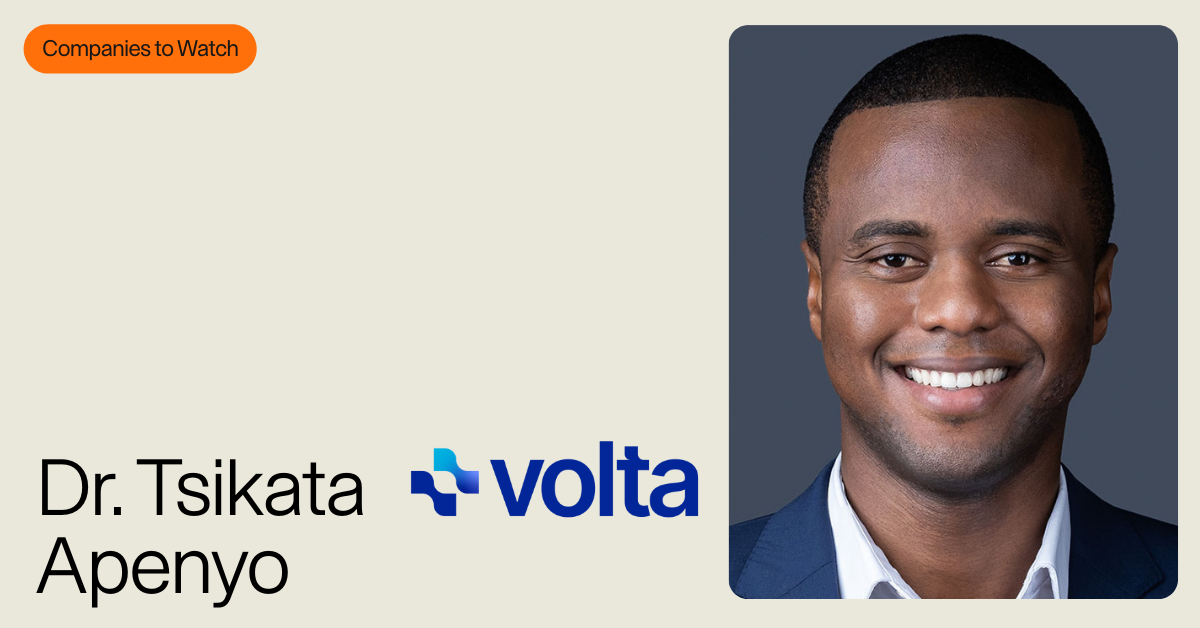
“Here, companies focus on fundamentals: revenue, durability, real customers, real-world integration, all in service of building institutions, not just dominating a single cycle. Get that right, and Sinatra’s famous lyrics ring true.”
What does your company do? What problem is it working to solve?
Volta Health is the operating system for college health services. Clinics on college campuses today are running on fax machines, spreadsheets, and disconnected systems — all while serving millions of young adults navigating healthcare on their own for the first time. We use AI and data to automate the messy, regulated insurance and healthcare workflows that bog down universities, so they can deliver better, more affordable coverage without adding administrative burden.
For students, Volta is the digital front door to health and wellness — streamlining access to mental and physical health resources on and off campus, creating a connected care experience that supports both their well-being and their academic success.
A question we like to ask every founder — why New York?
New York forces clarity. The pace is intense, the talent density is unmatched, and the bar is impossibly high. You're surrounded by people building at scale across healthcare, finance, and tech, and that proximity raises your own standards. You can't come here and think small. This city won't let you.
To be pointed: there is also a deep philosophical divide between the coasts. The West Coast often rewards massive technical bets, spending billions to make a model incrementally better and hoping scale wins. There’s brilliance in that. But I want to build something tangible, embedded, and enduring… infrastructure that genuinely improves how people experience healthcare.
Here, companies focus on fundamentals: revenue, durability, real customers, real-world integration, all in service of building institutions, not just dominating a single cycle. Get that right, and Sinatra's famous lyrics ring true.
What’s a success story you can share — one specific outcome a school saw after adopting Volta?
An administrator at a school once told us, “We just found ourselves consistently flying in the dark and then surprised when there's a new eruption or disturbance. It was exhausting and demoralizing to constantly be on the back foot, never knowing where we were going to get hit, from whom, or in what way.”
That’s the problem most people don't associate with student health infrastructure. Campus well-being isn’t just clinical. It’s emotional, political, and social. When a crisis hits, whether it’s a mental health spike, a public health scare, or civil unrest, administrators need to understand what students are feeling before it becomes a headline. Volta gives them that visibility. We’ve watched schools go from reactive to prepared, not because they hired more staff, but because they finally had a system that showed them what was happening across their campus in real time.
Where are you taking the platform next? What’s the next module or workflow you’re most excited about?
Fintech figured this out a long time ago. Hand a student their first credit card or bank account at 18 and you have a customer for life. I still use the Chase account I opened on Lombard Street in Portland, Oregon in August of 2014. Healthcare hasn’t had that moment yet.
Ask someone “shoes?” and they'll say Nike. “Streaming?” Netflix. “Coffee?” Starbucks. “Healthcare?” Silence.
College is the first time a young person navigates care entirely on their own. If Volta is how they learn to do it, we grow with them. When they graduate, when they turn 26, when HR asks them to pick a health plan ten years from now, they come back to Volta because we were there from the beginning.
Healthcare is one-fifth of GDP and it has no brand. We’re building one, starting where the relationship begins.
Where are you seeing real momentum for Black founders right now, and how can the ecosystem accelerate what’s already working?
We all know it’s a tough funding environment, for GPs and founders alike. Capital is tighter, which makes where it flows matter even more. And yet there’s no shortage of warm introductions, panels, press releases announcing new initiatives, and conversations about diversity and access. The real question is how many of those moments translate downstream into actual checks, actual contracts, and actual distribution.
I’m not talking about a symbolic leg up. Support without substance only postpones the inevitable, a market correction, and when that correction comes it is far more painful than the gap it was meant to close. Meanwhile, it’s hard to ignore scrolling LinkedIn and seeing some curious funding announcements from firms that once took a courtesy call with you, or added you to the deal flow to dress up a portfolio review or LP conference, but never leaned in meaningfully.
What founders want is a fair shot and a level table. Clear criteria. Direct feedback. Real opportunities to compete and win.
Momentum doesn’t come from announcements. It comes from alignment between words, capital, and action.
As a founder, what’s your self-care routine to recharge while still being heads down building a company?
I trained as a physician, where 100-hour plus weeks aren’t a flex, they’re Tuesday. And as a child of immigrants, rest was never really part of the vocabulary. So I had to learn that self-care isn’t indulgence. It’s maintenance.
A workout first thing every morning. Netflix on the couch (almost) every evening. And protecting sleep like it’s a board meeting.
Not many people get to wake up genuinely excited about work. I do. Self-care is how I make sure that stays true ten years from now.
Time for some New York-themed rapid fire questions — where is your favorite place to grab a slice of pizza in New York?
Lucali.
Where is your favorite coffee shop in New York?
BKLYN BLEND.
Do you have a favorite spot to escape the noise of the city?
Prospect Park.
What’s one piece of advice — that you’ve shared or was shared with you — on building a startup in New York City?
Your first customers are closer than you think. New York has more universities, hospitals, and institutions per square mile than anywhere in the country. Don't fly somewhere to pitch when you can take the subway. We signed our first client in the Bronx. Proximity is an underrated competitive advantage… use it.