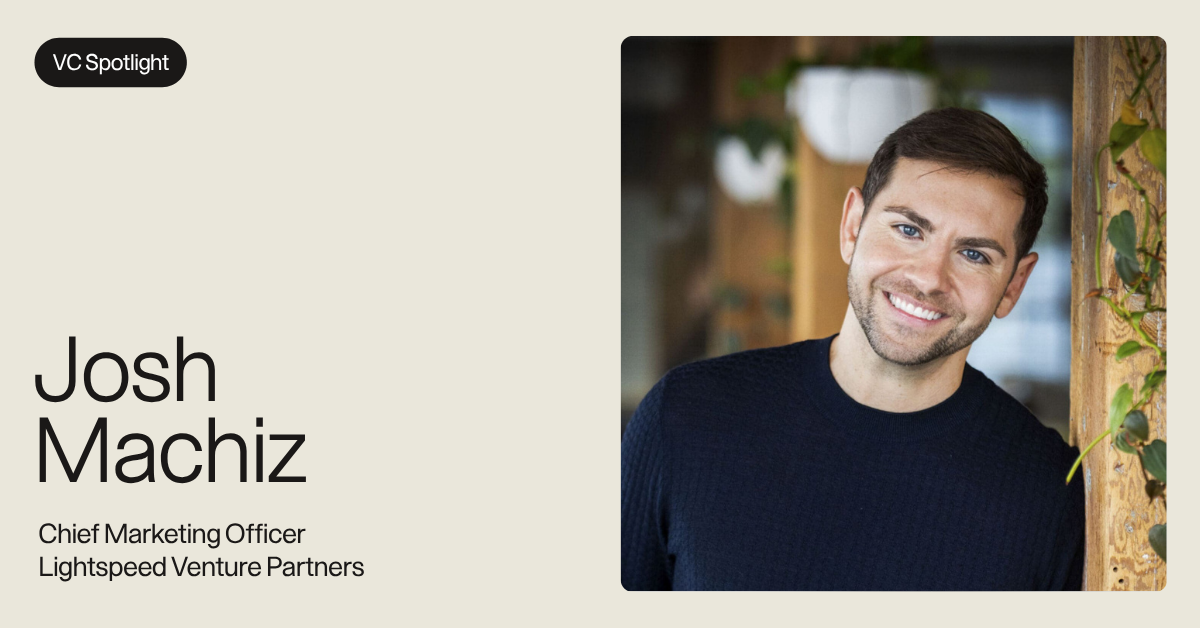
VC Spotlight: Josh Machiz, Chief Marketing Officer, Lightspeed Venture Partners
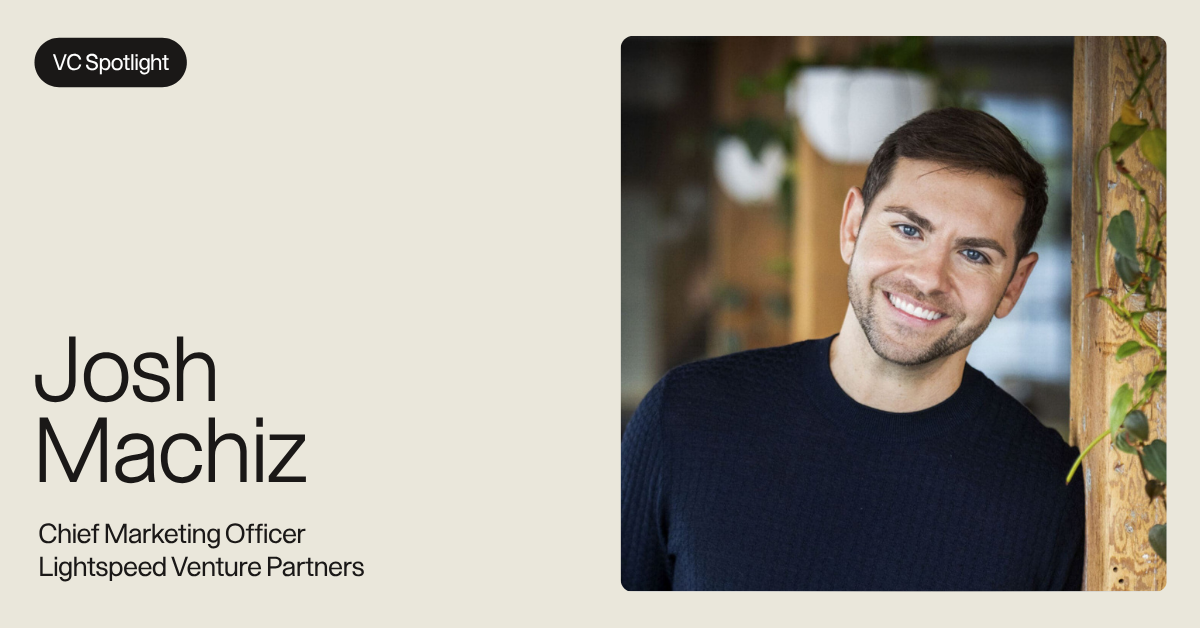
Josh Machiz knows how to tell a good story.
And as the Chief Marketing Officer at Lightspeed Venture Partners, he uses that skillset to help founders tell their story, from first fundraise to IPO.
Today, as Josh told us in our interview, venture capital firms have become much more than just capital providers. They’ve become media companies.
“Capital is a commodity now. Attention isn’t,” he told us. “Founders pick partners partly on who can amplify their story. Deals get won and lost on brand. So the modern firm looks more like a studio: shows, tent-pole events, original research, real distribution founders can plug into.”
Lightspeed recently launched Lightwork — a weekly AI news show that Josh co-hosts with Claire Zau out of the firm’s new NYC studio. With new episodes weekly, the show will break down the biggest moves in AI each week.
“That’s the model. The firm as a megaphone, not just writing checks.”
We caught up with Josh to discuss his career, how the job of building a VC firm’s brand has changed, his tech stack, how founders can tell a good story, and much more.
–
Where did your career start?
Josh: Nasdaq. I spent over a decade there, finishing as Chief Digital Officer. We took the social footprint from zero to 3.5 million followers, built Nasdaq Studios, and turned a stock exchange into a media platform for entrepreneurs.
My compensation was tied to how many deals the exchange won, and I realized the sales team was thinking about how to cover all unicorns vs. just focus on the ones that matter. So I built out venture capital partnerships — we sponsored the Forbes Midas List and made sure the right firms and companies got covered. That’s when the VCs came calling, mostly to build their own media arms, the way I had done at Nasdaq. I went to Redpoint and built their platform team. Then Lightspeed called me up to the big leagues.
The through line across 18 years: treat marketing as media, not collateral.
You’ve described attention as something founders can turn into an edge. What separates “good founder storytelling” from noise or hype?
Tension. Every good story has a setup and a payoff. Something is broken, backwards, or generic, and you show the answer. Hype skips the setup and goes straight to adjectives.
The other tell is proof. Good storytelling has names, numbers, and receipts. Noise has “thrilled to announce.”
And timing. Content tied to a news hook travels. Content that exists because the calendar said to post doesn’t. My test for everything: would anyone else publish this? If yes, why are you?
At Redpoint, you helped make the firm one of the most-followed VCs on TikTok and Instagram. What did you learn about what founders actually want to hear from investors online?
VC and marketing have a lot in common, but one big one is catching waves. To get an extraordinary outcome you have to spot what’s coming before anyone else and get yourself in position.
In 2021, when I was at Redpoint, humor was the way we connected with founders. It was the height of the corporate comedy era and I think we maxed out what an investment firm could do with that.
Now, we’re already riding the next wave, and founders are obsessed with AI knowledge and education. A whole generation of AI influencers built audiences, explaining this incredible transformative moment, and that's why we hired Claire Zau (Zauey Talks on Instagram) who is leading our New Media team as well as pre-seed investing, so that we can reach that next generation of founders who are coming of age in the AI era and meet them where they are.
As firms bring in people with built-in audiences and content-native credibility, how do you think the role of a VC is changing — from capital provider to community builder, talent scout, or something else entirely?
Media company. Full stop.
Capital is a commodity now. Attention isn’t. Founders pick partners partly on who can amplify their story. Deals get won and lost on brand. So the modern firm looks more like a studio: shows, tent-pole events, original research, real distribution founders can plug into.
At Lightspeed we’re building out Lightspeed Studios and a whole slew of shows including The Investment Memo, where a partner explains why we invested, timed to the funding announcement. And we just launched Lightwork — a weekly AI news show I co-host with Claire Zau out of our new NYC studio, breaking down the biggest moves in AI each week, ours and everyone else’s. New episodes every Monday. That’s the model. The firm as a megaphone, not just writing checks.
You’ve worked with companies from first fundraise through IPO. What’s one marketing or communications muscle founders should build much earlier than they usually do?
Their own voice. Your de-stealth shouldn’t be the first time anyone’s heard from you. Start building an audience 12 to 18 months before you need it, so when the announcement lands you’re broadcasting to a room you already filled.
The second: Think in viral news hooks. A round, a milestone, a launch. Tie content to a moment and you can get 10x the mileage of posting into the void.
How has the job of building a venture firm’s brand changed over the last five years?
Five years ago it was a logo, a blog, and a self-promotional newsletter nobody read.
Now it’s a full media operation. Video replaced the blog post as the atomic unit. We built podcast studios for Lightwork and our other shows in our NYC and SF offices because that’s where the needle moved. The bar went from “have a presence” to “be a media destination where founders can tell their story.”
And for our founders, we’re creating experiences that make them feel what it’s like to be backed by a firm that moves at Lightspeed — everything from partnering with F1 to take them to the Miami Grand Prix and making 1:1 introductions to CIOs and CISOs on site, to hosting them at the Lightspeed Lighthouse at Davos, so they can pack in more meetings with the Fortune 500 in a week than they'd get in a year.
If we expect our founders to be the best in the world at what they do, we hold ourselves to it too — being the best platform for getting them in front of customers and engineering the rooms where they can win.
What’s your favorite way to celebrate Pride Month in New York?
Occupy the Disco at Le Bain at The Standard on Pride Sunday, with my friend Ru Bhatt spinning. Nothing better.
What’s in your tech stack? What’s your favorite AI tool?
Lightspeed was an early Anthropic investor, so I’m biased, but I was a power user first and live virtually the entire day in Claude Code.
The rest of the stack: Granola for meeting notes, Affinity, Notion, Slack, and a video production pipeline that gets more AI-assisted every month. We recently onboarded Profound (a Lightspeed portfolio company), to help ensure what chatbots are saying about Lightspeed is on brand with what we’d want being said about us, if we’re gonna own the narrative on every platform, why leave off the LLMs.
Rapid fire: What’s your favorite coffee shop in NYC?
Ariston, the flower/coffee shop on 5th between 13th and 14th. Great coffee surrounded by fresh flowers and it’s decorated seasonally. What more do you want?
What’s the best slice of pizza in NYC?
Depends on the mood. Trashy NY slice: University Pizza on 13th and University. The real Italian version: Song E Napule on Houston. I know there are the standard Best of New York slices, I’m just not going to wait in line for them.
Disclaimer: Josh Machiz is Chief Marketing Officer at Lightspeed Venture Partners. The views expressed are his own and do not necessarily represent the views or opinions of Lightspeed or its affiliates. This content does not constitute an offer to sell or a solicitation of an offer to buy any securities or investment advisory services. For additional disclosures, please see lsvp.com/legal