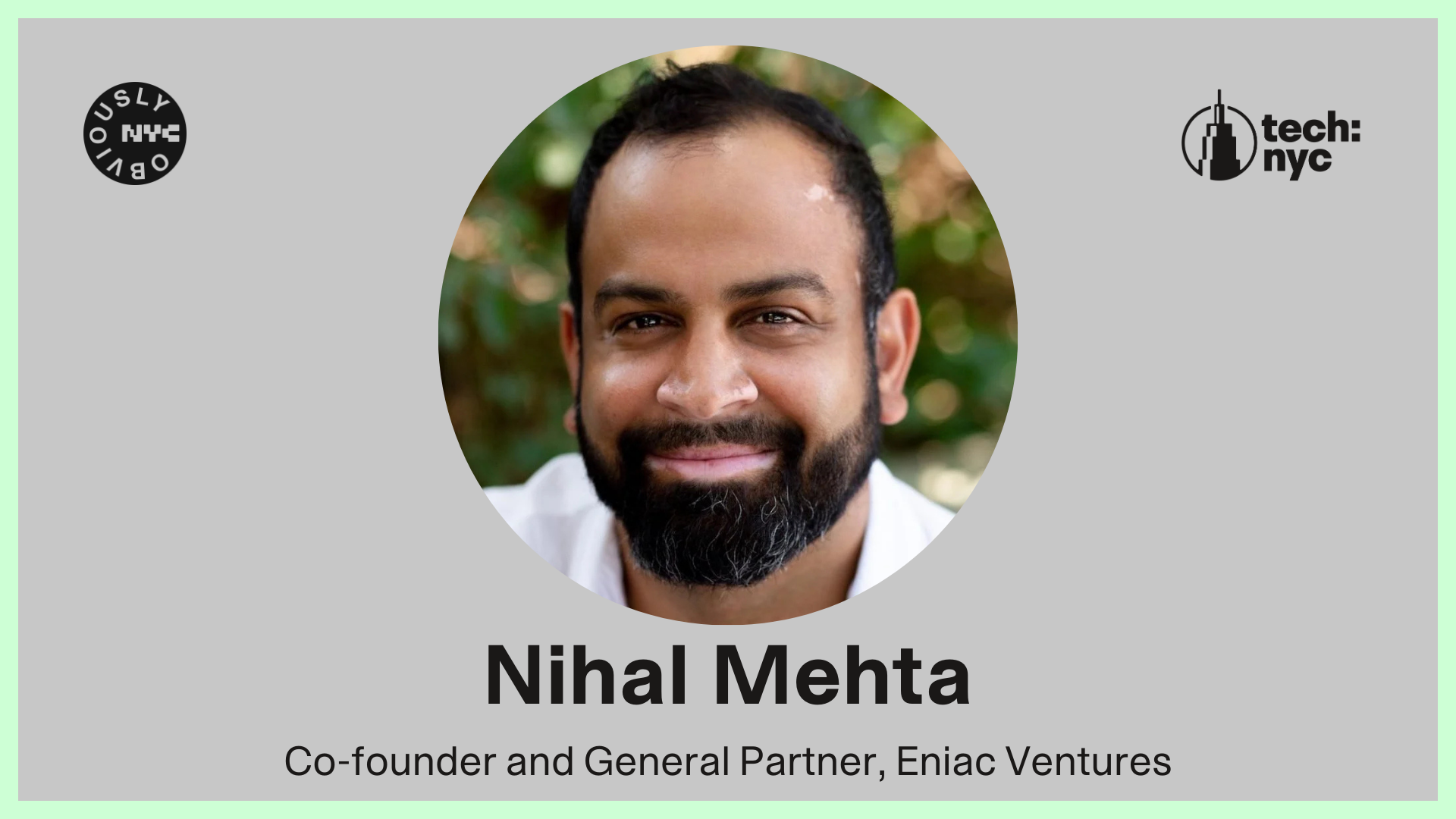
VC Spotlight: Nihal Mehta, Co-founder and General Partner, Eniac Ventures
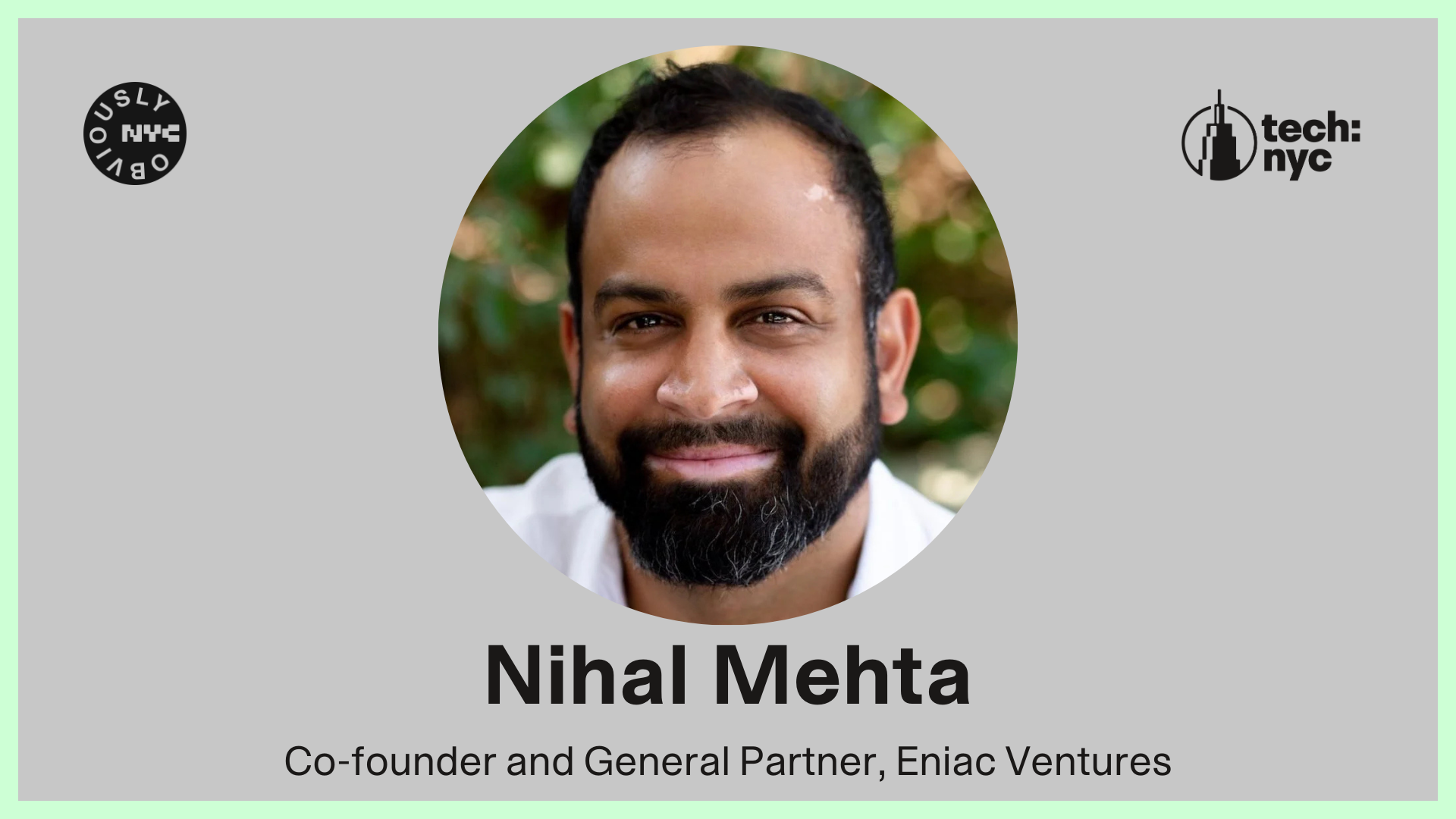
Nihal Mehta, Co-founder and General Partner at Eniac Ventures, is known by many as “the human Rolodex.”
While for some, building and sustaining relationships with founders, brands, and executives can be challenging, for Nihal, it isn’t complicated. “The framework is surprisingly simple: be a good human,” he told us.
Nihal knows a thing or two about building relationships with founders because he is one. As you’ll read in our interview below, he co-founded his first startup in 1999 from his senior-year house in Philadelphia. And while that startup ultimately shut down and filed for bankruptcy, it was, as he says, “where I earned real empathy for founders — and learned, viscerally, what resilience and grit actually feel like.”
Fast-forward a few years, and Nihal now leads Eniac Ventures, building on his experiences as a founder.
We caught up with Nihal to discuss his career, how he spots breakout companies early, how to effectively increase access to early capital for overlooked builders, and much more.
–
Where did your career start?
Nihal: My only “real job” was a summer internship at Microsoft in 1998, in the Bay Area, right before my senior year. The dot-com boom lit something in me, and in 1999 I co-founded my first startup from my senior-year house in Philadelphia: philly2nite.com.
We raised $1 million in angel capital, built a global publisher network, grew to 50 employees, and even plastered billboards along I-95. Then the bubble burst. By 2001, we shut it down and filed for bankruptcy.
That failure was the most formative experience of my career. It’s where I earned real empathy for founders — and learned, viscerally, what resilience and grit actually feel like.
I bought the assets out of bankruptcy, moved to San Francisco, and started ipsh!, a mobile marketing platform that was acquired by Omnicom (NYSE: OMC) and moved to NYC in 2005. After that, I founded two more startups — buzzd and LocalResponse — before co-founding Eniac.
You co-founded Eniac in 2009 — what was the catalyst?
After my first startup exit, I started angel investing and reconnected with three close friends from my engineering undergrad days. We’d all spent the first decade after school doing the same thing — building and operating startups.
We decided to try doing this together. In November 2009, we formed Eniac I, a $1.6 million fund with a few dozen LPs, initially as a nights-and-weekends effort while we were still running our own companies.
The real catalyst was our lived experience as founders. We’d seen both sides of venture, and — frankly — had accumulated plenty of “what not to do” moments with VCs. Eniac was built to be the opposite: truly founder-first, deeply engaged, and most impactful at the very beginning of a founder’s journey — when support matters most and decisions compound fastest.
What stage do you invest at and what’s your average check size?
Pre Series A, $500k-$5m with an average of $2m.
You spotted breakout companies early — AdMob, Brightwheel, Uber, and more. What signals do you think most investors overlook when evaluating founders at the earliest stages?
Most people say they’re focused on the founders — but then they still underwrite the market as it exists today. I think that’s the miss.
At the earliest stages, it’s really about whether the founder can break through walls: survive inevitable downturns, endure skepticism, and keep moving when the playbook doesn’t exist yet. Many great companies — Uber, Airbnb, Shopify — were initially passed on because the current market looked too small or too constrained.
Great founders don’t just participate in markets — they expand them. They create demand, change behavior, and pull the market toward their vision. That ability to bend reality a little is hard to model in a spreadsheet, but it’s often the most important signal of all.
People call you the “human rolodex.” What’s your framework for building and sustaining meaningful relationships across thousands of founders, brands, and executives?
The framework is surprisingly simple: be a good human.
Help people without keeping score and without expecting anything in return. Karma is very real — especially in an industry where too many founders still get ghosted. We try to show up differently.
Do a lot of favors. Make warm introductions. Share context. Be useful when it matters and invisible when it doesn’t. The real reward is getting to play a small role in other people’s success.
If you do that consistently, over years, it compounds. The goodwill comes back — often from unexpected places — 10x plus.
You’ve backed many underrepresented founders — what structural changes do you believe would most effectively increase access to early capital for overlooked builders?
Early-stage investing is fundamentally a trust business. People tend to back founders they know — or who look like, sound like, and move through the same networks they do.
If we want capital to reach more diverse founders, we can’t just focus on the top of the funnel. We need more diversity among the people writing the checks and shaping those networks in the first place. More diverse managers create more diverse trust loops — new patterns of access, pattern recognition, and belief.
That’s how the system changes structurally, not just rhetorically.
What’s the most common mistake you see founders make when pitching to investors?
Founders don’t spend enough time answering two of the most important questions: why them, and why now.
At the earliest stage, the real bet is whether this is the one in eight billion people uniquely positioned to pull this off. How did their life, career, and hard-earned lessons connect the dots to this idea? Why does this problem feel inevitable — almost unavoidable — for them to solve?
If a founder can convincingly answer that, and the ambition is a genuinely big swing, everything else becomes much more compelling. Features change. Markets evolve. But founder-market-fit is very hard to fake.
What’s an investment from the last 12 months you’re especially excited about?
A space access marketplace that’s still in stealth, built by a human who is the 1 out of 8 billion people to pull this off — to help individuals/companies/governments launch things (and people!) into space.
What are some of the top resources you recommend for founders starting out?
Startup Leadership Program (SLP) is an incredible, non-dilutive fellowship program in NYC (https://www.startupleadership.com/) where i’ve been a mentor for over 10 years.
Our show The Human Unicorn Podcast is pretty good too but I’m biased =)
Rapid fire time: You have a founder or LP in from out of town… Where are you taking them?
Jake’s Saloon, my local on 23rd/7th in Chelsea.
Choose one: power breakfast, power lunch, or work dinner. Where?
Power lunch at Balthazar in SoHo near Eniac’s office.
And finally… what’s the best slice of pizza in NYC?
Scarr’s in the LES!