

Grid Fellowship Housing Day: 5 Takeaways on the Future of Housing in NYC
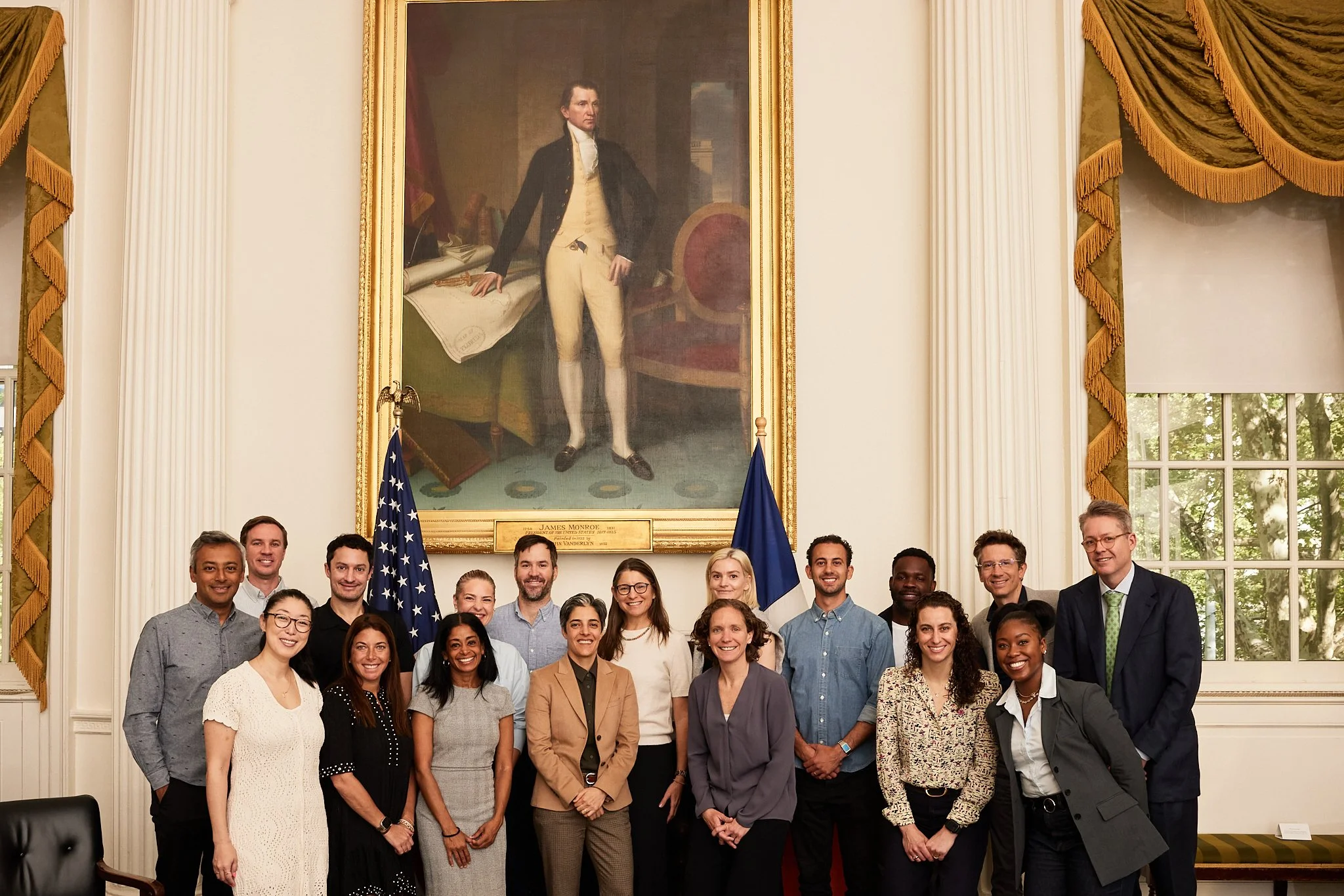
Lately, widespread agreement exists that NYC needs more housing. There is much debate, however, as to how to make that happen. As part of the Grid Fellowship — Tech:NYC’s civic leadership program connecting senior technology leaders with the systems shaping New York City, now accepting applications for the next cohort — fellows recently spent the day exploring one of the city’s defining challenges and opportunities: building the next chapter of housing in New York.
This month, the Grid Fellows heard from some of the city’s leading voices, including Deputy Mayor for Housing and Planning Leila Bozorg, NYU Furman Center Executive Director Brad Greenburg, and New York Apartment Association CEO Kenny Burgos. Fellows also toured the redevelopment of the former Stewart Hotel with Breaking Ground, where 580 permanently affordable homes are being created steps from Penn Station.
The day dove into everything from zoning and affordability to operational systems and public-private financing. Here are five key takeaways.
1. New York’s Housing Crisis Is Driving Broad Alignment
If there’s one thing leaders across government, housing, and the private sector can agree on, it’s this: New York needs significantly more housing.
With vacancy rates at historic lows and affordability challenges touching every neighborhood, speakers emphasized that the housing shortage has become impossible to ignore, and that there is rapidly growing consensus around the need to increase supply. Many of the current challenges stem from the Zoning Resolution, which slowed the development process during a term of planned shrinkage in the 1960s and 1970s.
Recent initiatives like City of Yes represent a major shift in housing policy, unlocking an estimated potential 80,000 new housing units through zoning reforms designed to make development easier and more predictable.
Fellows also heard broad agreement from both housing advocates and industry leaders that the city must dramatically accelerate housing production to meet demand. Experts noted that New York needs to build approximately 50,000 new units annually, but is currently producing only about half that number.
The takeaway: While the scale of the challenge remains enormous, there is movement around solutions.
2. Housing Is an Interconnected System
Housing Day reinforced how interconnected New York’s housing ecosystem really is.
Fellows walked through the roles of agencies like Housing Preservation & Development (HPD), the Department of Homeless Services, and the Department of City Planning, alongside nonprofit developers and community organizations.
The conversation highlighted that housing policy touches nearly every part of city life: Economic development, public health, transportation, workforce stability, neighborhood growth, and more.
Addressing the crisis requires coordination across all of those systems simultaneously. Leaders understand how these systems connect and how to move them forward together.
3. Operational Challenges Matter as Much as Policy
The day also underscored a reality that tech leaders know well: execution matters. The solution lies in policy innovation as well as systems innovation.
The city’s housing lottery platform, Housing Connect, can take more than 250 days to fill a vacant unit.
Housing enforcement systems remain fragmented and difficult to navigate.
Residents often need to repeatedly complete duplicative paperwork across disconnected agencies and portals.
For a room full of technology leaders, the parallels were obvious: improving systems design, user experience, and operational efficiency could have a meaningful impact on how New Yorkers access housing.
4. Affordable Housing Requires Creative Partnerships
The tour of the former Stewart Hotel offered fellows a real-time example of how New York is rethinking housing development.
Breaking Ground’s conversion of the vacant Midtown hotel – which first opened in 1929 – into 580 permanently affordable homes highlighted how adaptive reuse, nonprofit leadership, and public-private financing can work together to create new housing opportunities.
Throughout the day, speakers emphasized that affordable housing projects increasingly rely on layered funding structures involving city, state, federal, private, and community development financing. Solving the housing crisis will require collaboration across sectors and sustained investment in long-term solutions.
5. Housing Shapes the Future of New York City
More than anything, the day reinforced that housing is foundational to New York’s long-term success.
Whether discussing affordability, workforce retention, homelessness, or economic growth, every conversation returned to the same core idea: New York’s ability to remain dynamic, accessible, and economically competitive depends on its ability to house people.
Fellows saw firsthand that addressing the housing crisis will require political leadership, institutional coordination, operational excellence, and long-term thinking.
As the final deep dive of the Grid Fellowship, the day reflected the broader mission of the program: equipping leaders from the tech sector with a deeper understanding of the systems shaping New York City, and empowering them to contribute thoughtfully to what comes next.
Tech:NYC is now accepting nominations for the 2026–27 Grid Fellowship cohort. To be considered, applicants must be nominated by a Tech:NYC member.
To nominate a candidate, please email gridfellowship@technyc.org with:
The nominee’s name, title, and contact information
1–2 sentences explaining why you recommend them
Nominees do not need to be Tech:NYC members.





Photos credit: Elvin Abril